
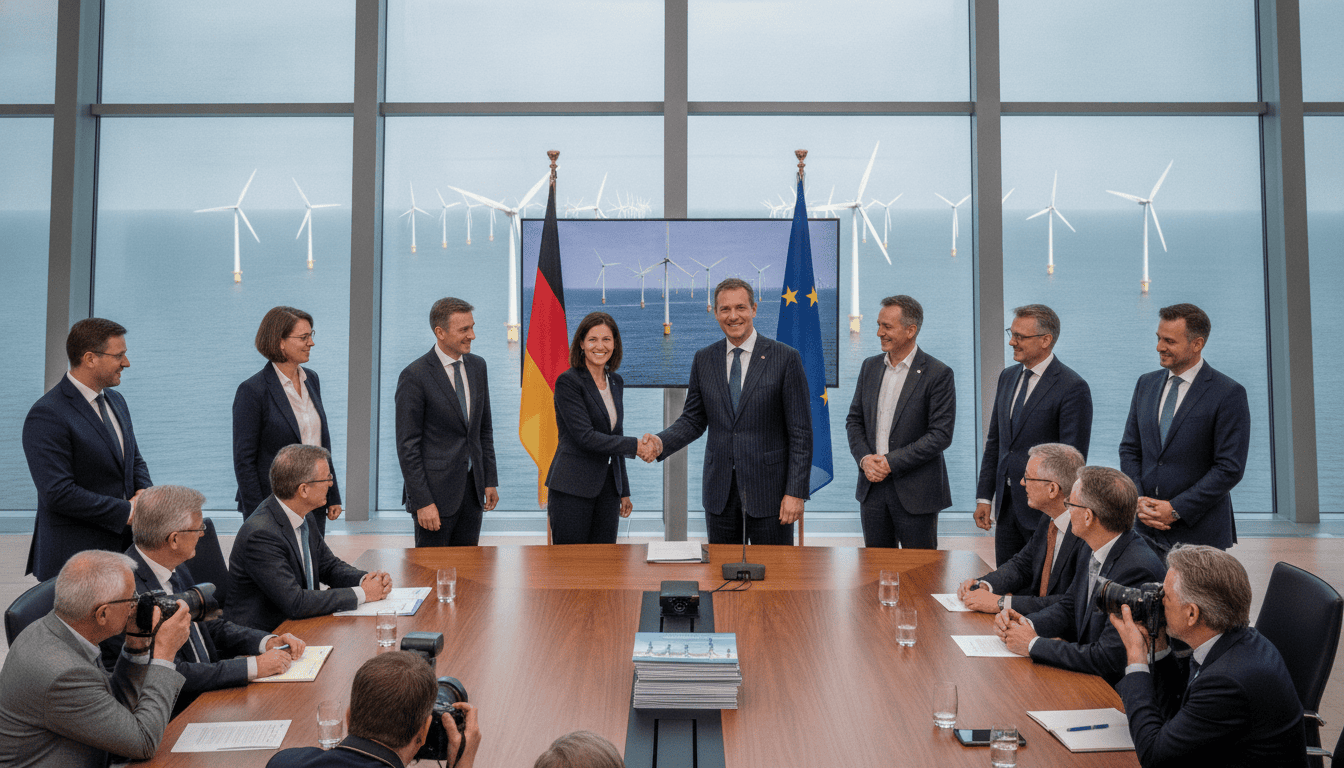
He Dreiht offshore wind farm begins operations after €2.4bn build funded by corporate power deals
He Dreiht offshore wind farm, built for €2.4bn with 64 turbines, starts operation after securing 15-year corporate power contracts with Evonik, Google, Fraport.
The He Dreiht offshore wind farm, Germany’s largest project of its kind, is set to begin commercial operation after a €2.4 billion construction program that proceeded without state subsidies. Project executive Georg Stamatelopoulos told DIE ZEIT the developer sold the farm’s output to roughly ten large corporate buyers under 15-year contracts, enabling finance without public support. The move marks a notable development in Germany’s renewables sector and corporate procurement strategies.
He Dreiht to begin commercial operation
The project includes 64 of the most powerful turbines currently in operation worldwide and occupies a prominent position in German offshore development. Developers say the combination of scale, technology and long-term offtake agreements allowed them to close financing at market terms.
Officials involved framed the start-up as proof that large offshore farms can be built without direct subsidies when corporate demand for green power is strong. The project’s timeline and commissioning were confirmed in recent statements to the press.
Financing model rested on long-term corporate contracts
According to the developer, the decisive factor in avoiding subsidies was the sale of future power to major firms under 15-year contracts. Those agreements provided predictable cash flow that lenders accepted in place of feed-in tariffs or direct state support.
This approach mirrors a broader trend of corporate power purchase agreements (PPAs) replacing or supplementing public support schemes in mature markets. For He Dreiht, the PPA buyers span multiple sectors, from chemicals and technology to logistics and transportation.
Major industrial and tech buyers signed 15-year deals
Georg Stamatelopoulos identified several anchor purchasers who bought significant shares of the expected output, including Evonik, Google and a subsidiary of Deutsche Telekom. He also named the operator of Frankfurt Airport, Fraport, along with industrial groups Salzgitter, Bosch, Stahl‑Holding‑Saar, Deutsche Bahn and DHL as committed buyers.
Together, these corporate partners committed to multi-year offtake contracts in order to decarbonise operations and secure long-term renewable power. Additional negotiations with other offtakers were reported to be ongoing as the project neared operation.
Technology and construction highlights of the site
The wind farm was equipped with a new generation of high-capacity turbines supplied by leading manufacturers, enabling a lower rotor count while maximizing energy yield. Engineers and project managers highlighted efficiencies in foundation work, installation vessels and grid connection that helped keep costs within the €2.4 billion budget.
Construction proceeded amid challenging marine conditions and logistical complexity typical of large offshore installations. Stakeholders said rigorous planning and a concentrated supply chain reduced schedule risks and supported the unsubsidised finance model.
Market implications for German renewables and corporate procurement
He Dreiht’s financing blueprint is likely to influence how future offshore projects in Germany and elsewhere approach capital markets. If replicated, the model could shift more of the sector toward buyer-funded frameworks and reduce the fiscal burden on public subsidy programs.
Energy analysts note that corporate appetite for long-term green power contracts is rising as companies pursue net-zero goals. The He Dreiht example presents a case study in aligning corporate sustainability targets with utility-scale project funding.
Regulatory context and grid integration challenges
Grid connection and system integration remain central to the successful commercial operation of large offshore farms, and project managers worked with transmission operators to secure necessary onshore interfaces. Coordination with national grid planners was required to schedule commissioning and manage dispatch during initial months of operation.
Regulators will monitor the project’s output and how these corporate PPAs affect wholesale market dynamics, balancing the interests of consumers, utilities and grid stability needs as more unsubsidised capacity comes online.
As the He Dreiht offshore wind farm moves into service, developers and corporate buyers will begin the operational phase of the 15-year agreements that underpinned the project’s financing. The outcome will be watched closely by industry observers and policymakers as Germany adjusts its energy mix and companies pursue larger shares of renewable generation in their supply portfolios.
