
German social state reform must simplify benefits and protect lower‑middle incomes, says Cremer
Cremer calls for German social state reform to simplify benefits, protect lower‑middle incomes and shore up pensions while avoiding the appearance of rollback.
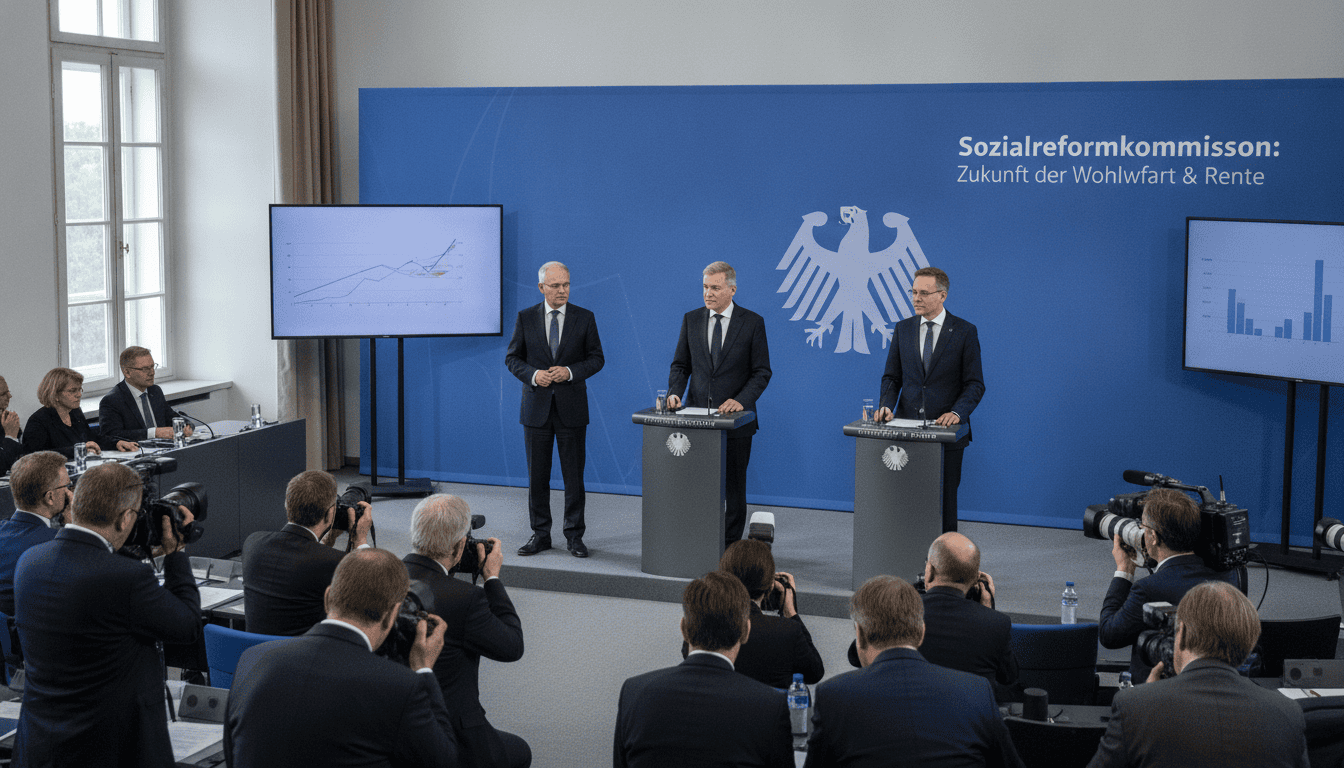
Germany’s debate over social policy has shifted from blanket claims of expansion or austerity to concrete proposals for streamlining benefits and protecting those near the bottom of the middle class, according to Cremer, a member of the government’s social‑state reform commission. He argued the commission’s recommendations offer a practical pathway to make the social state more citizen‑friendly and to improve the pension system without provoking unnecessary political backlash. The discussion comes as the coalition advances a package of measures that mix reversals of recent policies with new long‑term ideas.
Commission reached a pragmatic consensus
The reform commission produced a common set of proposals after months of negotiation that avoided extreme positions, Cremer said. He credited the commission’s composition and the willingness of its political members to compromise for enabling a result that most stakeholders can accept. The report deliberately kept individual elements within an overall plan so that no single measure is taken out of context.
Cremer emphasized that consensus was possible because members focused on implementable steps rather than headline‑grabbing positions. The commission’s approach moves the debate away from polarized rhetoric and toward incremental, administrable reforms. That posture, he said, should help lawmakers pursue changes without triggering panic or idealized reversals.
Pension changes linked to higher labor costs
One focal point of the commission’s work is a shift toward a partly capital‑funded pension component, which Cremer acknowledged will raise labor costs in the short term. He noted Germany’s social contributions are already among the world’s highest and that the increase is a legitimate concern for employers. At the same time, he argued Germany’s statutory pension level is moderate compared with many peers, and that postponing capital‑funded measures would have been short‑sighted.
Cremer also stressed that the capital element is part of a broader package that includes measures aimed at medium‑term relief for wage‑related charges. He warned against isolating the capital pension from the rest of the reform, calling the framework a unified strategy rather than a series of independent tweaks.
Bürgergeld debate seen as narrative‑driven
The political fight over the Bürgergeld has been driven more by narrative than by sweeping policy shifts, Cremer said, noting that neither the introduction of the Bürgergeld nor calls for its abolition constituted systemic ruptures. He accepted that reasserting work‑related obligations in benefit rules is a defensible policy aim, but cautioned that public discourse has often exaggerated the practical effects.
Cremer rejected claims that recent reforms represented a social state run amok, but he also warned that reversing benefits that recipients have already grown used to produces disproportionate anger. He pointed to several prior changes — such as measures to reduce pension deductions after long contribution periods and expanded care insurance supplements — that were politically sensitive when scaled back.
Complexity and access barriers undermine fairness
A central problem identified by Cremer is the administrative complexity of the benefit system, which fragments entitlements across many programs and thresholds. He argued that inconsistent asset tests, divergent income rules, and poor data exchange between agencies create high access barriers for needy households. The commission therefore recommends simplifying rules and considering consolidated pathways for certain groups, while recognizing simplification will create winners and losers.
Cremer proposed using reasonable allowances and flatter rules to reduce bureaucratic hurdles, even at the cost of modest redistribution shifts. He made the case that a more transparent, predictable system would increase fairness overall by ensuring small, regular gains for working families instead of marginal improvements buried in complex calculations.
Measures to make work pay for families
One recurring theme in the commission’s proposals is strengthening incentives for additional work among lower‑middle income families. Cremer said the central question is how much of every extra euro earned actually reaches the family budget after benefits are tapered out. He argued for reforms so that a substantial portion — at least a meaningful fraction — of additional earnings remains in household hands, especially where rent pressure erodes the advantage of higher pay.
Cremer dismissed sensationalized claims that low‑wage workers regularly quit to enter the benefits system, while acknowledging that the tapering of housing and child supplements can blunt the effect of earnings gains. He favors targeted adjustments such as higher disregard rates or smaller withdrawal rates on supplementary benefits to ensure that extra work translates into noticeable income gains.
Communication and implementation are decisive
Beyond technical design, Cremer warned that success will hinge on political communication and on the practical quality of delivery. He said that promoting a positive, realistic narrative about achievable social progress is essential to counter cynical perceptions. Equally important, he argued, is improving implementation so that well‑intentioned rules actually reach their intended beneficiaries and are not captured by better‑informed groups.
Cremer singled out public management of new capital‑funded pension accounts as a response to poor performance in the private advisory market, and he asked for clearer, citizen‑centered service in benefit administration. He concluded that better execution and a fairer distribution at the lower edge of the middle class would strengthen trust in democratic institutions and make reform durable.
Public acceptance remains the implicit test for any package of German social state reform; Cremer warned that even careful, modest gains can be lost if citizens perceive only losses. He urged policymakers to combine technical fixes with clearer messaging so improvements are seen, not dismissed, by the people they are intended to help.
