
Pius Brotherhood Excommunication Challenged as Society Files Formal Appeal
Pius Brotherhood appeals the excommunication of its bishops, invoking canonical remedies while the Vatican says the automatic penalty remains in force.
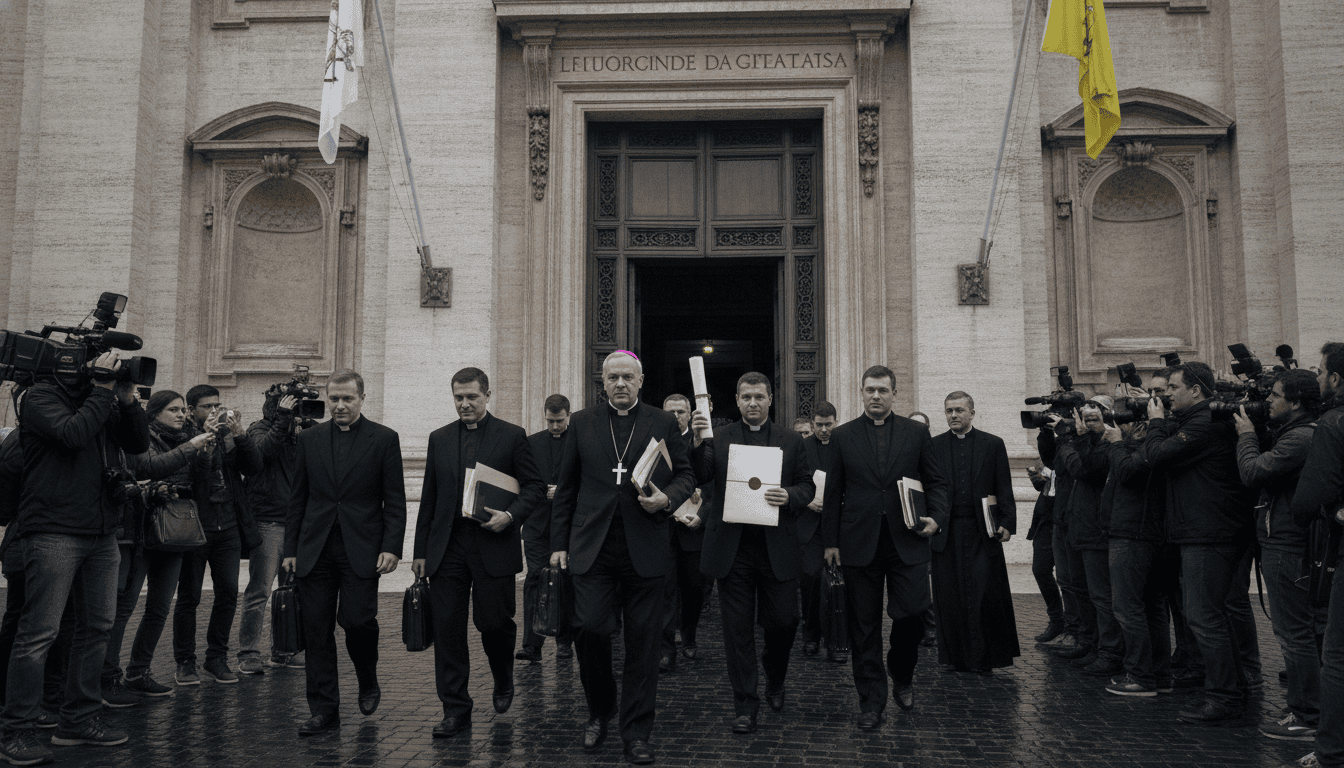
The Pius Brotherhood excommunication of several of its bishops has been formally challenged, the Society announced as it lodged an administrative appeal seeking correction of the Vatican’s notification. The Society of St. Pius X framed the step as a request for rectification made “in the spirit of respect for ecclesiastical authority,” while the Vatican has described the penalty as a canonical consequence that occurred automatically. The appeal is a required procedural step before further judicial remedies and keeps the dispute within church tribunals even as observers in Rome view reversal as unlikely.
Appeal Filed as First Step in Canonical Process
The Society submitted an administrative complaint contesting the Vatican’s declaration that its bishops incurred excommunication by being consecrated without papal mandate. Under church law, such penalties are typically considered latae sententiae — automatic upon commission of the act — but can be formally declared afterward, which is what Rome undertook in this case. The appeal aims to trigger a review of the administrative act; if rejected, the Society may petition the Apostolic Signatura, the Holy See’s highest tribunal, as a last resort. Canonical experts note that this sequence is procedural and does not, by itself, alter the underlying legal assessment.
The Society’s statement emphasized its continued professed loyalty to the Church’s well-being and asked for correction of what it sees as an unjust administrative determination. Vatican officials, however, have repeatedly signaled that the penalty flows from established norms and that Rome will not easily reverse course without a clear change in circumstances. Observers say the outcome will likely hinge on whether the parties can reach a negotiated solution or whether Rome insists on preserving the legal clarity of its declaration.
Automatic Penalty and Vatican Declaration Explained
Under canon law, the ordination of bishops without papal approval triggers an automatic censure intended to protect ecclesial communion and discipline. In this instance, the Vatican did not itself invent the penalty but declared that the condition for its automatic imposition had been met. That legal distinction — between the automatic entry of a penalty and a discretionary imposition — is central to Rome’s position and constrains the leeway available to later appeals.
When the Holy See issues a formal declaration, it also places obligations on clergy and faithful to prevent participation of those affected in sacramental ministry. That administrative confirmation is meant to provide legal clarity and to guide diocesan authorities in response. It is this public confirmation that the Society now seeks to contest through the available canonical channels.
Past Precedents Offer Limited Guidance
The Society’s appeal evokes memories of earlier episodes of schism and reconciliation, but historical precedents provide no clear template for success. The 1988 ordinations that first triggered sanctions against the Society were later the subject of a papal act in 2009, when Pope Benedict XVI lifted the excommunications of the bishops involved as a gesture aimed at fostering dialogue. That intervention, however, was framed as a discretionary act of papal clemency rather than a reworking of canonical principles.
Legal scholars point out that each case turns on distinct facts: prior assurances given to a pope, expressions of obedience, or other specific commitments can shape Rome’s response. Where past remedies were granted as papal favors, they were often accompanied by conditions and diplomacy rather than by a wholesale reinterpretation of church law. The current appeal therefore faces a different institutional context and a Vatican that has signalled reluctance to repeat such gestures without concrete shifts in behavior.
Local Routes for Lifting Penalties for Clergy and Laity
While bishops face the most complex canonical path, priests and lay members who received analogous penalties have a simpler route to restoration through local ecclesial authorities. The Diocese of Regensburg, where the Society’s seminary at Zaitzkofen is located, outlines a procedural pathway for those seeking to have excommunications lifted: a formal profession of faith, a signed declaration of church affiliation, and a current baptismal certificate presented to a priest, who then forwards the documentation to the diocesan ecclesiastical court.
That local mechanism, available for non-episcopal cases, underscores the distinction between penalties that can be remedied through repentance and pastoral reconciliation and those that implicate episcopal authority and ecclesial order. Diocesan offices also require compliance with administrative formalities, including documentation related to data protection, before they can process requests. So far, diocesan officials report no wave of penitential petitions from Society members seeking reinstatement.
Broader Implications for Church Discipline and Sacramental Life
The public dispute over the Pius Brotherhood excommunication spotlights tensions between canonical enforcement and pastoral outreach within the Church. Excommunication is the most severe censure in canon law: it does not erase baptismal identity but restricts access to the sacraments and public ministry. That reality raises pastoral and practical questions for bishops, priests and local communities about how to respond when members of a religious society incur such penalties.
For Rome, maintaining the integrity of canonical norms is a priority; for the Society, preserving its clerical identity and sacramental practice is central to its mission. The clash therefore tests the balance between juridical clarity and the search for pathways back to full communion, should both sides find grounds for negotiation. How diocesan pastors handle sacramental access at the parish level will shape the lived consequences of the dispute for ordinary Catholics.
The Society’s formal appeal keeps the matter inside the Church’s legal framework and delays any immediate external resolutions, but it also reaffirms that canonical processes — not only diplomatic gestures — remain the principal means of adjudicating such conflicts.
The outcome will depend on both legal argumentation and the diplomatic will of those in Rome and within the Society to find an accommodation, though many Vatican observers say a reversal is improbable without clear acts of submission or assurances from the Society’s leadership.
