
German solar subsidy cuts set to reshape household PV incentives under EEG reform
Germany to curb solar subsidies from January 1, 2027, with a phased end to feed-in tariffs under the proposed EEG reform, affecting small rooftop systems across the country.
Reiche proposes phased end to feed-in tariffs
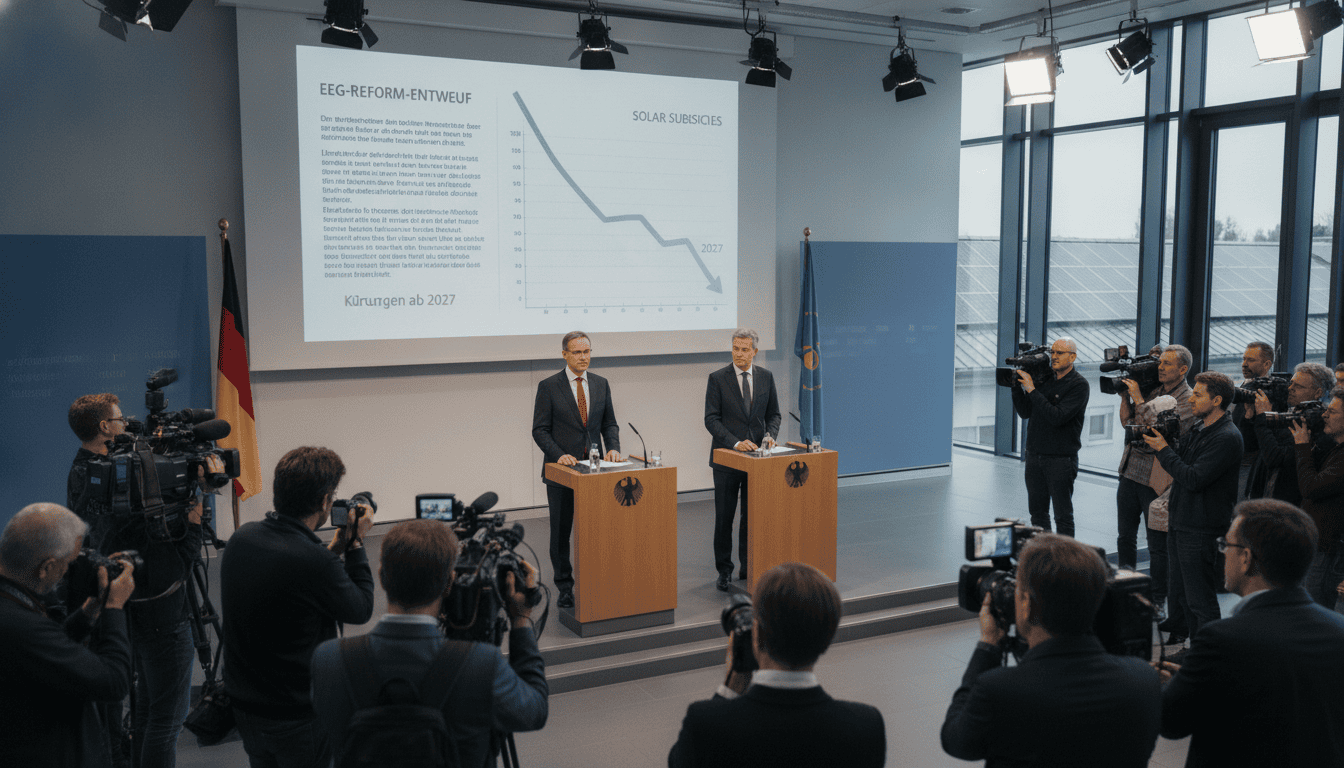
Economics Minister Katherina Reiche (CDU) has put forward a second draft of the Renewable Energy Sources Act (EEG) that would sharply reduce support for new private solar installations beginning January 1, 2027. The draft abandons an immediate repeal of the feed-in tariff in favor of a 36-month phase-down, according to the ministry text circulated to federal states and industry groups.
Under the proposal, the guaranteed fixed payments that small photovoltaic (PV) operators currently receive from network operators would be tapered rather than extinguished overnight. After the three-year transition period, owners of new systems would be required to sell generated electricity via market channels rather than rely on the old feed-in scheme.
New transition rules for household PV systems
The draft introduces stepped limits that tighten over the transition period to target subsidy reductions by system size. Homeowners installing new PV systems under 50 kilowatts (kW) from 2027 would receive a reduced fixed payment for only three years, with that transitional payment set about one eurocent per kilowatt-hour below existing levels.
For systems commissioned in 2028 the protected size threshold would fall to 25 kW, and in 2029 to seven kW, after which the transitional compensation disappears. From January 1, 2030, the draft foresees no further transitional feed-in payments, pushing all new installations onto direct-market mechanisms.
Mandated direct marketing and market risks for small producers
Once feed-in payments end, new PV operators must market their electricity directly, which means selling power at the wholesale exchange price. That exposes households and small producers to volatile market outcomes: in certain hours prices could exceed prior guaranteed levels, while in other periods prices could fall to zero or even become negative.
The draft anticipates professional marketers being used to handle sales and to collect fees for their services, which would further reduce net returns for small owners. To soften the shift, the ministry proposes a limited direct-marketing bonus for small PV systems lasting four years after market entry.
Redispatch costs and fiscal rationale
A central argument for the change is the rising cost of so-called redispatch measures, where system operators curtail generation to prevent grid overloads and then compensate producers. The ministry estimates these redispatch costs at about €3 billion annually, costs borne collectively by electricity consumers.
Officials argue that the current framework can lead to “double payments” when renewable generators are compensated while their output is curtailed, and that some investments receive public support despite being financially viable without it. The reform is presented as an effort to reduce subsidies, increase market discipline and lower systemic costs for consumers.
Adjustments to biomass targets and regional wind incentives
The draft also raises the deployment target for biomass, increasing the planned capacity to at least 9.5 gigawatts (GW) by 2035 from the previous 8.4 GW benchmark. The ministry says the higher target will secure fuel supplies for existing plants whose initial 20-year EEG support is expiring and enable investment in flexibility measures.
Separately, the proposal seeks to rebalance onshore wind deployment geographically by creating incentives for more capacity in southern Germany. Officials say a more even regional distribution of wind assets would reduce costly transmission upgrades needed to carry power from the predominantly northern and eastern clusters to consumption centers in the south.
Political response and industry reaction
The first EEG draft, published in January, drew resistance from Finance Minister Lars Klingbeil and Environment Minister Carsten Schneider (both SPD), who warned that sweeping subsidy cuts could undermine the energy transition. Klingbeil has also stressed fiscal prudence, given the substantial budgetary burden of EEG-related payments in recent years.
Industry groups welcomed the arrival of a revised proposal but urged careful timing and legal clearance. The Federal Association of the Energy and Water Industry (BDEW) said investors and operators need clarity and highlighted that the European Commission must approve any state aid changes before projects can proceed. BDEW leadership also criticized the brief consultation window given to stakeholders to respond to the draft.
The ministry describes the reform as a shift from a broad subsidy “safety net” toward a targeted instrument to ensure system responsibility and market integration. It maintains the headline goal of producing at least 80 percent of electricity from renewables by 2030 while reducing subsidy volumes.
Homeowners and small installers face a clear choice: proceed under the current terms before the January 2027 phase begins, or prepare to sell into a more exposed wholesale market with transitional payments that decline by size and year. The draft will now proceed through consultations with states, industry and Brussels before any final legal text is adopted.
