
Electrification Accelerates in Germany as EVs and Heat Pumps Surge
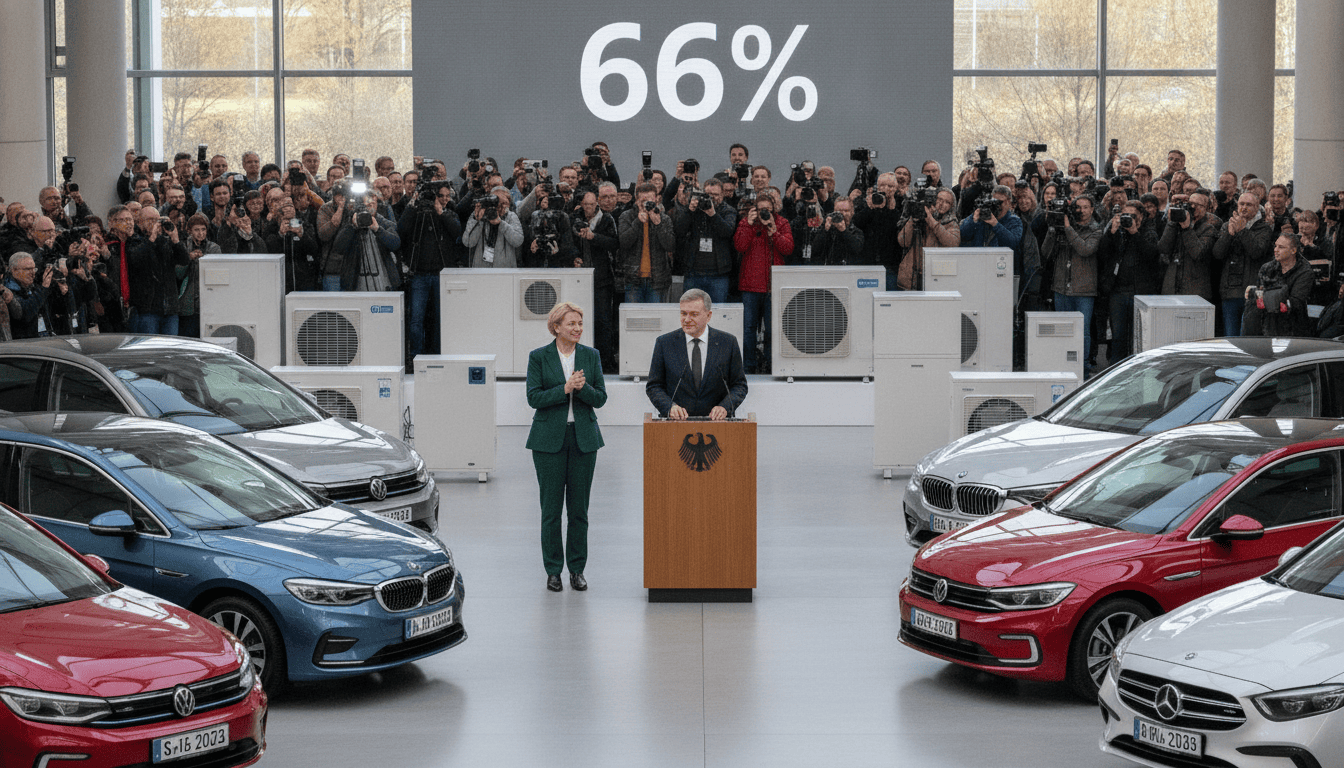
Germany sees rapid electrification: nearly two-thirds of new cars are electric, hybrid or gas, while heat pumps became the leading new heating system in 2025.
Germany’s electrification surge is gaining momentum, with nearly two-thirds of newly registered vehicles now powered by electric, hybrid or gas drivetrains and battery-electric cars accounting for roughly a quarter of new sales. The same year saw heat pumps become the most frequently installed heating technology, according to recent industry and research surveys, signaling a broader shift toward electric solutions in transport and buildings.
Two-thirds of new cars adopt alternative drivetrains
Nearly two-thirds of newly registered vehicles in Germany now feature an electric, hybrid, or gas drivetrain, industry data show. Battery-electric cars alone make up about one-quarter of new passenger vehicle registrations, a rise of seven percentage points from the prior period.
Manufacturers and market analysts interpret the figures as a turning point: improved battery technology, expanding charging infrastructure and changing relative costs have combined to make electric vehicles a mainstream choice for many buyers. Subsidies and transitional incentives appear to have accelerated uptake, though market forces are also increasingly cited as decisive.
Heat pumps top new heating installations in 2025
In 2025 heat pumps overtook other systems to become the most commonly installed heating technology, three research institutes reported after a national survey. Installations of fossil-fuel boilers fell sharply over the same period, reflecting both regulatory pressure and shifting consumer preferences.
Research bodies and economic institutes point to lower running costs for heat pumps and the added benefit of summer cooling as factors driving adoption. Financial incentives and rising fossil fuel prices have further encouraged homeowners and builders to switch to electric-based heating solutions.
Consumer economics and convenience drive choices
Households and motorists are increasingly choosing electrified solutions for pragmatic reasons: lower operational costs, reduced exposure to fuel price volatility, and improved user experience. Car buyers cite longer battery range and a denser public and private charging network as key reasons to opt for electric models.
Economists note that the pattern reflects classic creative destruction: new technologies improve incrementally, reach cost parity, and then scale quickly. In markets like China the transition has moved especially fast, driven by large-scale solar deployment and aggressive local manufacturing that have pushed prices down and broadened consumer access.
German auto industry faces structural challenge
Germany’s automakers have confronted a difficult transition as demand patterns shifted globally. Early investments in electric vehicle production were substantial, but exports to major EV markets such as China fell at times, exposing mismatches between production strategies and international demand cycles.
Industry observers warn that failing to align product offerings and cost structures with global EV market dynamics risks long-term competitiveness. At the same time, suppliers and industrial groups focused on electrification, including firms producing semiconductors and electric power components, have found new revenue streams and strategic opportunities.
Policy debates and the 2035 combustion timeline
Political debate over measures such as a European ban on new combustion-engine cars from 2035 has intensified, with recent moves suggesting the proposal may be renegotiated under pressure from member states. Some analysts argue that such regulatory timelines could become less relevant if consumer preferences and market economics drive combustion technology out of the marketplace before mandatory dates take effect.
Still, transition advocates emphasize that policy choices shape infrastructure and investment decisions. Efficient grid expansion, streamlined permitting for charging and heating installations, and predictable incentive frameworks are cited as critical to sustaining momentum and avoiding bottlenecks that could slow adoption.
Grid constraints and system-level risks remain
Despite rapid uptake, electrification faces tangible technical and operational challenges. The power grid requires substantial reinforcement to accommodate higher electricity demand from vehicles, heat pumps and data centers, while seasonal and weather-related variability can cause supply stress during extended low-renewable periods.
Planners identify accelerated grid expansion, investment in storage technologies and smarter demand management as necessary to mitigate risks associated with intermittency. Experts also point to the importance of coordinated policy and industry action to ensure that the pace of infrastructure development matches the speed of electrification on the consumer side.
Electrification in Germany is no longer a distant policy goal but a rapidly unfolding economic and technological shift affecting transport, buildings and industry; whether policymakers and firms can align investment, infrastructure and regulation will determine how smoothly that transition proceeds and who captures the economic benefits.
