
San Francisco mayor urges stricter rules after Waymo robotaxis stalled in July 4 gridlock
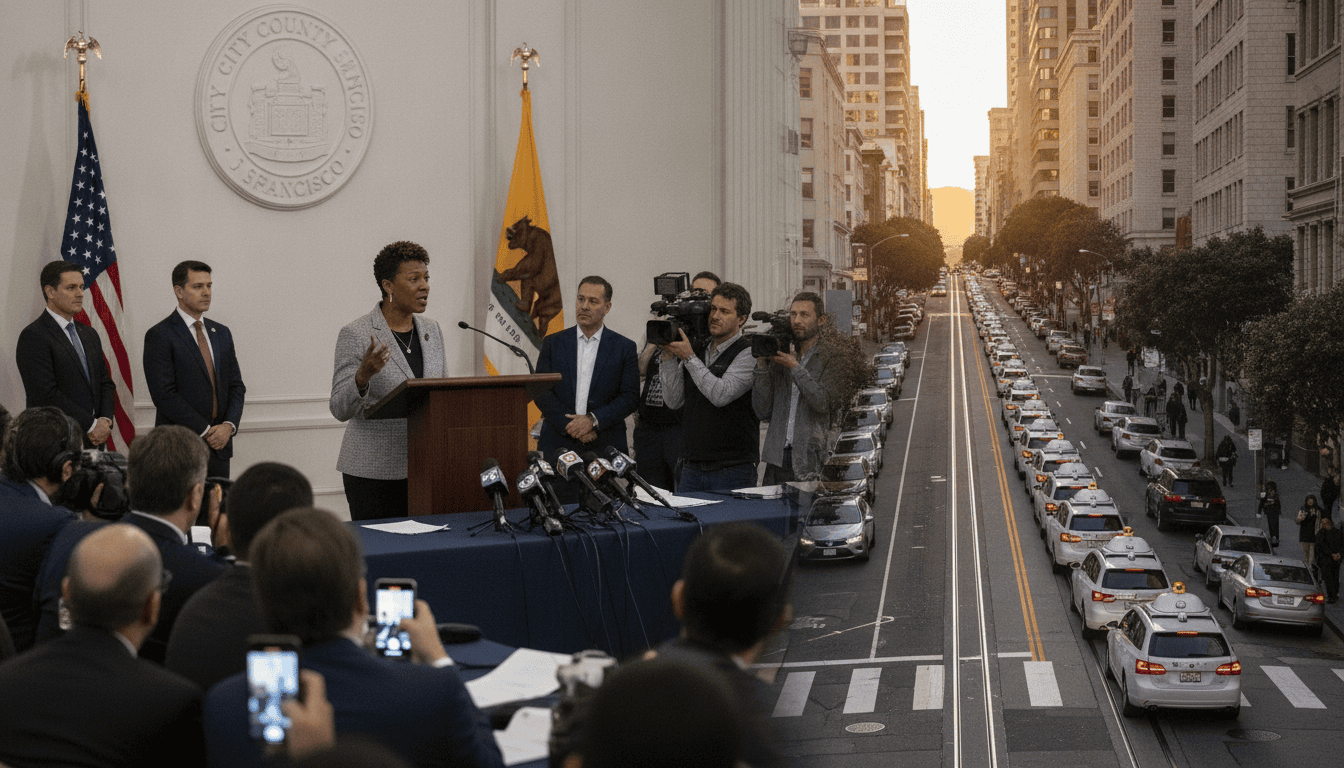
San Francisco mayor Daniel Lurie has asked California regulators to tighten autonomous vehicle rules after Waymo robotaxis stalled and blocked streets during the July 4, 2026, waterfront gridlock.
Mayor Lurie sent a formal letter to the California Department of Transportation in mid-July 2026, saying the city’s experience during the July 4 holiday exposed gaps in how autonomous vehicles perform in extraordinary events. The letter cites both the heavy July 4 waterfront traffic and a widespread power outage in December 2025 as examples that left dozens of driverless vehicles stranded and disrupted transit for thousands.
Mayor requests statewide standards for emergency behavior
In his correspondence, Lurie argued that California’s current framework does not sufficiently require robotaxi operators to handle major incidents, planned or unplanned. He urged the state to establish clear, enforceable standards that would govern vehicle behavior when unusual congestion, infrastructure failures, or large public events occur.
The mayor emphasized that the issue is less about the ordinary safety of autonomous systems and more about their reliability under stress. He warned that without binding requirements, private fleets operating at large scale can unintentionally become obstacles to emergency response and routine traffic flow.
July 4 operations left robotaxis immobile and streets blocked
On July 4, 2026, large crowds gathered for the Golden Gate Bridge fireworks, an event the city estimates drew roughly 100,000 spectators to the waterfront. Heavy congestion multiplied when a number of autonomous vehicles became immobile, reportedly running low on charge and stopping in active travel lanes.
The resulting logjam trapped municipal shuttles and private vehicles, producing hours-long delays that affected commuters, visitors, and emergency access. City officials said the stoppage compounded an already difficult traffic environment and turned a festival evening into a citywide mobility problem.
Four operational capabilities city wants proven by operators
Lurie outlined four core capabilities he said operators should be able to demonstrate before expanded deployment in dense urban settings. First, companies must show they can promptly remove or relocate stalled robotaxis from active lanes to avoid blocking traffic.
Second, fleets should be able to adapt in real time by adjusting routes, service areas, and pick-up or drop-off points during incidents. Third, operators must share real-time operational data with local agencies, including the location of immobile vehicles, service disruptions, and recovery actions. Fourth, companies should prove through testing that their systems can handle high passenger volumes and sudden surges associated with major events.
State permitting structure and local authority at play
California requires companies seeking to operate robotaxi services to navigate two parallel permit regimes administered by the Department of Motor Vehicles and the Public Utilities Commission. Those processes cover both driverless testing and commercial passenger service, and they include conditions intended to protect public safety and local mobility.
San Francisco’s request seeks to supplement these state permits with explicit operational expectations tied to incident response and interagency coordination. Officials noted that California’s rules are already stricter than those in some other states, but that the scale of current commercial fleets raises new governance needs.
Waymo’s regional footprint increases regulatory scrutiny
Waymo, the largest operator in the Bay Area, is estimated to run about 1,000 robotaxis locally and to operate in multiple U.S. cities. The company’s scale, municipal leaders say, magnifies the consequences when vehicles stop in congested corridors, turning single-vehicle failures into systemwide disruptions.
City officials pointed out that Waymo had implemented voluntary measures for July 4 — including restricted service near parts of the waterfront and an on-site company representative at the city emergency center — but maintained those steps proved insufficient once traffic pressures moved beyond the restricted zone. Mayor Lurie said voluntary actions are no longer enough given fleet sizes and the risk of cascading impacts.
The broader industry landscape includes several companies with driverless testing permits and others preparing commercial rollout, creating a patchwork of approaches across corporate operators. San Francisco officials want a consistent baseline so local agencies can anticipate behavior and coordinate responses during emergencies.
Regulators now face a choice about how prescriptive statewide standards should be and which agencies will enforce them. The California Department of Transportation, the DMV and the Public Utilities Commission will be asked to weigh technical feasibility, public safety, and the operational realities of large robotaxi fleets.
Waymo did not immediately respond to requests for comment on the mayor’s proposals. City leaders say they will continue consultations with state regulators and industry partners to translate the requested capabilities into enforceable rules while monitoring commercial deployments closely.
