
Anthropic CEO Meets White House as Pentagon Supply‑Chain Risk Label Deepens Administration Split
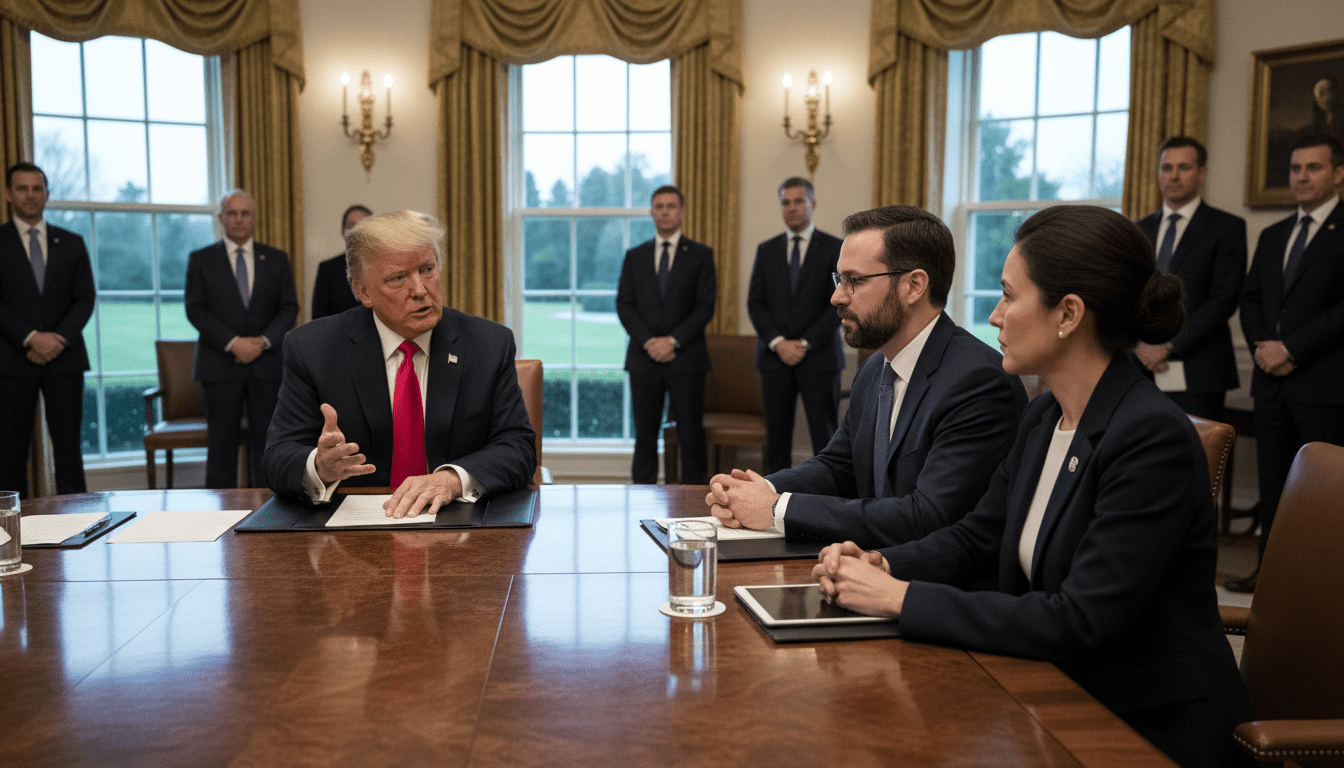
Anthropic CEO Dario Amodei met senior White House officials on Friday, marking a notable development as Anthropic navigates a Pentagon supply‑chain risk designation that has complicated its relationship with federal agencies. The meeting, described by the White House as introductory and constructive, focused on collaboration around AI safety, cybersecurity and maintaining U.S. leadership in the technology race. Discussions come amid ongoing legal and contracting disputes between Anthropic and the Department of Defense over the military use of large language models. The encounter signals continued engagement between parts of the administration and the AI company despite the Pentagon’s classification.
Amodei Meets Senior White House Officials
The White House said the meeting involved senior aides and administration officials who discussed collaboration and shared protocols for scaling AI technology responsibly. Anthropic confirmed its chief executive held a productive discussion about cybersecurity, AI safety and ways the company and government might work together on shared priorities.
White House participants included the chief of staff and senior economic and national security advisers, while the meeting also followed outreach by Treasury leadership aimed at private‑sector testing of new models. Officials framed the dialogue as exploratory, with both sides expressing interest in continued engagement and technical briefings.
Pentagon Labels Anthropic a Supply‑Chain Risk
Earlier this year the Department of Defense designated Anthropic a supply‑chain risk, a label typically reserved for foreign adversaries or vendors whose presence could threaten sensitive systems. That classification could severely limit the agency’s ability to procure Anthropic models and services for defense and intelligence applications.
Anthropic has publicly contested the authority’s rationale and consequences, arguing that the matter is tied to contracting negotiations and policy boundaries over permissible uses of its technology. The dispute has prompted heightened scrutiny across federal procurement channels and raised questions about how risk designations are applied to advanced AI vendors.
Split Across the Administration on AI Use
Despite the Pentagon’s stance, multiple other agencies have signaled interest in adopting or testing Anthropic’s technology. An administration source indicated that nearly every agency except the Department of Defense has expressed some willingness to evaluate or deploy Anthropic models for non‑military missions.
High‑level economic and financial officials have also encouraged private‑sector testing of newer Anthropic models, reflecting a pragmatic push to keep U.S. banks and critical infrastructure aligned with domestic AI innovation. That divergence underscores a broader policy tug‑of‑war inside the administration between national‑security caution and economic or technological competitiveness.
Negotiations Over Military Use and Safeguards
The current tensions trace back to negotiations over whether Anthropic’s models could be used in fully autonomous weapons systems or for broad domestic surveillance. Anthropic sought contractual safeguards and explicit restrictions on those applications, pressing for contractual language that would limit how its models could be repurposed.
Other AI firms have taken different paths, with some entering government programs under terms that permit broader defense collaboration. Those divergent approaches have shaped both market perceptions and policy debates, complicating a uniform federal strategy for AI procurement and safeguards.
Legal Challenge and Contracting Dispute
Anthropic has mounted a legal challenge to the Pentagon’s supply‑chain risk determination, framing the issue in part as a contracting dispute that should not obstruct technical briefings or non‑defense partnerships. Company leaders have emphasized their willingness to work with the government on cybersecurity and safety while contesting the scope and impact of the defense designation.
Legal filings and public statements from the company argue the designation lacks clear precedent for domestic vendors and could set a restrictive precedent for private sector engagement. The litigation is likely to remain a focal point for both procurement lawyers and policy officials as agencies refine guidance for AI vendor assessments.
Implications for Procurement, Cybersecurity and the AI Race
The split in executive branch views illustrates the challenge of balancing national security with technology leadership and economic competitiveness. Agencies that proceed with testing or pilots may gain operational benefits, while the Defense Department’s caution reflects risk management concerns tied to sensitive systems and supply‑chain integrity.
For private sector organizations and financial institutions, mixed signals from the federal government complicate decisions about which models to test and integrate. At the same time, the White House and Anthropic emphasized shared priorities such as cybersecurity and safety protocols, indicating potential pathways for reconciled collaboration if government and industry can agree on enforceable limits and oversight mechanisms.
The outcome of the legal challenge and subsequent policy choices will shape how federal agencies evaluate AI vendors moving forward, influencing contracting standards, disclosure requirements and acceptable use clauses. Continued technical briefings, interagency coordination and potential legislative or regulatory responses are likely to follow as both sides seek clarity.
The meeting in Washington does not resolve the underlying disputes but does represent a renewed channel of communication between Anthropic and senior non‑Defense officials. As the company pursues legal remedies and seeks to preserve commercial relationships, policymakers will face pressure to reconcile competing objectives around innovation, national security and public accountability.
