
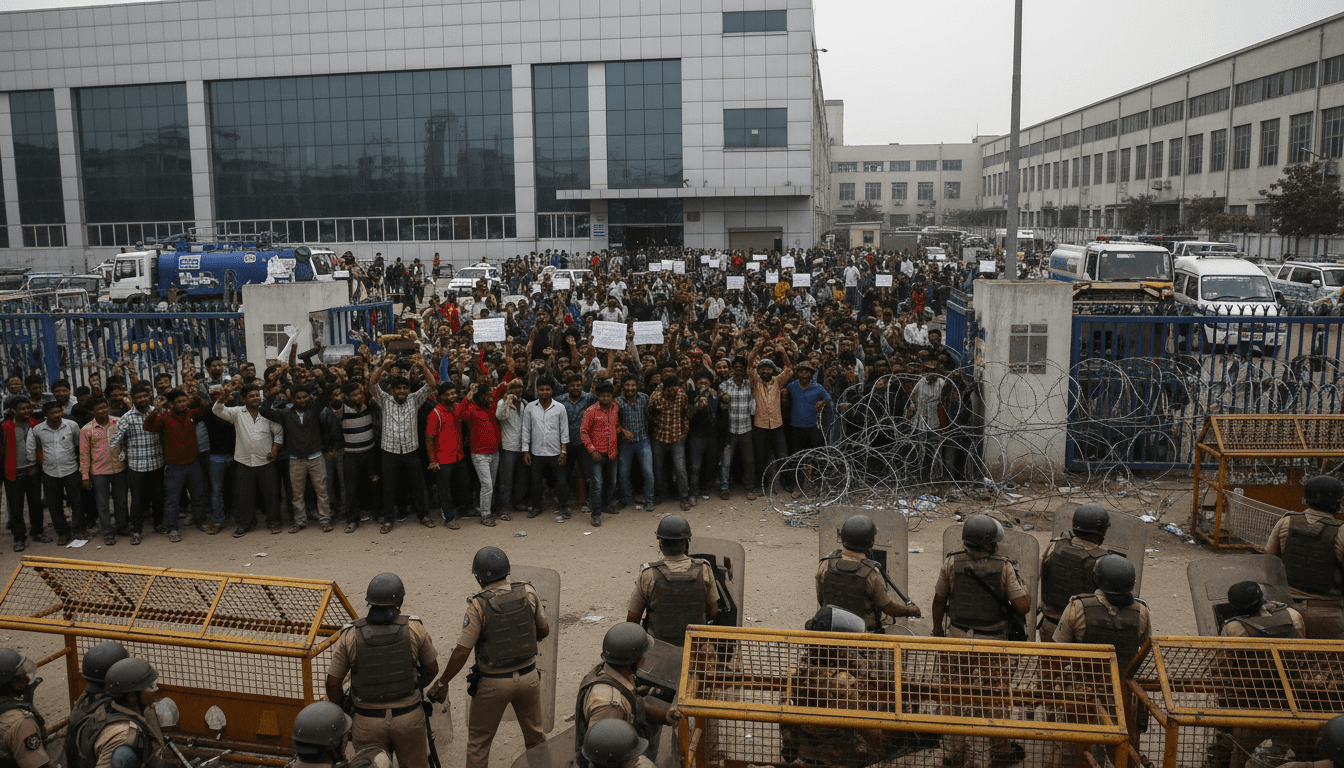
Noida factory workers’ protest turns violent for fourth day as police scale up enforcement
Noida factory workers’ protest turns violent for a fourth day as police step up enforcement amid cost-of-living pressures tied to the Middle East conflict.
The Noida factory workers’ protest, which entered a fourth consecutive day on April 13, 2026, escalated into renewed clashes with police as authorities increased enforcement measures across the industrial belt. Protesters and local officials said the unrest was driven by mounting cost-of-living pressures that demonstrators and some analysts link to wider geopolitical tensions in the Middle East. The city’s industrial districts, a key node in northern India’s manufacturing network, reported disruptions to production and transport as the situation intensified.
Violence flares on fourth day
A combination of mass pickets and sporadic confrontations pushed the demonstrations into a more violent phase on April 13, according to witnesses and local reports. Police sources said officers had to intervene to break up blockades that were obstructing major thoroughfares and factory access points.
Residents described scenes of stone-throwing and use of batons during attempts to disperse crowds, and several workplaces temporarily suspended operations for safety. Local hospitals and emergency services reported receiving people with minor injuries, while authorities said they were working to prevent a wider escalation.
Police escalate enforcement across the industrial belt
Authorities in Noida significantly increased their security presence, deploying additional police units and traffic controls around key factory complexes. Officials described the measures as necessary to restore order and keep supply routes open for critical goods.
Local law enforcement emphasized enforcement actions were aimed at preventing property damage and ensuring public safety rather than targeting specific worker groups. Officials also said they were coordinating with district administrators to monitor developments and manage crowd flows.
Workers cite rising living costs and economic pressure
Protesters told reporters their grievances centered on squeezed household budgets and demands for higher wages or adjustments to compensation to match rising expenses. Demonstrators connected local economic distress to broader global inflationary pressures that have pushed up fuel and food prices, increasing cost burdens on low- and middle-income households.
Organizers said the factory workers’ protest began as a call for urgent talks with management and authorities over pay, allowances, and job security. While union representation was reported at some sites, several smaller worker groups said they felt compelled to act independently as pressures mounted.
Supply chains and local commerce feel the impact
Manufacturing units in and around Noida, which supply parts to industries across northern India, experienced halted shifts and logistics bottlenecks as pickets impeded truck movements. Small businesses that depend on daily factory trade reported sharp drops in sales and growing uncertainty about the near-term economic outlook.
Analysts warned that prolonged disruption in the Noida industrial corridor could ripple into adjacent supply chains, affecting retailers and manufacturers who rely on just-in-time deliveries. Local transport unions and logistics firms were reported to be in discussions with authorities about contingency routing to minimize broader interruptions.
Government and labor representatives respond cautiously
State and municipal officials urged restraint and called for immediate dialogue while insisting that public order must be maintained. Authorities signaled readiness to open channels for negotiation but also reiterated that unlawful blockades and violence would be addressed under the law.
Labor rights groups and some industry representatives publicly encouraged mediated talks, saying negotiated settlements would better serve workers and employers alike. Observers noted that swift, credible engagement from both management and the state could defuse tensions and prevent further escalation.
Economic context tied to international tensions
Commentators and some economists linked the protests to worldwide cost-of-living pressures that have been exacerbated by recent geopolitical instability in the Middle East. They said higher energy and commodity prices have transmitted into domestic inflation, eroding real incomes for vulnerable households and contributing to industrial unrest.
While the local dispute centers on workplace conditions and pay, experts said the broader backdrop of global price shocks makes reaching a durable settlement more urgent. Policymakers face the dual task of addressing immediate demands and pursuing measures that mitigate the wider inflationary pressures affecting workers’ purchasing power.
Negotiations were reported to be under way between selected worker representatives, factory managers and municipal officials at the close of the fourth day, though no formal agreement had been announced. Observers said the coming 48 to 72 hours would be critical for whether talks produce commitments sufficient to end demonstrations and restore normal operations.
