
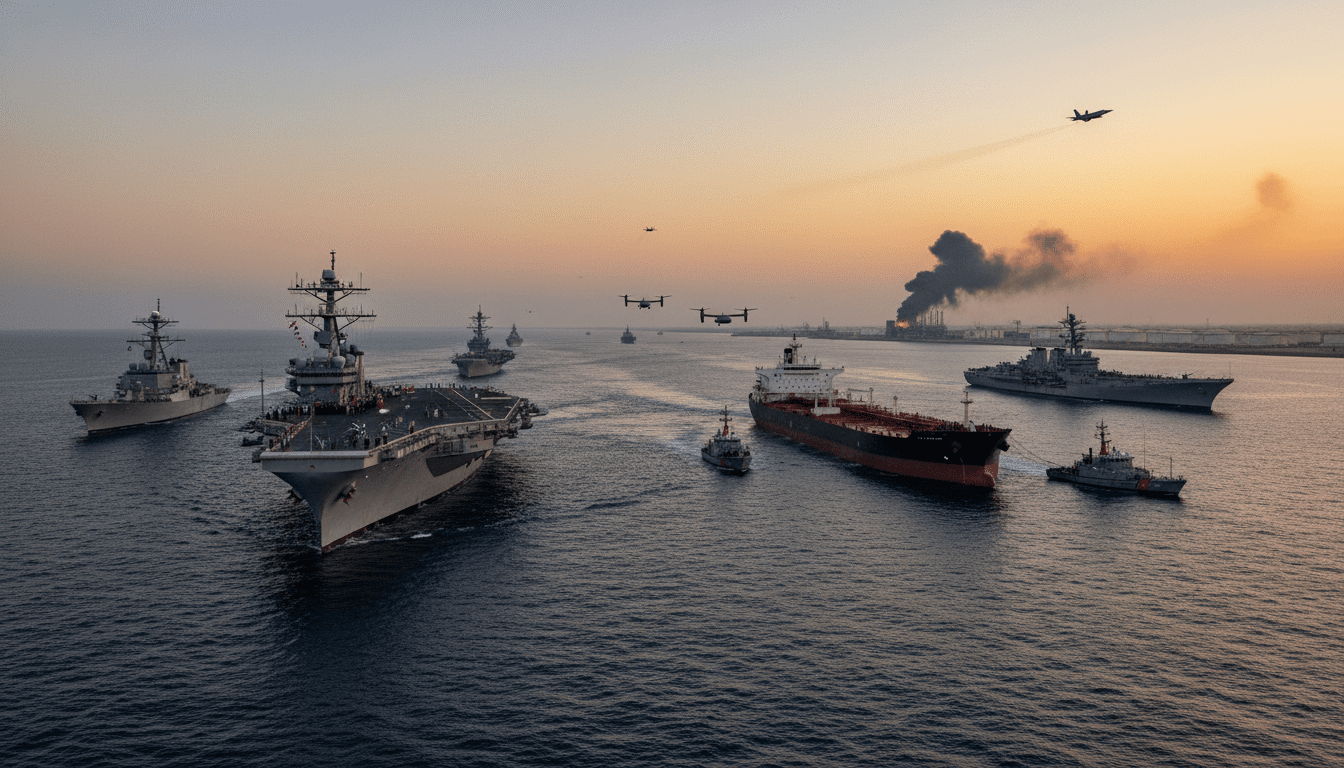
US announces blockade of the Strait of Hormuz, set to begin April 13, 2026
US blockade of the Strait of Hormuz to start April 13, 2026 at 16:00 CEST; move targets vessels serving Iranian ports and raises global energy and security risks.
The United States announced on April 13, 2026 that it will impose a blockade of the Strait of Hormuz aimed at stopping tankers bound for or departing from Iranian ports, a measure that Washington says will begin at 16:00 Central European Summer Time (CEST) the same day. The US blockade of the Strait of Hormuz, announced by President Donald Trump and clarified by US Central Command, singles out vessels linked to Iranian oil flows while allowing other commercial traffic to continue under certain conditions. The declaration has already altered shipping patterns, pushed oil prices higher and heightened the risk of military confrontation in the region.
How the blockade is defined
US Central Command later specified that the intervention targets ships loading from or discharging to Iranian ports rather than all commercial passage through the strait. Under the plan, vessels directly involved with Iranian oil shipments may be intercepted, observed, escorted or forced to turn back by US naval forces. Washington indicated flag state will be less relevant than the ship’s destination or origin; ships taking on oil at Oman terminals are expected to transit even after the measure takes effect.
Centcom urged mariners to monitor updates and maintain radio contact with US naval units operating in the Gulf, signaling that enforcement could include boarding and inspection actions. The precise rules of engagement were described as contingent and operationally determined, leaving uncertainty for carriers and insurers over how aggressively the United States will apply its new interdiction authority.
Immediate changes to shipping and behavior
Ship-tracking services reported a sharp reduction in traffic through the strait in the hours before the blockade took effect, with many vessels rerouting or anchoring outside the Gulf. At least three oil tankers loaded with crude or refined products departed the Persian Gulf before the deadline, while others reversed course after last-minute schedule changes. Analysts characterized the corridor as "unsafe" for certain voyages, prompting some operators to delay or abandon planned transits.
A mix of public and private tracking data showed only a small number of ships remaining in the narrow waterway on Monday, and several vessels registered under flags including Vietnam and the Marshall Islands completed crossings headed to ports in the United Arab Emirates and Iraq. Industry sources warned that continued unpredictability will increase costs for shippers through higher insurance premiums and longer voyages.
Volume of oil at stake
Market analysts estimate the earlier Iranian blockade had removed roughly 11 million barrels per day from global trade, with Iraq among the hardest hit — its exports reportedly fell from a potential four million barrels per day to about 900,000 barrels during prior disruptions. If the new US action focuses exclusively on Iran’s exports, it will still cut a major source of crude supply; Iran’s exports rose in recent months to roughly 1.7–1.8 million barrels per day, above 2025 averages.
Beyond daily flows, a large floating inventory compounds the market risk: industry trackers counted nearly 200 tankers anchored in the Persian Gulf carrying more than 170 million barrels of crude — oil effectively withheld from markets while carriers await clarity. That backlog could either relieve short-term physical shortages if released or deepen price pressure if many vessels remain blocked or delayed.
Impact on markets and key buyers
Oil benchmarks reacted quickly to the announcement, with Brent crude jumping into triple-digit territory and US grades following suit, reversing recent declines tied to a prior ceasefire. Retail fuel prices also edged higher in importing countries, including notable increases at German pumps. Traders said the prospect of constrained Persian Gulf flows drove immediate speculative buying and a reassessment of near-term supply balances.
Asia stands out as the most exposed region: China accounted for the lion’s share of Iranian sales in 2025, with estimates showing roughly 80 percent of Iran’s exports went there and about 12 percent of China’s overall crude imports originating in Iran. While some buyers have previously benefited from exemptions and alternate supply arrangements, the blockade threatens to remove a longstanding and relatively low-cost source of crude for several Asian refiners.
Diplomatic and military escalation risks
Tehran’s leadership denounced the blockade as a breach of the recent truce and branded the move an act of piracy, warning that it could provoke military responses. Iranian naval statements reportedly warned of confronting US vessels, and regional commanders signaled readiness to defend what they call sovereign trade routes. Washington issued stern warnings in turn, saying forces are prepared to act if confronted and emphasizing protection of commercial shipping.
Military analysts caution that enforcement actions such as inspections or boardings create frequent flashpoints, especially in a constricted maritime choke point where missiles, small craft and mines can rapidly escalate incidents. The chance of miscalculation remains high, and both sides face international pressure to avoid an open maritime confrontation while asserting strategic objectives.
Global markets and governments will be watching closely as the blockade takes effect on April 13, 2026, and as vessels, insurers and port authorities adjust to new rules. The immediate economic fallout will depend on how strictly the United States enforces interdictions, whether affected oil can be redirected through alternative channels, and how rapidly diplomatic channels can reduce tensions to reopen reliable flows through the Strait of Hormuz.
