
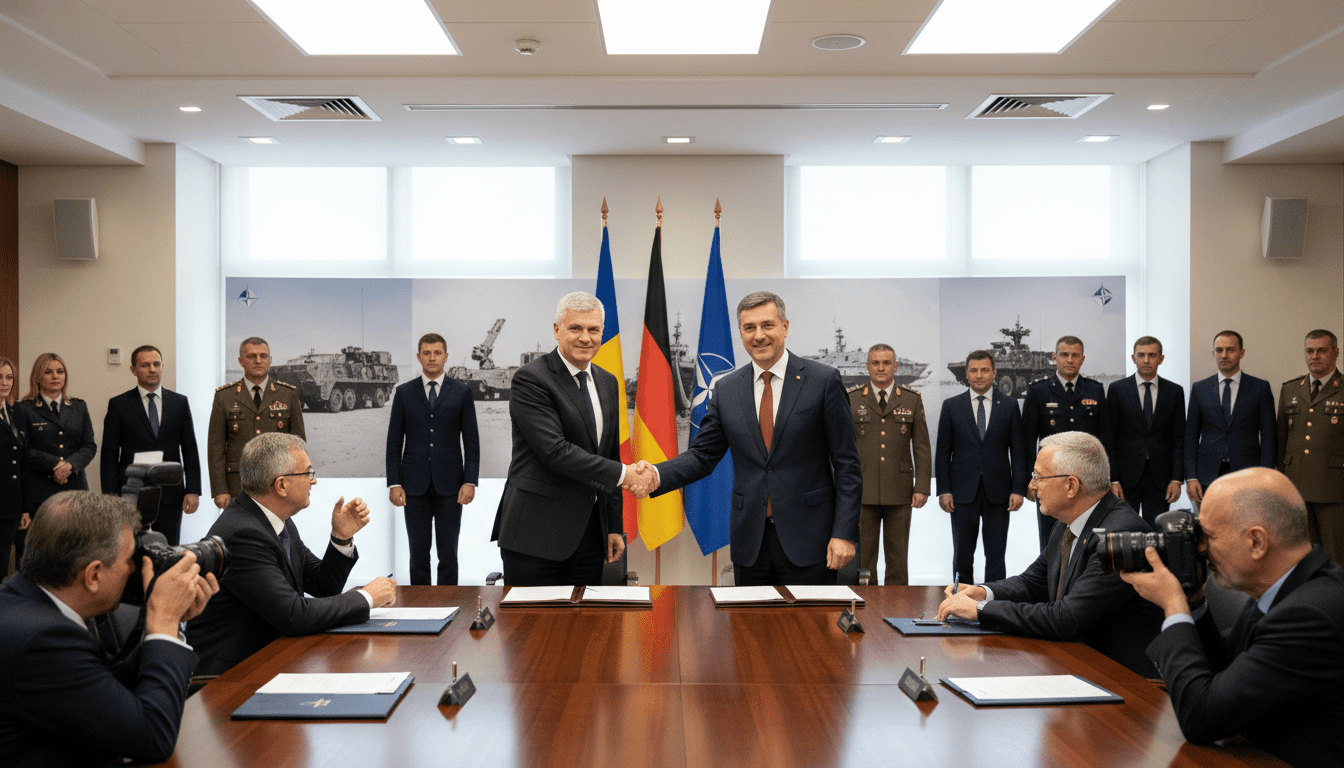
Rheinmetall Romania contract: €5.7bn deal for combat vehicles, air defence and four ships
Rheinmetall wins EUR 5.7bn Romania contract to supply nearly 300 combat vehicles, air-defence systems, ammunition and four ships; local investment planned.
The German defence group Rheinmetall said it has signed a EUR 5.7 billion contract with Romania to supply combat vehicles, air-defence systems, ammunition and four naval vessels under the EU Security Action For Europe (Safe) programme. The Rheinmetall Romania contract will include local production and a planned investment of several hundred million euros, the company said. Deliveries are scheduled to begin in 2028 and to be completed by 2030.
Scope of the €5.7 billion contract
Rheinmetall stated the order covers almost 300 combat vehicles, integrated air-defence systems, ammunition and munitions components, plus four ships for Romania’s navy. The company described the package as the largest international order in its recent corporate history and part of the EU Safe initiative. The contract consolidates a range of land, sea and air-defence capabilities in a single procurement programme.
Delivery timetable and production targets
Rheinmetall plans to start deliveries in 2028 and complete the programme by 2030, according to the company announcement. Production is intended to be ramped up to meet the multi-year schedule, with phased deliveries of vehicles, munitions and naval units. The timetable reflects both manufacturing lead times for complex systems and the logistical requirements of coordinating land and naval platforms.
Investments and technology transfer in Romania
The group said it will invest several hundred million euros in Romania and expand its existing facilities there to carry out a substantial portion of the manufacturing. Rheinmetall also committed to technology transfer measures aimed at localising production and ensuring long-term maintenance capabilities. The company indicated this industrial footprint will support domestic supply chains and increase Romania’s defence-industrial base.
Job creation and supplier network expansion
Rheinmetall expects the programme to create employment in the “four-digit” range and to involve more than 200 subcontractors in the supply chain. The company emphasised the role of local suppliers in producing components and services needed for vehicles, munitions and ships. Officials framed the investment as both a commercial enterprise and an economic stimulus for manufacturing hubs in Romania.
Related orders and corporate expansion since 2022
The Romania contract follows other major contracts for Rheinmetall, including a reported EUR 1.04 billion award from the German Bundeswehr in April for infantry equipment under the “Infanterist der Zukunft – Erweitertes System” programme. Rheinmetall has increased production capacity since the Russian invasion of Ukraine in 2022, expanding facilities and output across multiple product lines. The company said the new Romanian award builds on that expansion and on growing demand for modernised European defence systems.
Strategic implications for European security
By assigning a large package to a European defence company with in-country production, Romania and EU partners aim to bolster interoperability and supply security for critical systems. The use of the EU Safe programme also illustrates Brussels’ role in coordinating multinational procurement efforts following renewed focus on territorial defence. German government statements earlier this year signalled interest in deeper cooperation with Ukraine on defence, and firms like Rheinmetall have cited the regional security environment as a driver of increased production and partnership initiatives.
Rheinmetall’s confirmation of the Romania deal signals a new phase of defence industrial activity in Eastern Europe, combining large-scale procurement with local industrial development and job creation. The contract’s multi-domain scope and the planned investments in Romanian production capacity are likely to influence regional defence planning and supply chains as deliveries ramp up from 2028 through 2030.
