
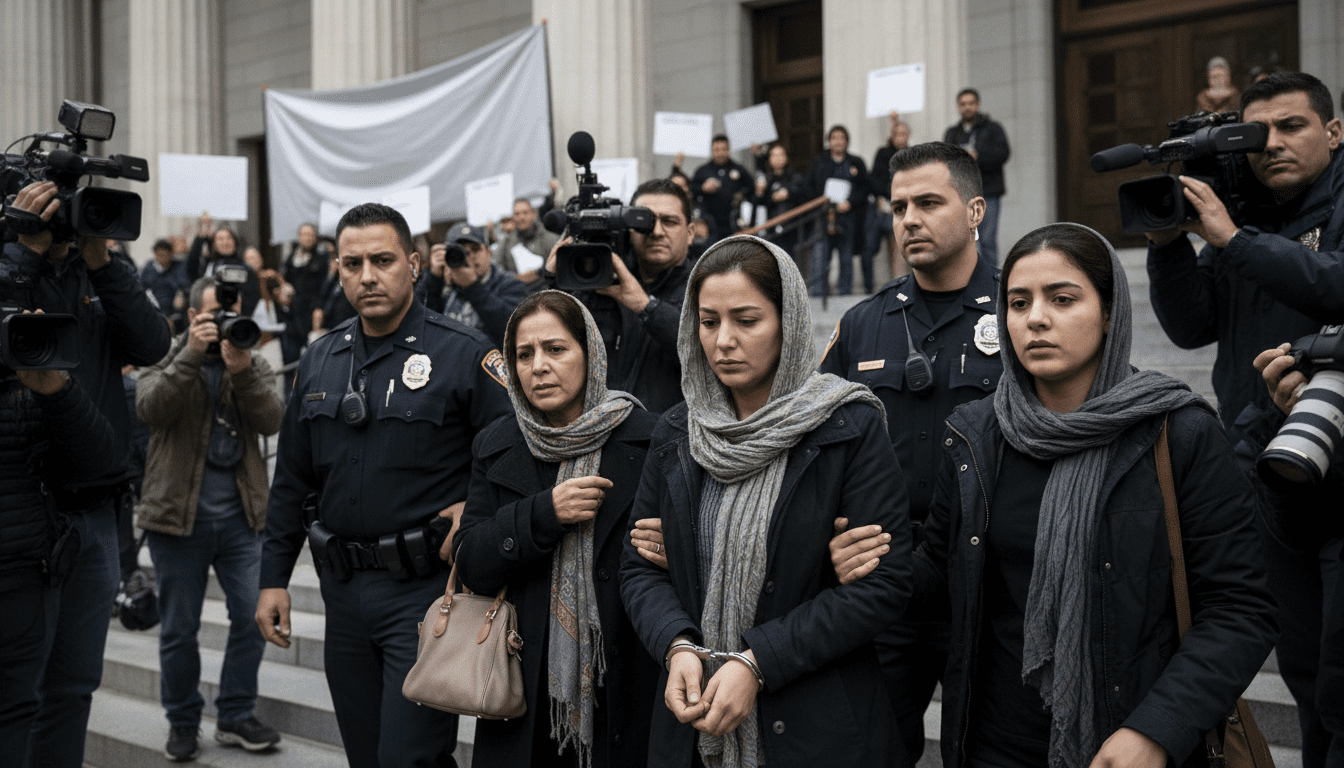
Records show two women arrested in US were not Qassem Soleimani relatives
Two women arrested in the US after being accused as Qassem Soleimani relatives are not related, Iranian records and documents show, Drop Site News reports.
A US-based report has found that two women detained in early April after their residency permits were rescinded are not related to the late Quds Force commander Qassem Soleimani. The alleged familial link, widely shared on social media and cited in public complaints, prompted immigration action that led to the arrests. Documents reviewed by Drop Site News — including Iranian birth records and identification papers — contradict the claims that the women are members of Soleimani’s family.
Arrests and immigration action
Hamideh Soleimani Afshar and her daughter Sarina were taken into custody in the United States in early April after authorities moved to revoke their residency status. According to the account in Drop Site News, the detentions followed the rescission of residency permits rather than a criminal indictment made public at the time. The report indicates the administrative immigration action was triggered by allegations shared online.
The case drew attention because the two women were identified in social posts as possible relatives of the assassinated Iranian military leader. That identification appears to have been central to the decision to revoke their permits and detain them pending further immigration procedures.
Social media complaint and public identification
The women’s alleged connection to Qassem Soleimani was highlighted on social media by far-right activist Laura Loomer, who posted about the pair and said she had reported them to the Department of Homeland Security. Loomer’s posts claimed the women had posted content sympathetic to the Iranian regime and religious leadership, and she urged authorities to investigate. Those public accusations circulated widely and were cited by others as the basis for scrutiny.
The social media exposure intensified public interest and appears to have placed pressure on immigration authorities to act quickly. The sequence of events underscores how online allegations can lead to rapid administrative responses, particularly when allegations involve high-profile international figures.
Documentary evidence reviewed by Drop Site News
Drop Site News says it examined a range of Iranian documents including birth records, identification papers and a family will that together show no familial connection between the two women and Qassem Soleimani. The outlet reports that the documents bear names, dates and relationships that do not align with the claim that Hamideh Soleimani Afshar and Sarina are related, even distantly, to the late Quds Force commander. The material described in the report is presented as primary-source evidence challenging the social media narrative.
The publication’s account emphasizes that official civil records and personal papers — rather than social posts or hearsay — provide the most reliable basis for establishing family links. Those documents, according to the report, indicate different family lines than the one associated with Soleimani.
Authorities and public statements
The Drop Site News report does not include a public statement from immigration authorities directly confirming the family relationship that was alleged on social media. The narrative in the report centers on records and documents rather than on a formal, public justification from federal officials. As of the reporting, the evidence provided in the outlet’s review was the principal source questioning the accuracy of the initial public claims.
Because the situation involves immigration enforcement and personal records, official comment and procedural details may be limited or withheld during ongoing proceedings. The available reporting stresses the distinction between public allegations and document-based verification.
Implications for public identification and enforcement
The episode highlights broader concerns about the intersection of social media-driven identification and immigration enforcement actions. When allegations about identity and political sympathy spread quickly online, they can prompt expedited administrative measures that rely on surface-level claims rather than corroborated records. Experts and rights advocates often warn that such dynamics increase the risk of mistaken identity and reduce opportunities for due process.
The report also raises questions about the standards used to evaluate tips and complaints that arrive via social platforms, especially when they concern individuals linked, accurately or not, to internationally prominent figures. The case underscores the need for careful documentary verification before taking irreversible administrative steps.
The Drop Site News account presents a challenge to the public narrative that led to the arrests, but it does not, in itself, resolve the immigration or legal status of the two women. Further clarification from authorities and any legal filings would be needed to establish the official basis for the detentions and the consequences for the women involved.
The matter remains a notable example of how rapidly circulating online assertions can intersect with government enforcement mechanisms, and of the importance of primary documents in establishing facts about identity and family relationships.
