
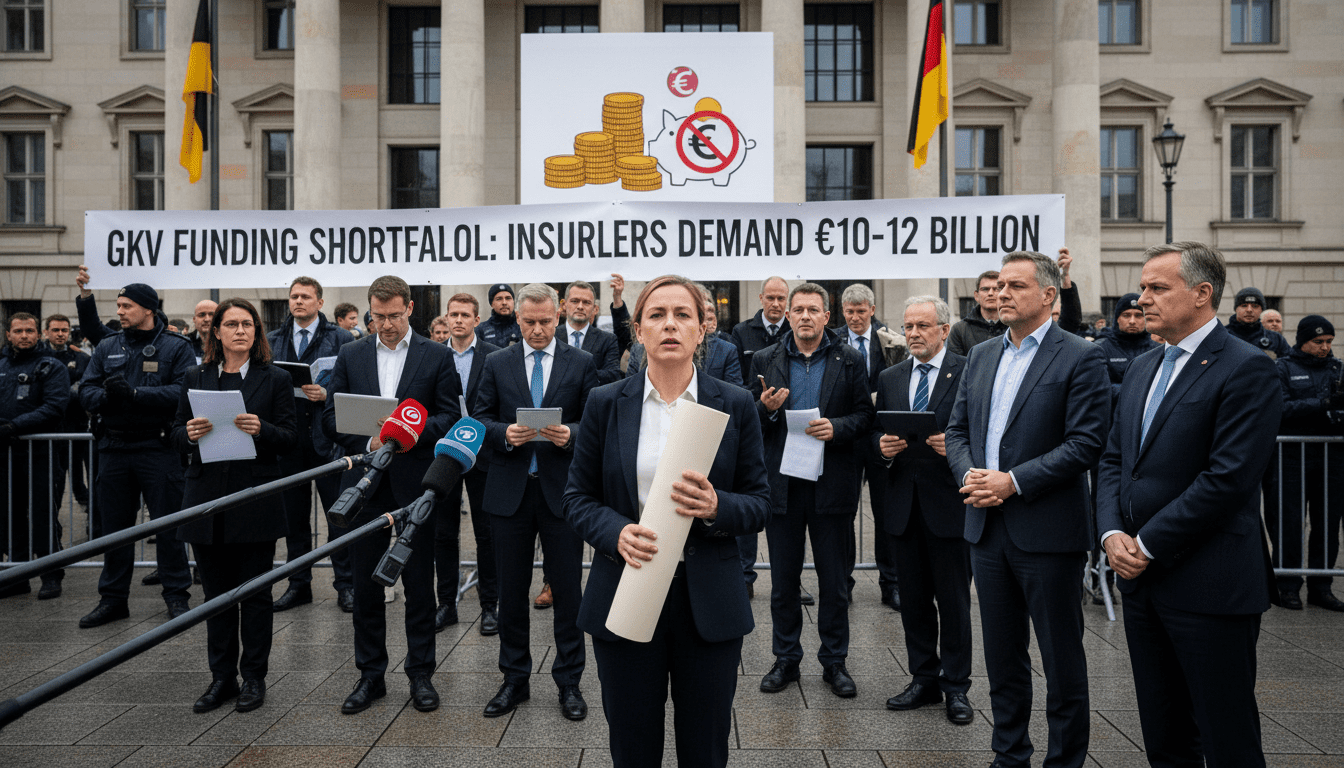
GKV funding shortfall prompts calls for €12bn federal top‑up for Bürgergeld recipients
German GKV funding faces a deep shortfall as experts urge a €12bn federal top‑up for Bürgergeld recipients; ministers and courts weigh legal and fiscal fallout.
The German statutory health insurance system’s GKV funding gap has become a central fiscal and legal flashpoint as experts and insurers press the federal government to increase its annual payments for Bürgergeld recipients. A commission convened by Health Minister Nina Warken recommended a roughly €12 billion boost to the federal contribution, arguing current lump‑sum payments fall far short of actual costs. The dispute now involves ministers balancing a fragile budget, lawsuits from the health funds and warnings from former top jurists about constitutional exposure.
Shortfall and scale of the problem
The GKV currently receives substantial federal transfers for non‑contributory beneficiaries, but those payments do not cover the actual medical costs associated with Bürgergeld and basic security recipients. Insurers say the monthly federal contribution per person is roughly €109 while average expenditure for these members runs around €312, leaving a large and recurring deficit. Overall social insurance pressures are significant: transfers to the pension system alone exceed €120 billion annually, and the GKV faces a projected multi‑billion euro gap heading into 2027.
Commission recommendation and ministerial response
The financial commission appointed by Health Minister Warken recommended raising the federal GKV lump sums by about €12 billion per year to shore up coverage for Bürgergeld recipients. Warken incorporated many of the commission’s proposals into her draft for contribution stabilisation but stopped short of insisting on the larger federal top‑up, citing tight public finances. The recommendation has nevertheless intensified political debate, with regional leaders and parts of the coalition pressing for immediate budgetary relief for the health funds.
Finance Ministry and budget constraints
Finance Minister Lars Klingbeil has signalled limited willingness to increase GKV funding unless offsetting savings or new revenue sources are identified in the federal budget. Officials expect discussions over the 2027 framework to be difficult amid a projected budget shortfall exceeding €20 billion, and proposals under consideration include modest additional transfers or extensions of existing loans to the health funds. The finance ministry’s caution underscores a broader trade‑off: filling the GKV gap today would relieve insurers and contributors but require difficult decisions elsewhere in the federal balance sheet.
Legal challenge and path to the Constitutional Court
The GKV central association has launched litigation challenging the adequacy of the federal allocations, targeting foundational decisions by the relevant federal office for 2026 disbursements. The association seeks a judicial determination that the statutory financing structure systematically underfunds the healthcare of Bürgergeld recipients and may ultimately ask the Federal Constitutional Court to rule on the constitutionality of that shortfall. A recent legal opinion by a former president of the Federal Social Court supports the insurer position, arguing that the state should fully shoulder costs tied to social assistance beneficiaries rather than passing them to the insured community.
Constitutional and normative arguments from jurists
Legal experts involved in the debate contend that using contribution revenue to finance what are effectively state welfare obligations may violate constitutional norms, specifically the principle of equal burden‑sharing under the Basic Law. The opinion advanced by the retired court president stresses that citizens who receive social minimums have a constitutionally guaranteed right to health‑related benefits, and that the state’s current practice imposes a dual burden on workers and employers. Those experts warn that a Constitutional Court referral could force the federal government to rectify longstanding underpayments, potentially triggering significant retroactive liabilities.
Insurers and interest groups press for remedy
The GKV‑Spitzenverband and representatives of the statutory funds say the legal opinion strengthens their case and call for urgent political action to stop what they describe as a covert subsidy of the federal budget by contribution payers. Insurers argue that continued underfunding is eroding net incomes for the roughly 75 million insured and raising employer labour costs, and they are seeking both immediate top‑ups and restitution for pandemic‑era burdens that were not offset. The insurers say they are pursuing litigation as a last resort to secure equitable financing and to prevent further shifting of social‑welfare costs onto contribution payers.
The unfolding dispute over GKV funding ties fiscal policy to constitutional law and could reshape how Germany finances care for social assistance recipients. Ministers must weigh short‑term budget realities against potential long‑term legal rulings, while insurers and jurists press for a resolution that separates state welfare responsibilities from contribution‑financed insurance.
