
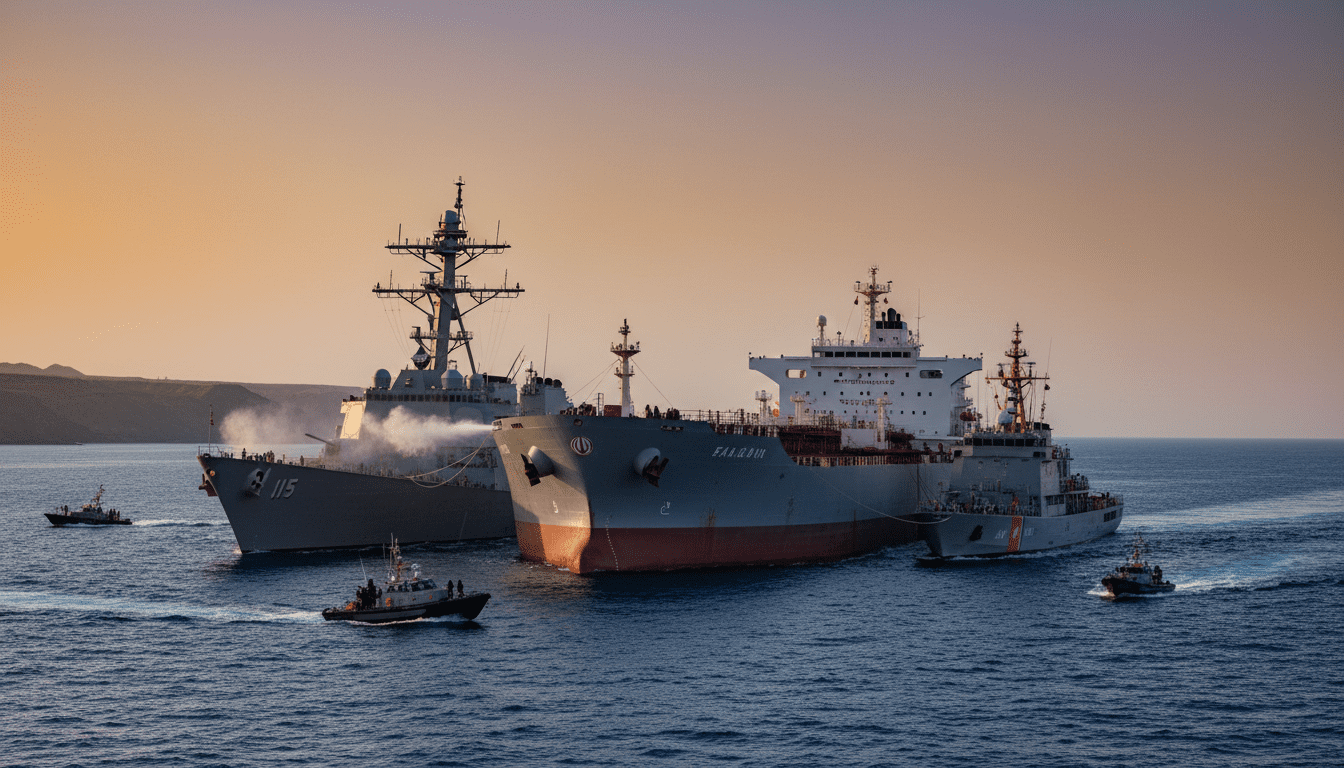
US-Iran Clash in the Strait of Hormuz Echoes 1980s Tanker War
US seizure of Iranian ships near the Strait of Hormuz revives memories of the 1980s Tanker War, disrupting shipping and pushing oil prices higher globally.
US Naval Action Near the Strait of Hormuz
On April 20, US forces fired on and seized an Iranian-flagged container ship close to the Strait of Hormuz as part of a broader naval blockade that began one week earlier. The action followed Washington’s announcement of a maritime interdiction effort targeting vessels alleged to be supporting Iran’s oil exports despite sanctions. US Central Command said naval units had directed dozens of Iran-linked vessels to turn back since the blockade began.
The seizure and related detentions mark a significant escalation in maritime enforcement and have prompted Tehran to tighten control over passage through the strait. Iranian authorities have responded by restricting transit and asserting tighter control over who may transit the waterway, heightening the risk of further confrontations at the vital shipping chokepoint.
1980s Tanker War: When Gulf Shipping Became a Battleground
The 1980s Tanker War unfolded within the larger Iran‑Iraq War after Saddam Hussein’s 1980 invasion of Iran. By 1984, attacks on oil tankers by both sides turned the Gulf into a theater of maritime conflict aimed at crippling the opponent’s oil revenue. Iran and Iraq, and their proxies and allies, struck one another’s commercial shipping and oil infrastructure, producing sustained insecurity in the Strait of Hormuz and adjacent waters.
Washington entered the fray in 1987 with Operation Earnest Will, reflagging Kuwaiti tankers and escorting them to protect global energy flows. The US later mounted direct strikes against Iranian naval assets in Operation Praying Mantis in 1988 following mine damage to US vessels, a campaign that underscored the seriousness of maritime escalation in the Gulf.
Human and Economic Toll in the 1980s
Attacks on merchant shipping during the 1980s caused significant human and economic losses. Combined Iranian and Iraqi strikes left more than a hundred merchant sailors dead, with dozens missing and many more wounded, and pushed insurance costs and shipping risk premiums sharply higher. The disruption raised global concern about uninterrupted oil supplies even as trade found ways to continue through heightened protection and convoying.
The military campaigns of that period involved mine countermeasures, naval escorts and targeted strikes by multiple states, including NATO partners. Those measures eventually reduced the immediate threat to commercial shipping, but they required sustained military commitment and international cooperation to secure the critical transit routes.
What Sparked the Current Standoff
The present confrontation traces back to March 4, when Iran’s Islamic Revolutionary Guard Corps declared effective control over the strait and began imposing clearance requirements on vessels. That declaration came amid an intensifying conflict that included US and Israeli strikes on Iranian territory, prompting Tehran to assert authority over maritime passage and at times to demand toll-like payments from vessels it deemed friendly.
Shipping transits through the Strait of Hormuz fell precipitously, with traffic reportedly collapsing by roughly 95 percent at the height of the restrictions. The sudden squeeze on a channel that carries about a fifth of the world’s seaborne oil supplies sent prices sharply higher, with Brent crude topping triple‑digit levels during the most intensive phase of the crisis.
Parallels Between Then and Now
There are clear strategic similarities between the two episodes: both show how relatively small-scale maritime actions — mining, ship seizures, attacks on tankers — can produce outsized economic effects because of Hormuz’s status as a chokepoint. Disruptions in the strait reverberate through global energy markets, insurance markets and the political calculations of consumer and producer states alike.
Mines and the threat of mines have been a recurrent concern in both periods, prompting public statements from US officials about the need for mine clearance operations. The logic of using maritime pressure as a lever on an adversary’s economy is a throughline from the 1980s into the present crisis.
Key Differences from the 1980s Tanker War
Despite the parallels, the current standoff differs in important ways. In the 1980s, the Tanker War was embedded in a broader interstate land war between Iran and Iraq, with Western states more willing to commit naval resources to escort and mine‑clearing operations. Today, many US allies have declined to join direct minesweeping or escort missions, citing the risk of being drawn into a wider war.
Iran’s military posture has also evolved: analysts say Tehran now combines missile, drone, cyber and energy-coercion tools with asymmetric naval tactics, and it appears structurally more capable of withstanding sanctions and damage than it was under the earlier embargoes. Political leaders and military planners face a different operational environment, where rapid escalation could have broader regional and global consequences.
The shifting alliance calculus and the greater technological reach of modern weapons make the current confrontation more complex to manage than the Gulf conflicts of four decades ago.
The US-Iran naval exchanges in the northern Arabian Sea and through the Strait of Hormuz have resurrected difficult lessons from the Tanker War era, highlighting how maritime choke points can amplify geopolitical disputes and quickly translate into market shocks and human risk. As both sides press their maritime claims, regional states and global markets will be watching whether naval blockades, interdictions and seizures become a sustained feature of this confrontation or whether diplomacy and restraint will avert a wider maritime war.
