
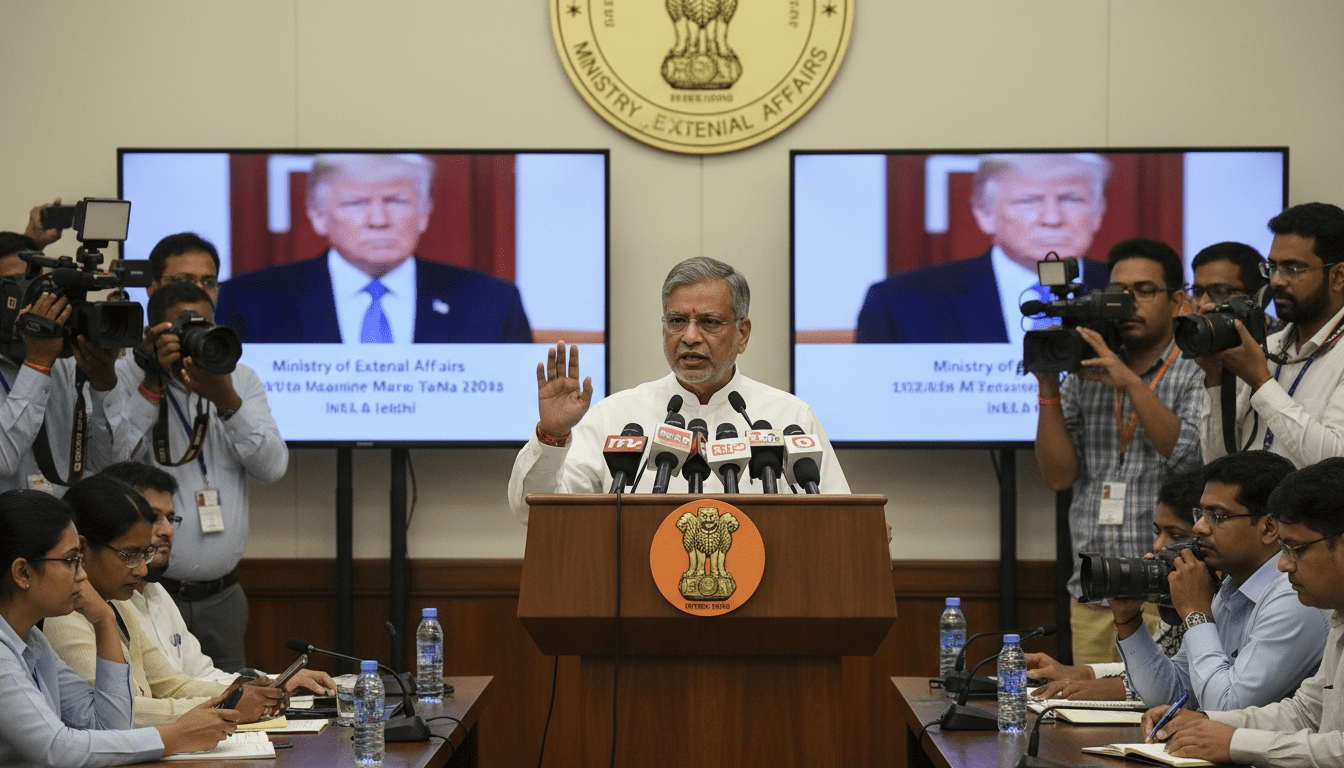
Trump reposts Michael Savage ‘hellhole’ remark about India, New Delhi condemns comment
India calls the reposting of the Trump “hellhole” remark by conservative radio host Michael Savage uninformed and inappropriate, straining diplomatic tone.
President Donald Trump on Thursday reshared a comment from radio host Michael Savage that described India as a “hellhole,” a post that drew immediate rebukes from New Delhi and criticism from opposition leaders. The repost, made on Trump’s Truth Social account without added comment, reopened tensions over rhetoric aimed at immigrants and foreign nations. India’s foreign ministry described the language as “uninformed, inappropriate and in poor taste,” underscoring concern about the impact on bilateral relations.
Trump’s repost and the original comment
The original comment from Michael Savage criticized U.S. birthright citizenship and said a newborn becomes “an instant citizen” and that families arrive “from China or India or some other hellhole on the planet.”
Trump did not craft the language himself but amplified Savage’s words by sharing them on his social platform, which officials and political observers say lends weight to inflammatory remarks.
Indian government response and diplomatic tone
Foreign Ministry spokesperson Randhir Jaiswal responded late on Thursday, calling the remark “obviously uninformed, inappropriate and in poor taste.”
Jaiswal added that such statements “certainly do not reflect the reality of the India‑US relationship, which has long been based on mutual respect and shared interests,” signaling New Delhi’s objection while framing the response in diplomatic terms.
U.S. response and embassy statement
The U.S. Embassy in New Delhi sought to temper the fallout by noting the president’s prior public praise for India, saying “the president has said ‘India is a great country with a very good friend of mine at the top’.”
That comment by the embassy aimed to reaffirm official ties even as individual remarks circulated that could undermine bilateral goodwill, according to analysts familiar with diplomatic messaging.
Political reaction inside India
India’s main opposition Congress party described the reposted remark as “extremely insulting and anti‑India,” saying it “hurts every Indian” and urging Prime Minister Narendra Modi to raise the issue directly with the U.S. president.
The party called for a formal objection to be registered, reflecting domestic political pressure on the government to respond decisively when a major international figure is implicated in derogatory language.
Context: diaspora, trade and recent tensions
Nearly 5.5 million people of Indian origin live in the United States, making the Indian diaspora one of the largest Asian‑origin communities in the country, and many Indian Americans hold prominent roles in business, medicine and academia.
Relations between Washington and New Delhi have been broadly cooperative but have faced strains, including last year’s U.S. tariffs on some Indian goods that were later rolled back, and ongoing negotiations on a trade agreement intended to prevent new tariff escalations and expand bilateral commerce.
Rhetoric and precedent in U.S. discourse
Observers note that Trump has a record of using derogatory language toward foreign nations and immigrant groups, which in past years has provoked international backlash and domestic debate on presidential rhetoric.
Similar controversy followed previous comments by Trump that made global headlines, and analysts say repeated incidents can complicate diplomacy by forcing official responses that balance national interest with domestic political considerations.
India’s foreign ministry and opposition leaders framed their reactions in terms of respect and bilateral interest, avoiding escalation but making clear the statement was unacceptable. Those responses aim to preserve working ties while registering formal disapproval.
The reposted remark adds a fresh episode to a pattern of contentious public statements and highlights how commentary from media figures can have diplomatic consequences when amplified by political leaders.
