
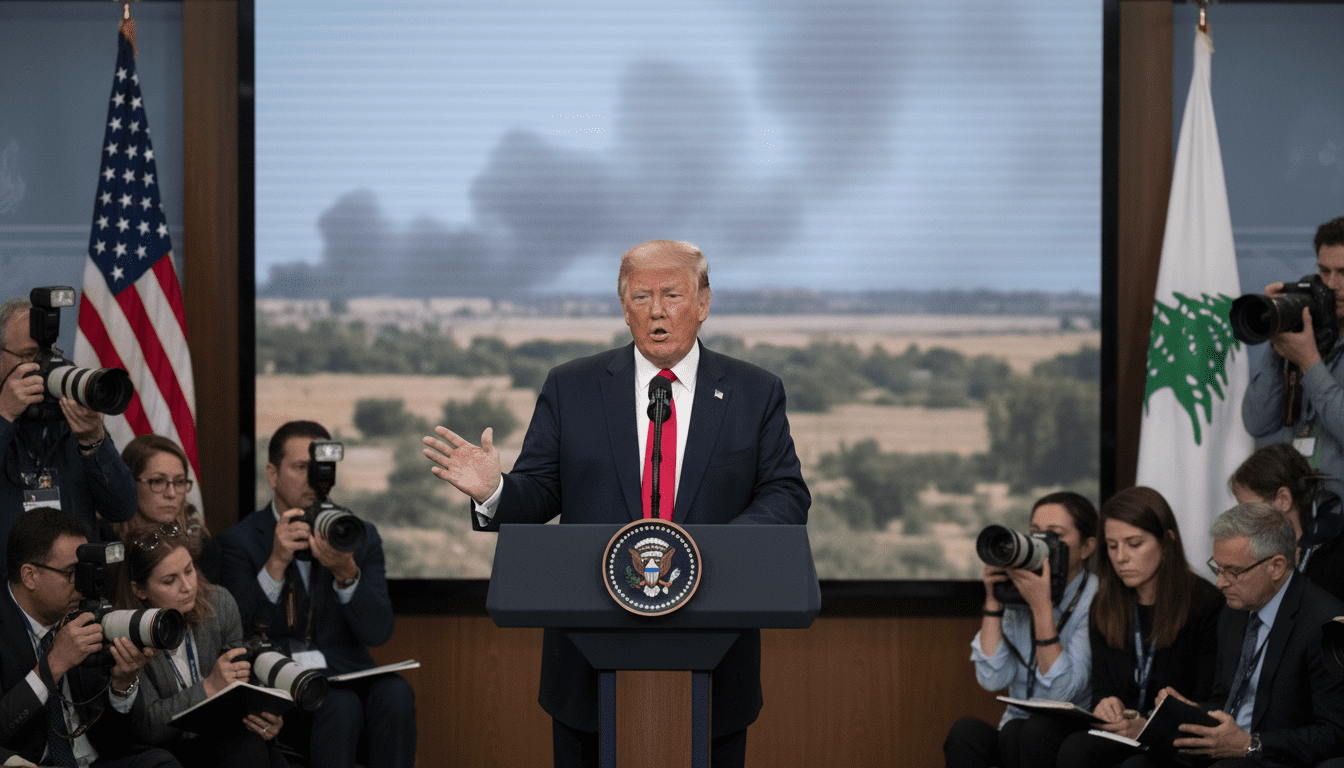
Trump announces three-week Lebanon ceasefire extension amid continued strikes
US president extends Lebanon ceasefire to May 15, 2026, while Israeli strikes persist and diplomacy intensifies in Washington.
President Donald Trump announced a three-week Lebanon ceasefire extension on April 24, 2026, extending the fragile truce and pushing the Lebanon ceasefire extension through May 15, 2026. The announcement came after a White House meeting with Israel’s ambassador to Washington, Yechiel Leiter, and Lebanon’s ambassador, Nada Moawad. The move seeks to prolong a previously agreed 10-day pause in hostilities but comes against a backdrop of ongoing exchanges of fire across the Israel-Lebanon border.
Ceasefire extension announced at the White House
Trump revealed the Lebanon ceasefire extension in a post on his social platform following talks at the White House with the two envoys. He told reporters he expected Israeli and Lebanese leaders to meet him in the coming weeks and expressed optimism about reaching a permanent deal later this year.
The extension formally adds 21 days to the existing truce, which, if uninterrupted, will expire on May 15, 2026. U.S. officials are leading mediation efforts aimed at converting the temporary pause into a more durable arrangement between Beirut and Jerusalem.
Strikes and exchanges continue after the announcement
Despite the extension, Israeli air strikes, artillery fire and ground raids were reported in southern Lebanon on the morning of April 24, 2026. Lebanese media cited shelling and strikes near Majdal Zoun, Touline, Kherbet Selem and the al‑Rihan highlands even as diplomats were meeting in Washington.
The violence this week included lethal strikes that killed seven people, among them a journalist, underscoring the gap between declared pauses and operational activity on the ground. Both sides traded fire during the talks, signaling that the truce remains fragile and intermittently violated.
Diplomatic push in Washington and proposed leader meetings
U.S. mediation intensified around the White House meeting, where envoys for both countries briefed the president on the situation and next steps. Trump said he anticipated meeting with Israeli and Lebanese leaders soon, framing the talks as a pathway toward a possible permanent agreement.
Washington’s role is focused on bridging key differences, including security arrangements on the border and withdrawal of forces, and on securing commitments to prevent renewed escalations. The administration is also attempting to coordinate humanitarian access and de‑escalation mechanisms should violations recur.
Lebanese government demands a full withdrawal
Lebanese Prime Minister Nawaf Salam has signalled that any formal deal must include a full Israeli withdrawal from southern Lebanon, including areas Israel considers a buffer zone. He told U.S. and international interlocutors that civilians must be allowed to return to their villages and that foreign forces should not remain on Lebanese soil.
Beirut’s negotiating position centres on sovereignty and the restoration of normal civilian life in border communities displaced or restricted by the conflict. Lebanese officials have insisted that security guarantees be accompanied by concrete steps on the ground, not only diplomatic assurances.
Hezbollah rejects the talks and combatants remain active
Hezbollah, which has been engaged in hostilities with Israeli forces in southern Lebanon, rejected direct negotiations between Lebanon and Israel and warned against any agreement reached without its assent. The group launched rockets and deployed drones earlier in the week in response to what it described as repeated Israeli violations.
The organization’s continued military posture complicates efforts to achieve a stable ceasefire, since it operates as both a political actor within Lebanon and an armed force along the border. Israeli officials have said they will respond to cross‑border attacks, which risks further undermining any temporary pause.
Territorial advances, buffer zone and humanitarian toll
Since early March 2026, Israeli forces have expanded a ground offensive several kilometres into southern Lebanon, declaring a roughly 10 kilometre buffer zone where military units remain deployed and civilians are barred from returning. The buffer zone and ongoing operations have intensified displacements and disrupted access to basic services for residents in affected villages.
Humanitarian agencies warn that repeated strikes, demolitions and restrictions on movement are exacerbating civilian suffering, including loss of homes and threats to local journalists covering the conflict. Aid access and reconstruction will be central issues should the temporary ceasefire be sustained or evolve into a longer‑term agreement.
President Trump said he sees a “very good chance” of reaching peace, calling an eventual deal “an easy one,” but major practical obstacles remain, from Israel’s security demands to Lebanon’s insistence on full withdrawal and Hezbollah’s refusal to endorse talks. The extension to May 15, 2026, provides breathing space for diplomacy but does not yet halt the cycle of strikes and reprisals.
Efforts in Washington will continue in the coming days as mediators press both capitals and regional actors to codify de‑escalation measures and to agree on mechanisms for monitoring and enforcing the truce. The success of the Lebanon ceasefire extension will depend on whether parties translate diplomatic promises into verifiable steps on the ground that prevent further loss of life and open routes for humanitarian relief.
