
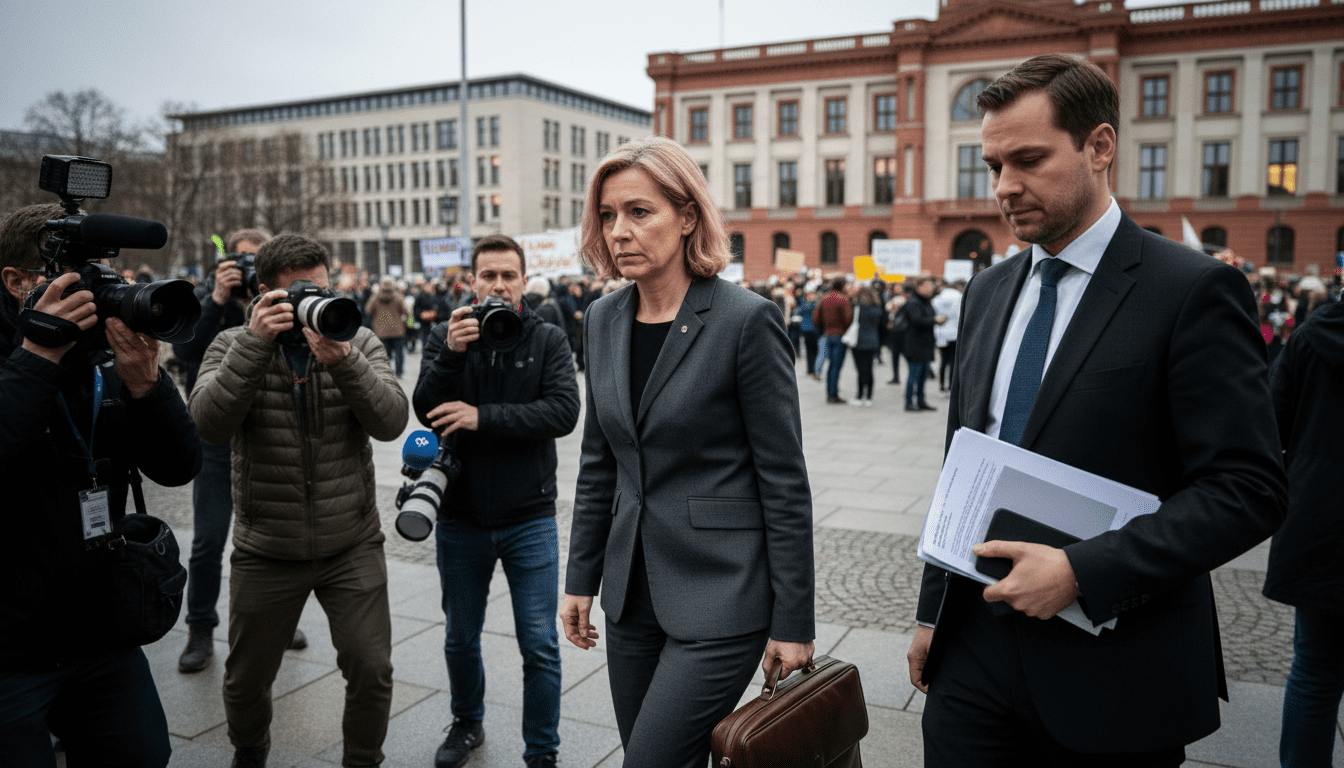
Sarah Wedl-Wilson resigns as Berlin culture senator after audit finds irregularities in antisemitism funding
Sarah Wedl-Wilson resigns as Berlin culture senator after a state audit found procedural and legal breaches in the allocation of antisemitism project funding, prompting a political reckoning.
Berlin’s culture senator Sarah Wedl-Wilson announced her resignation after a state audit concluded there were serious legal and procedural failures in the administration’s handling of grants for antisemitism projects. Wedl-Wilson said she had asked Mayor Kai Wegner to accept her dismissal to protect the integrity of work against a rising tide of antisemitism in the city. Mayor Wegner accepted the request and publicly thanked Wedl-Wilson for taking political and personal responsibility.
Wedl-Wilson submits resignation after audit findings
Sarah Wedl-Wilson framed her decision as an act of responsibility toward Berlin and its citizens, saying she wished to prevent damage to the city’s efforts to combat antisemitism. In her public statement she acknowledged the audit’s findings and stressed that stepping down was intended to remove a distraction from the broader campaign against hatred. The resignation follows an earlier personnel move by the senator in which she dismissed her state secretary amid the unfolding controversy.
Audit cites legal breaches in grant procedures
The Berlin audit office concluded that the culture administration’s procedures for reviewing and disbursing certain grants violated the Landeshaushaltsordnung and other legal requirements. Auditors found that several award notices should not have been issued under the rules governing public funding and that the selection process lacked clear, documented criteria. The report described the selection of projects as effectively arbitrary and noted the absence of a binding, transparent evaluation framework.
13 projects and €2.6 million placed under scrutiny
Inspectors identified thirteen projects in the 2025 funding cycle whose awards are now questioned, with a total volume of about €2.6 million from a budget line designated for “projects of particular political significance.” Those thirteen are part of a broader list of eighteen projects that received attention from the audit because of how approvals were processed. Members of the Berlin CDU faction had actively promoted several of the projects, a fact that auditors and opposition parties have cited in their criticisms.
Political fallout and investigation committee activity
The audit’s publication intensified a dispute that has already led to personnel shifts and parliamentary scrutiny, including an investigation committee convened in December to examine alleged undue influence and procedural failures. Opposition parties, notably the Greens and The Left, have accused the culture administration and its recent CDU-affiliated predecessors of yielding to partisan pressure in funding decisions. The controversy follows a string of resignations in the culture portfolio, creating sustained political pressure on the Senate to clarify oversight and accountability.
Short tenure and succession context in the culture ministry
Wedl-Wilson had held the culture portfolio since May 2025 and leaves office after less than a year in the post, following a predecessor who himself resigned amid disagreements over cultural budget cuts. The brief tenure, combined with repeated leadership changes, has raised concerns among cultural institutions about continuity and the long-term management of grant programs. Critics and sector representatives are calling for an immediate review of funding rules and for interim arrangements that preserve ongoing projects while the audit’s findings are addressed.
Questions for Berlin’s antisemitism initiatives and funding reform
Beyond personnel consequences, the episode has triggered urgent questions about how Berlin funds initiatives that fight antisemitism and how to safeguard those processes from legal and political risk. Municipal officials and civil society groups emphasize that the substance of antisemitism prevention work must not be undermined by administrative failures. Several stakeholders have demanded a publicly documented overhaul of application, review and approval mechanisms to restore confidence among applicants and beneficiaries.
The mayor has accepted Wedl-Wilson’s resignation and the Senate will need to appoint an interim or permanent successor while the parliamentary inquiry continues its work. For now, Berlin faces the twin tasks of ensuring ongoing support for antisemitism prevention projects and implementing clear procedural reforms so that public funding meets legal standards and public expectations.
