
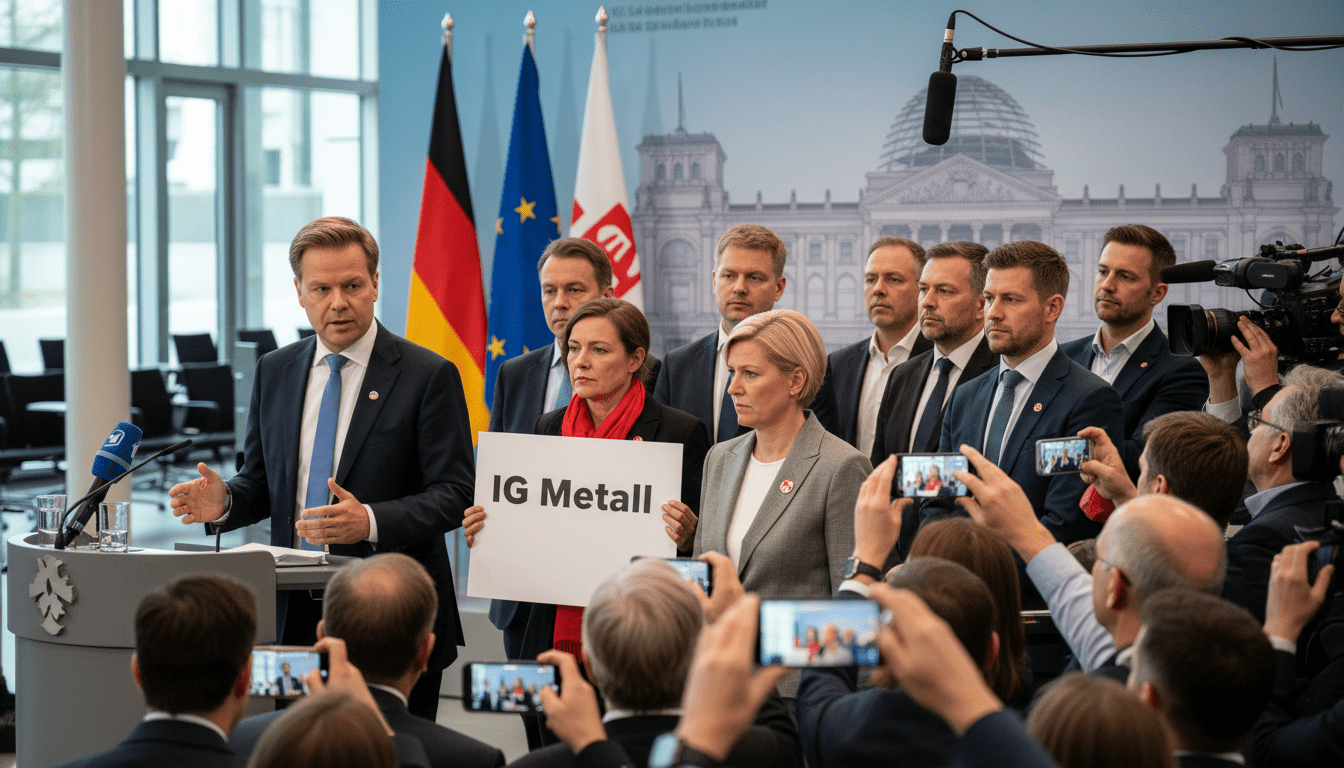
Abolish May Day holiday proposal draws sharp rebuke from IG Metall and unions
IG Metall leader Christiane Benner has strongly rejected plans to abolish May Day, saying proposals to abolish May Day holiday strike at the heart of labor rights and igniting union and SPD opposition.
Benner frames abolition as an attack on workers
Christiane Benner described the idea to abolish May Day holiday as an affront to the traditions and protections of the labor movement. She argued the proposal targets the symbolic day that represents decades of gains for workers rather than a neutral calendar change.
Benner challenged the notion that removing the holiday would boost growth, pointing to economic performance in states with more public holidays. Her intervention set an early, vocal tone for union resistance and framed the debate as one over values as much as over economics.
Coalition tensions surfaced at Villa Borsig talks
Reports say the suggestion emerged during recent coalition discussions at Villa Borsig, where CDU and CSU delegates floated the idea as part of a broader reform agenda. The SPD is reported to have rejected the move, deepening an already visible split within the coalition.
The episode underscores mounting friction between leading figures in the government as they try to advance reforms across pensions, labor and health care. Observers say the debate over the 1 May holiday has become a proxy for wider disagreements about timing and political priorities.
Unions and the DGB emphasize symbolic weight of May Day
The German Trade Union Confederation (DGB) criticized the proposal as particularly insensitive, arguing May Day is not an ordinary public holiday but a day dedicated to workers and their rights. The DGB warned that questioning the day’s status risks undermining the recognition of collective achievements and workplace protections.
Union leaders framed the debate in social and historical terms, stressing that the day embodies workers’ struggles for rights, safety and co-determination. For unions, the contention goes beyond calendar adjustments and touches on how the government values labor.
Economic claims behind the proposal are disputed
Supporters of cutting public holidays argue doing so could increase annual working hours and stimulate output, a claim the unions and some researchers dispute. Benner and other critics pointed to Bavaria and Baden-Württemberg — regions with many holidays that nonetheless perform strongly economically — to argue that fewer holidays are not a simple solution.
Recent research cited by labor groups suggests eliminating holidays does not produce measurable growth in productivity or long-term GDP, undermining the policy rationale. Economists consulted by unions say productivity depends on deeper structural reforms, not shorter holiday lists.
Pension and labor reform context sharpens opposition
Benner’s critique comes amid wider controversy over the government’s reform plans, including proposals to reshape statutory pensions and workplace policy. Unions have already signaled resistance to pension cutbacks and warned of protest action if protective elements are weakened.
DGB leadership has also criticized the government for insufficient engagement with social partners during reform drafting, saying employers and employee representatives have been sidelined. That complaint has added to the political pressure on the coalition as it tries to reconcile competing priorities.
Political fallout and next steps in negotiations
With the SPD reportedly opposing the holiday abolition proposal, coalition leaders face decisions about how to proceed on the broader reform package without fracturing their majority. The dispute over May Day has become a bargaining chip in ongoing talks over the sequencing and content of reforms.
Observers expect unions to press their case through public statements and coordinated responses, while party leaders negotiate adjustments to the reform timetable. The outcome may depend on whether the government can present compensating measures that address labor concerns.
The May Day debate highlights how symbolic issues can mobilize political and social opposition, complicating an already crowded reform agenda.
As discussions continue in Berlin and within party ranks, unions and the SPD remain clear in their objections, leaving the government to weigh political costs before advancing any proposal that would remove a longstanding workers’ holiday.
