
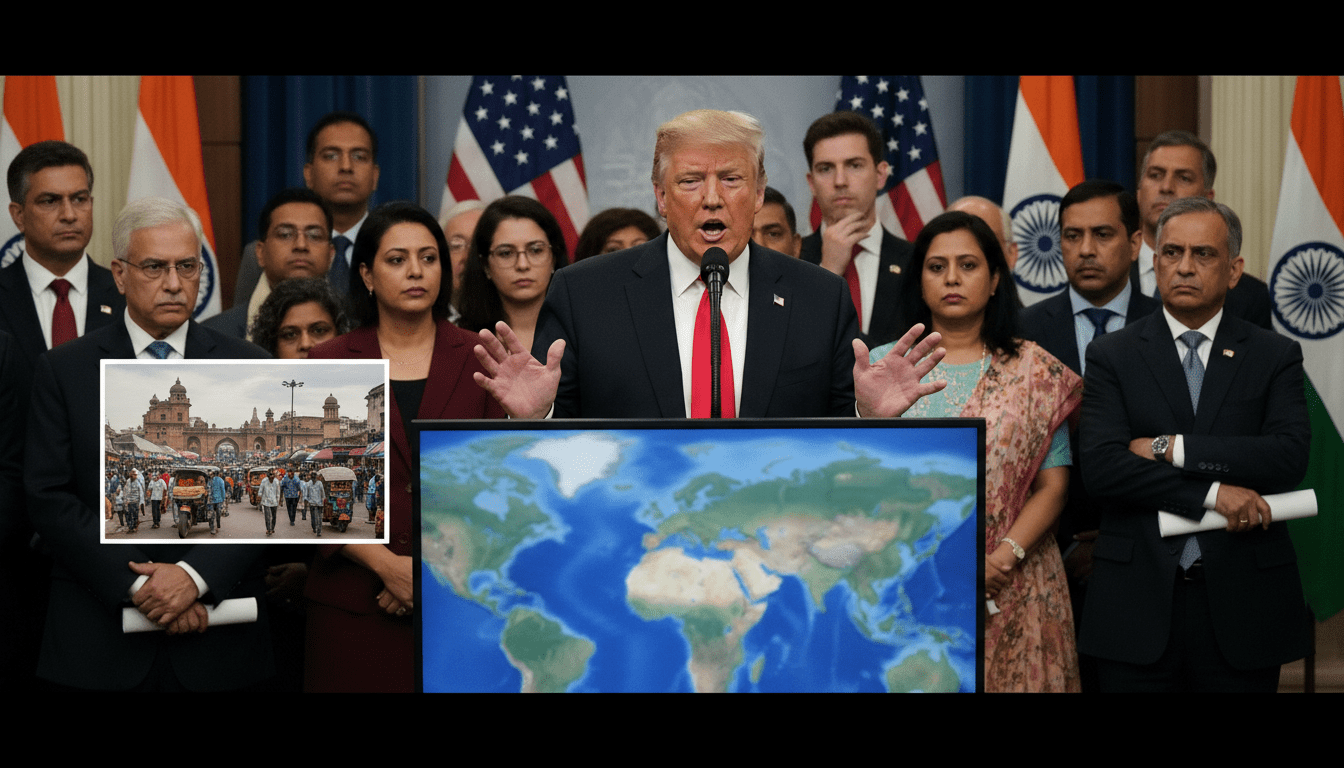
Trump calls India a “Hellhole” on Truth Social, drawing sharp rebukes from New Delhi
Trump calls India a “Hellhole” in a shared transcription; New Delhi condemns the language while the US embassy seeks to calm diplomatic friction. Diaspora groups and opposition leaders demand accountability.
Former US president Donald Trump shared a post on Truth Social that described India — along with China — as a “hellhole,” a characterization that quickly provoked criticism in New Delhi and among Indian diaspora organizations. The post was not an original Trump statement but a transcription of a segment from conservative commentator Michael Savage’s “Savage Nation” podcast. The remark reignited tensions in bilateral relations already strained by recent trade disputes and stirred calls for an official protest from political leaders and advocacy groups.
Details of the post and its origin
The Truth Social entry reproduced the transcript of a podcast episode rather than presenting a direct Trump-written message. The segment criticized birthright citizenship in the United States, linking the policy to immigrants from the Indian subcontinent and mainland China. Although the content originated with Savage, Trump’s amplification of the remarks brought immediate media and diplomatic attention.
Observers noted the distinction between author and amplifier, but also the political weight carried when a former president circulates inflammatory language about a major partner. The format — sharing a third-party transcript — did not lessen the public reaction inside India, where officials and civic groups said the phrase was offensive and unhelpful to bilateral ties.
Indian government reaction and official statements
India’s Ministry of External Affairs condemned the description as “obviously uninformed, inappropriate and in bad taste,” spokesperson Randhir Jaiswal said in a formal response. New Delhi initially responded cautiously but then issued a clear rebuke, stressing that such characterizations did not reflect the realities of India’s global standing or the India–US relationship.
Government officials also emphasized the longstanding strategic ties and mutual interests that underpin cooperation between the two democracies. New Delhi’s tone combined sharp disapproval of the language with efforts to avoid an escalation of diplomatic friction, signaling a preference for measured state-to-state engagement despite domestic political pressure.
US embassy response and diplomatic damage control
The US embassy in New Delhi moved quickly to de-escalate the situation, underlining that the post did not represent official US government policy. Ambassador Sergio Gor — described by some observers as a close associate of Trump — and embassy officials publicly reiterated Washington’s regard for India as an important partner and highlighted ongoing cooperation on a range of issues.
Diplomatic sources suggested the embassy’s outreach sought to reassure Indian officials and business leaders after earlier strains, including a contentious tariff dispute that had already cooled some Indian enthusiasm for Trump. The damage-control effort aimed to separate inflammatory commentary from the broader bilateral agenda on trade, defense, and regional security.
Political backlash within India
India’s main opposition Congress party labeled the remark “deeply insulting” and called on Prime Minister Narendra Modi to lodge a formal protest with Washington. The party’s comment on X urged decisive action and described the post as an affront to the dignity of every Indian, reflecting domestic political pressure for a robust governmental response.
The ruling Bharatiya Janata Party (BJP) and its supporters also voiced dismay, and public criticism spanned a spectrum from diplomatic reprimand to calls for reciprocal measures. Analysts say such incidents can quickly become electoral issues in a politically charged environment, amplifying the domestic stakes of foreign-policy missteps.
Diaspora groups and civil society condemn the language
Prominent diaspora organizations reacted sharply to Trump’s amplification of the podcast transcript. The Hindu American Foundation characterized the remarks as a “hate-filled, racist tirade” and warned that endorsement of such language by a prominent US political figure risks stoking xenophobia and endangering minority communities in the United States.
Other community groups and civil-rights organizations expressed concern that the rhetoric would encourage hostility toward South Asian communities already facing heightened incidents of discrimination. Leaders called for broader condemnation of xenophobic language and emphasized the need for political responsibility in public discourse.
Context and precedent: past inflammatory remarks
The episode recalls earlier controversies in which Trump used derogatory language about foreign countries, most notably his 2018 comment disparaging certain African nations and Haiti. Those prior incidents produced sustained diplomatic unease and domestic backlash, and analysts say the recurrence underscores how quickly incendiary rhetoric can undermine long-term strategic relationships.
Trade tensions and policy disagreements in recent years have already introduced strain into India–US ties, observers note, and repeated instances of provocative public commentary risk eroding goodwill on both sides. Diplomats from both capitals now face the task of reaffirming cooperative priorities while managing domestic political reactions.
The shared transcript of a conservative radio host may not carry official weight, but its publication by a figure with global visibility has reignited debates about responsibility and rhetoric in international affairs. As New Delhi and Washington navigate the fallout, officials on both sides will likely seek to confine the damage to public statements and maintain momentum on substantive cooperation.
