
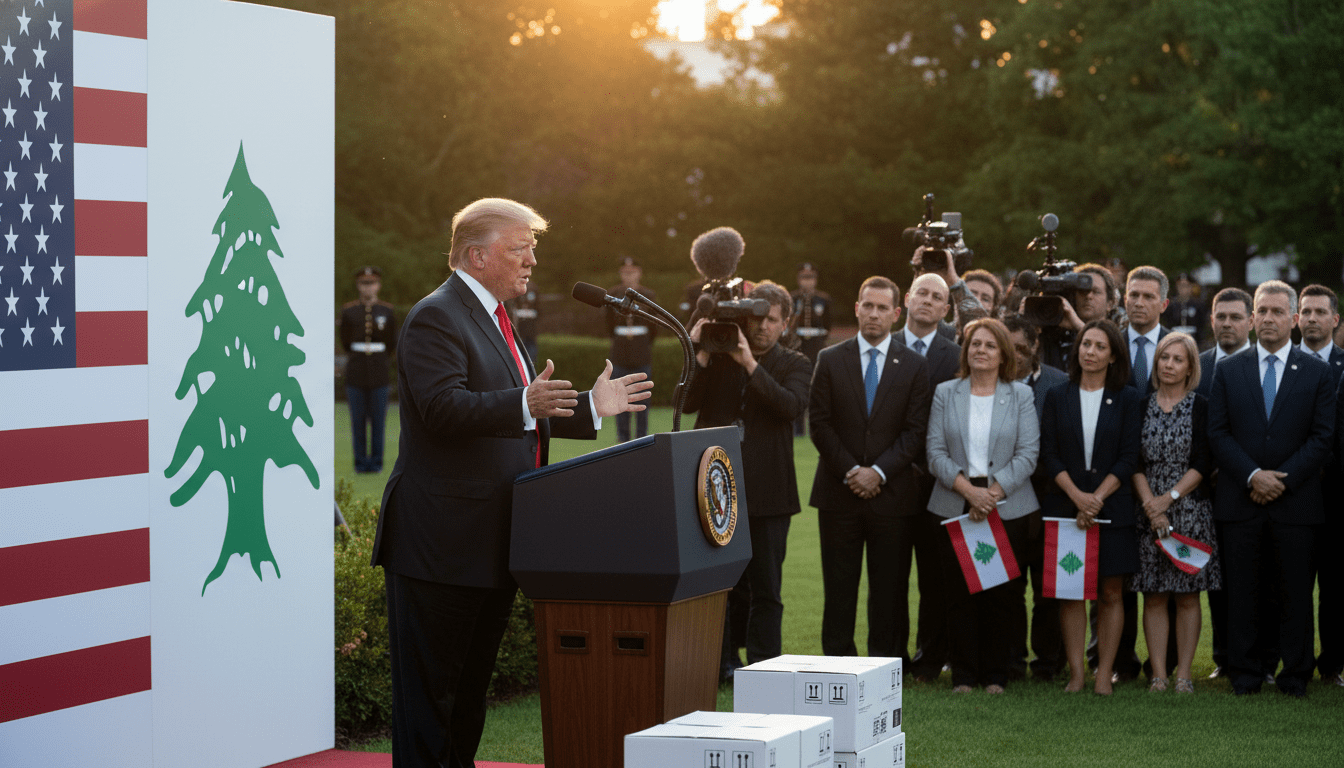
Trump Announces Israel-Lebanon Ceasefire Extension After Oval Office Meeting
President Trump announced a three-week Israel-Lebanon ceasefire extension following talks in the Oval Office on April 23, 2026, saying the United States will work with Lebanon to bolster its defenses. The announcement, posted on Truth Social, named senior U.S. and regional officials present and signaled diplomatic follow-up visits by Israeli and Lebanese leaders. The Israel-Lebanon ceasefire extension is the centerpiece of a U.S.-led effort the White House described as aimed at preserving the current pause in fighting and preventing wider escalation.
Oval Office Meeting and Presidential Statement
President Donald J. Trump convened the meeting in the Oval Office with a delegation that included Vice President J.D. Vance, Secretary of State Marco Rubio, Ambassador to Israel Mike Huckabee, and Ambassador to Lebanon Michel Issa. According to the president’s post on Truth Social, high-ranking representatives of Israel and Lebanon were also present for talks described as “historic.” The statement framed the session as a coordinated U.S. effort to extend calm along the Israel-Lebanon front.
The post said the ceasefire between Israel and Lebanon would be extended by three weeks and that the United States would work with Lebanon to help it protect itself from Hezbollah. The White House message emphasized diplomacy and security cooperation as twin aims of the meeting. Officials did not provide a detailed public readout at the time of the announcement beyond the social media posting.
Terms and Timeline of the Ceasefire Extension
The administration’s announcement set the ceasefire extension at three weeks, a fixed short-term timeline meant to buy time for further negotiations. That extension is aimed at maintaining the current pause in hostilities while diplomatic channels remain open. Observers noted the limited duration suggests expectations of continued monitoring and possible adjustments based on developments on the ground.
A short, specified extension also provides a diplomatic window for follow-up engagements, including proposed visits by foreign leaders. U.S. officials indicated they would use the period to coordinate security assistance and to press for measures that reduce the risk of renewed clashes. The length and terms of enforcement, however, were left largely unspecified in the initial statement.
U.S. Security Assistance and Lebanon’s Defense
The president’s message said the United States would work with Lebanon “in order to help it protect itself from Hezbollah,” signaling potential increases in security cooperation. That language implies U.S. support could include training, materiel, intelligence-sharing, or diplomatic backing aimed at strengthening Lebanese security institutions. Washington’s stated goal is to buttress Lebanese authorities’ capacity to prevent militant operations from reigniting cross-border violence.
Any concrete assistance package would likely require consultations with Congress and coordination with regional partners. U.S. policymakers face a complex balance between supporting state institutions in Lebanon and avoiding measures that could be perceived as directly confronting Hezbollah inside Lebanese territory. The administration’s next steps are expected to clarify the scope and modalities of assistance.
Officials Present and International Reactions
The president’s post listed a number of U.S. officials and envoys who participated in the Oval Office meeting, reflecting a mix of political, diplomatic, and regional expertise. Vice President J.D. Vance and Secretary of State Marco Rubio were named among senior participants, alongside envoys for Israel and Lebanon. The involvement of multiple senior figures underscores Washington’s intent to project unified engagement on the matter.
Reactions from regional capitals and international organizations were not included in the presidential statement, and public responses from Israeli and Lebanese officials were pending at the time of the announcement. Analysts cautioned that the public posture of support does not automatically translate into immediate operational changes on the ground. Diplomatic communications in the coming days will be closely watched for clarifying details.
Plans to Host Israeli and Lebanese Leaders
The president said he looks forward to hosting Israeli Prime Minister Benjamin Netanyahu and “the President of Lebanon, Joseph Aoun,” signaling planned high-level diplomacy as part of the follow-up. The mention of bilateral visits indicates Washington seeks to formalize commitments and to keep both governments engaged directly with U.S. leadership. Scheduling and the agendas for such visits were not specified in the initial posting.
If confirmed, hosting both leaders in quick succession would aim to reinforce U.S. mediation efforts and to cement commitments on maintaining the ceasefire. Such meetings could be used to negotiate monitoring mechanisms, security assistance packages, or steps to de-escalate local tensions. Observers will watch for official invitations and agreed dates to assess the seriousness and feasibility of the proposed visits.
Regional Implications and Risk of Escalation
The administration framed the ceasefire extension as a measure to reduce the risk of a broader regional conflagration involving Israel and Lebanon. Continued U.S. involvement is intended to discourage renewed exchanges of fire and to encourage political solutions. However, the durability of the pause will depend on local commanders, militant groups, and the effectiveness of any measures taken to address underlying triggers.
Analysts warn that short-term extensions can stabilize a situation temporarily but often require parallel progress on political and security fronts to hold longer term. Humanitarian and reconstruction concerns in areas affected by recent clashes remain pressing and could influence the trajectory of negotiations. The coming weeks will be critical in determining whether the Israel-Lebanon ceasefire extension leads to sustained calm or merely postpones further confrontation.
The next phase of U.S. engagement will focus on translating the Oval Office announcement into specific actions, monitoring compliance with the ceasefire extension, and arranging the proposed visits by the Israeli and Lebanese leaders. Continued diplomatic activity and transparent reporting on assistance details will be essential to assessing whether the extension fulfills its objective of preventing renewed hostilities.
