
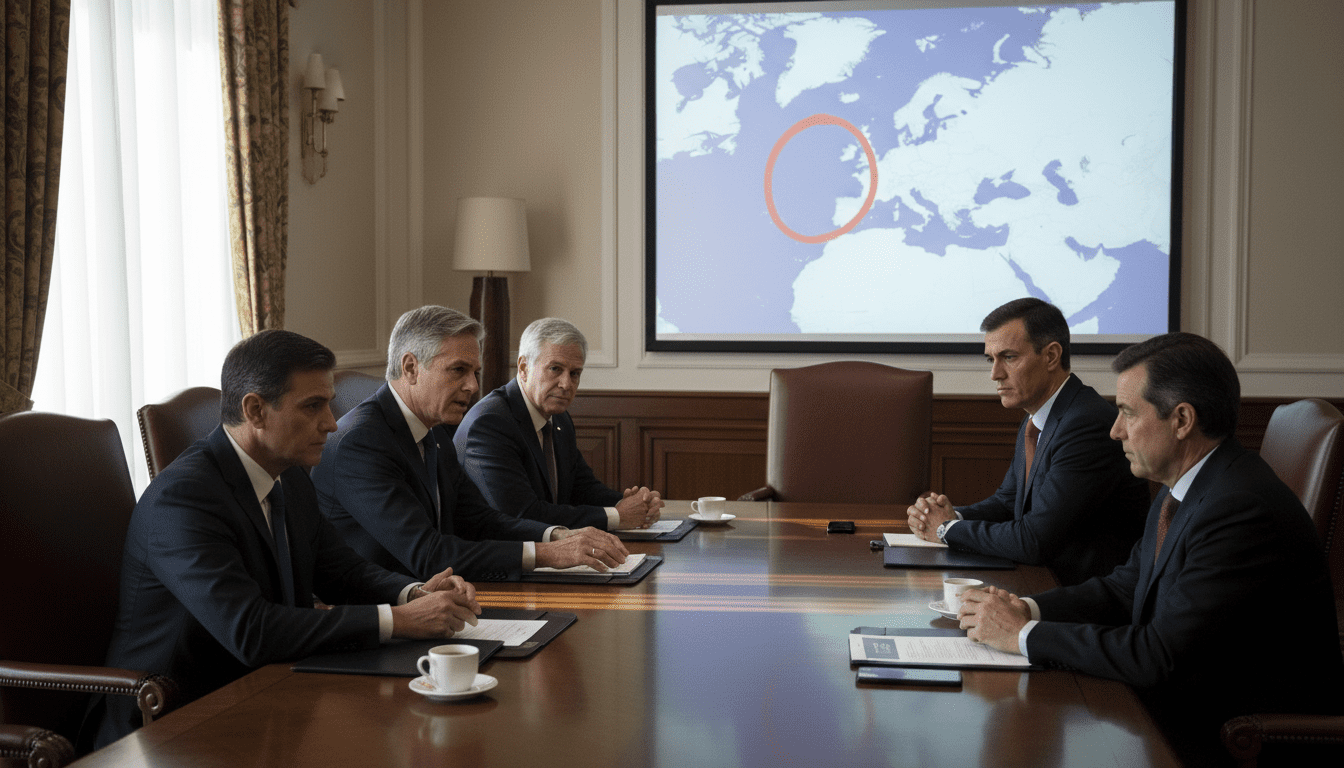
U.S. Weighs Spain NATO Expulsion After Madrid Denies Bases and Airspace for Strikes on Iran
US Defense Department email outlines possible Spain NATO expulsion after Madrid denied use of bases and airspace for strikes on Iran, US officials warn.
An internal U.S. Defense Department email sketches punitive options that include a potential Spain NATO expulsion after Madrid refused to grant access to bases and airspace for military strikes on Iran. The disclosure reflects mounting frustration in Washington over allied limits on stationing, overflight and basing rights that U.S. officials describe as foundational to NATO interoperability. Spanish Prime Minister Pedro Sánchez has publicly downplayed the correspondence, stressing that formal diplomacy and official documents—not internal emails—guide Madrid’s policy choices. The episode has raised legal and political questions about how, and whether, alliance membership could be used as leverage over a democratic partner.
Details of the Pentagon memo
The internal message from the Defense Department reportedly lists a range of responses to allies judged to be withholding essential military support, with Spain specifically highlighted as a target for symbolic measures. The memo frames access, stationing and overflight rights as “the absolute basis” for alliance operations, and urges options that would signal U.S. displeasure if partners do not contribute what Washington views as necessary. Pentagon spokespeople have reiterated the administration’s desire for allies to shoulder more operational burdens while emphasizing that any formal decisions rest with national governments and established procedures. The memo’s appearance has nonetheless amplified concern among diplomats about informal pressure becoming formal policy.
Madrid’s refusal and official reply
Spanish authorities declined to allow U.S. forces to use two Spanish bases and national airspace for operations against Iran, a decision the Sánchez government has defended as grounded in Spanish law and national interest. In public remarks, Prime Minister Sánchez said Madrid relies on official exchanges and government-level agreements rather than private communications when setting foreign and defense policy. Spanish officials have framed the refusal as consistent with a cautious approach to a widening regional conflict and with commitments to European consultation. The Spanish response underscores a tension between alliance solidarity and sovereign decision-making in democracies.
Legal obstacles to expulsion from NATO
Any move toward Spain NATO expulsion would face substantial legal and procedural hurdles because the North Atlantic Treaty includes no mechanism to expel a member state. The treaty instead contemplates voluntary withdrawal, meaning a country must choose to depart of its own accord, a process that alters the usual dynamics of enforcement or sanction within the alliance. Legal scholars and former diplomats note that while political pressure can be applied through other multilateral forums, a formal expulsion would likely be unprecedented and constitutionally fraught. Those constraints make the idea of outright expulsion more symbolic than operational, even if it serves a rhetorical purpose in Washington.
Political context and past threats
The debate over punitive options arrives amid a pattern of public pressure from the U.S. executive branch on NATO allies to increase defense spending and operational cooperation. Previous public comments by the U.S. president singled out Spain over budgetary and policy disagreements, and internal Pentagon communications now appear to extend that pressure to wartime access issues. Critics argue that leveraging alliance membership as a bargaining chip could erode trust among partners and complicate NATO’s cohesion at a time when collective deterrence is emphasized. Supporters of a tough stance contend that real consequences are necessary to prevent free-riding and to ensure alliance readiness.
Potential military and diplomatic consequences
Officials assessing the consequences of a Spain NATO expulsion stress that practical impacts on U.S. military operations would likely be limited, given other basing options and logistical workarounds. The symbolic cost, however, could be significant: singling out a key European partner might strain bilateral relations and reverberate through European capitals, affecting intelligence sharing and coordination. Diplomatic fallout could also complicate broader efforts to present a united front in talks aimed at de-escalation or conflict management in the wider region. Analysts warn that a narrowly focused punitive signal could have wide-ranging and unintended strategic consequences.
Allies weigh reactions and alliance unity
Other NATO members are watching the debate closely as they balance domestic politics, legal constraints and transatlantic relationships. Some governments may be reluctant to allow U.S. demands to set a precedent for coercive measures within the alliance, while others may privately sympathize with Washington’s operational needs. European institutions and leaders face the challenge of preserving alliance cohesion while acknowledging the sovereign prerogatives of member states to make independent security choices. The unfolding episode is likely to prompt renewed diplomatic engagement among capitals to clarify expectations and avoid public escalations.
The episode highlights a growing fault line between operational imperatives voiced by the U.S. defense establishment and the political calculations of allied capitals, with Spain at the center of a test case over the limits of alliance leverage and the role of sovereign decision-making in wartime.
