
Spain NATO suspension fears rise after report of Pentagon plan; Sánchez stresses cooperation
Spain NATO suspension concerns grow as an unconfirmed Pentagon document reportedly contemplates measures against “difficult” allies, prompting Prime Minister Pedro Sánchez to reaffirm Spain’s commitment to cooperation under international law.
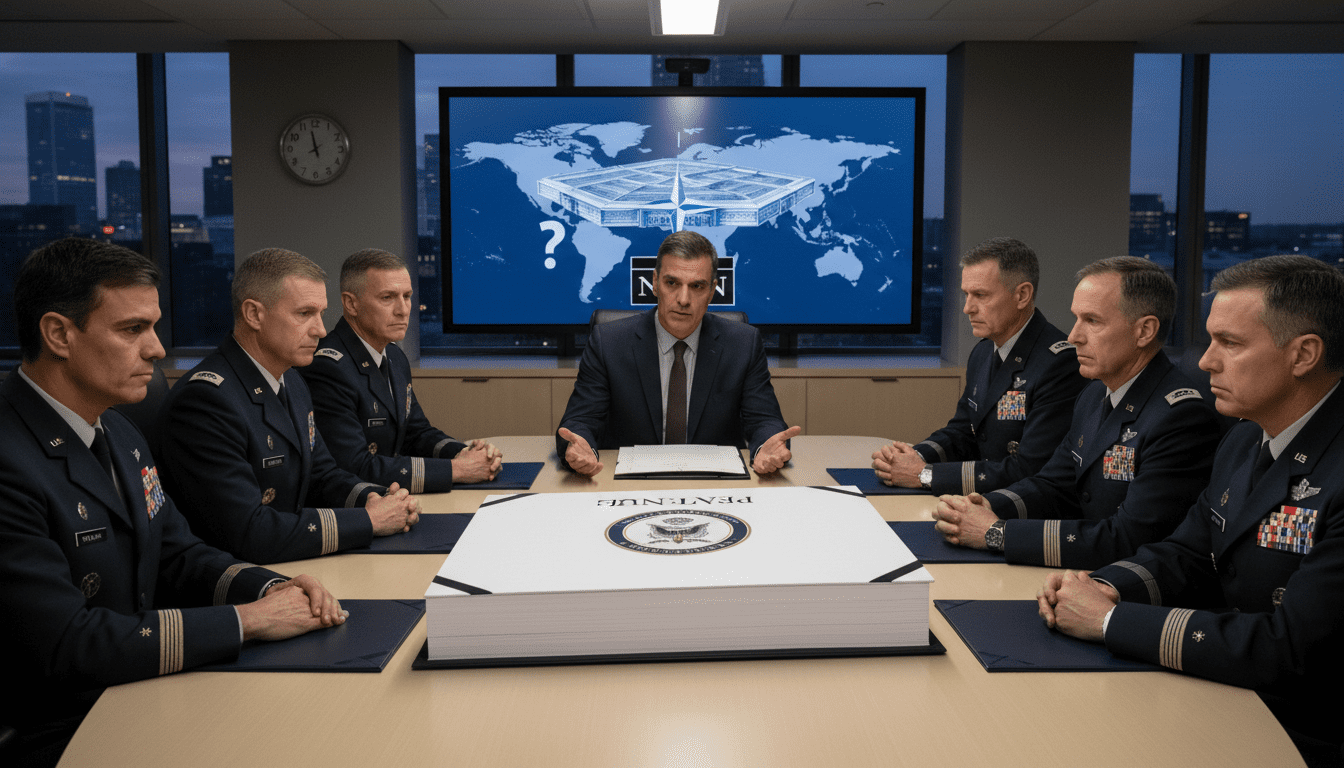
Spain NATO suspension fears surfaced after media reports said a Pentagon paper lists potential penalties for allies deemed uncooperative, including suspension of membership for Spain, according to a report in El País. At an informal EU leaders’ meeting in Nicosia, Cyprus, Prime Minister Pedro Sánchez told journalists that Spain remains committed to “absolute cooperation with our allies,” while insisting that such cooperation must adhere to international law. The disclosure has spurred debate in Madrid and among European capitals about alliance cohesion and the limits of U.S. pressure on NATO partners.
Spanish leader stresses legal framework for cooperation
Pedro Sánchez emphasized that Spain will continue to work with NATO partners but only within the confines of international law, a stance he reiterated to reporters in Nicosia. He has been one of the most vocal European critics of the U.S.-Israel approach to the conflict with Iran, and his comments signal an attempt to balance alliance duties with principled objections. Sánchez’s intervention aims to calm domestic concern while sending a clear message to allies that Madrid views legal norms as non-negotiable.
Details of the Pentagon report remain unconfirmed
The element that sparked the controversy is described as an internal Pentagon document that allegedly outlines options for dealing with “difficult” NATO members, including temporary suspension of membership. The account originates from a Spanish media outlet and has not been independently verified by U.S. or NATO officials. Because the report is unconfirmed, officials in several capitals have urged caution and are seeking clarification from Washington before drawing conclusions about policy or intent.
Why Spain became the named example
El País said the document specifically mentioned the possibility of suspending Spain’s membership, an inclusion that has provoked unease given Madrid’s active role in NATO missions and its long-standing alliance commitments. Analysts point out that Spain’s vocal criticism of certain U.S. policies in the Middle East may have contributed to tensions, but they also stress that single reports do not necessarily reflect official policy decisions. Madrid’s diplomatic corps has been quietly engaging allies to underline Spain’s contributions to NATO and to defuse alarm.
NATO procedures and the mechanics of suspension
Legal and procedural experts note that NATO does not have a simple, codified mechanism for suspending a member akin to expulsion from a private organization, and any move to restrict a member’s rights would be politically complex. Decisions affecting member participation typically require consensus and would likely be accompanied by intense diplomatic negotiation. The notion of suspension, even if discussed in internal planning papers, would face both legal scrutiny and resistance from allies wary of setting a precedent.
Allied reactions and calls for clarification
Several European capitals have reportedly asked Washington for clarification about the origins and intent of the Pentagon paper, while NATO officials have emphasized the importance of internal consultation and unity. In public, most allied representatives have been measured, avoiding escalation while seeking more information through diplomatic channels. Observers say the preferred immediate outcome for allies would be a transparent explanation from the U.S. that either confirms the paper as exploratory planning or distances official policy from the speculative options reported.
Domestic political consequences in Spain
The report has immediate domestic implications for Sánchez’s government, which must reassure both pro-alliance constituencies and voters concerned about national sovereignty and foreign policy independence. Opposition parties are likely to press for parliamentary scrutiny and formal statements from the foreign ministry and NATO delegates. Spanish defense and diplomatic officials face the twin tasks of demonstrating Madrid’s ongoing commitments and preventing the episode from deepening transatlantic rifts.
The reported Pentagon document has injected fresh unease into alliance politics by raising sensitive questions about how NATO manages dissent among members and how far major powers may go to enforce alignment. Whether the paper represents routine contingency planning or signals a shift in pressure tactics will depend on further clarification from U.S. and NATO officials and on how Madrid’s diplomatic outreach shapes perceptions in allied capitals.
