
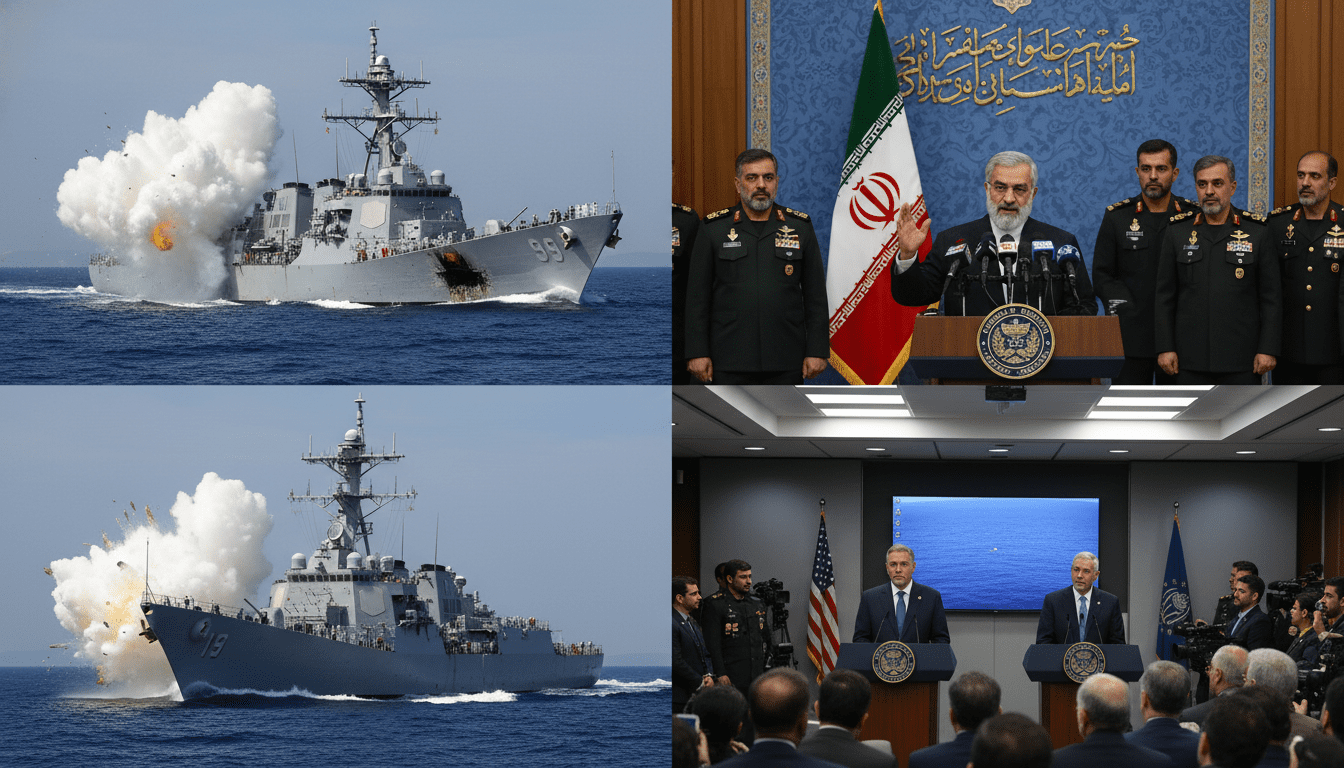
Iran missile attack on Kuwait: Tehran blames Patriot interceptor for airport damage as US denies vessel strike
Iran says its missile strike on Kuwait airport was caused by a malfunctioning Patriot interceptor; US Central Command calls Iran’s actions a deliberate assault.
Opening summary
Iran said it targeted a US military vessel hosting a “control and command” centre as it approached Iranian territorial waters in the Gulf of Oman, while also blaming a Patriot missile interceptor for significant damage at Kuwait International Airport.
US Central Command denied any strike on its vessel and described the barrage of more than 30 ballistic missiles aimed at Kuwait as a “deliberate, calculated, and unjustified attack” that killed one person and wounded about 60 others at the airport.
Iran’s account and claims
Iranian officials asserted the damage in Kuwait resulted from a Patriot interceptor that went off course, striking the airport rather than the intended targets.
State media and Iranian spokespeople framed the incident as an unintended consequence of air-defence activity during exchanges in the region, and said Tehran had engaged a US ship it identified as a command centre off the Iranian coast.
US military response and denial
US Central Command rejected Iran’s account of a strike on a US vessel, denying that any American ship was hit and characterising Iran’s missile launches as an unprovoked assault on a partner nation.
The command pointed to the toll at Kuwait airport and framed the episode as a significant escalation, underlining Washington’s condemnation of attacks that put civilians and regional infrastructure at risk.
Kuwait’s situation and airport impact
Kuwait reported one fatality and around 60 wounded at its airport, and said the facility sustained substantial damage that disrupted operations and prompted heightened security measures.
Authorities in Kuwait have detained and deported individuals who filmed missile activity, and Kuwaiti officials have repeatedly denied allowing their territory to be used as a launchpad for strikes against Iran, despite being a focal point of Tehran’s accusations.
Political fallout in Washington
The incident surfaced during congressional testimony by US Secretary of State Marco Rubio, where Representative Gregory Meeks pressed him on whether Washington had warned the president that strikes on Iran could prompt retaliatory attacks on allies and Americans in the region.
Rubio told lawmakers the administration had been “prepared for any response” and defended prior operations, saying efforts to degrade Iranian conventional capabilities had aimed to prevent Tehran from building a shield from which it could advance a nuclear programme.
Negotiations and regional diplomacy
Despite the escalation, Iran signalled it remains in contact with US negotiators, with Iranian Foreign Minister Abbas Araghchi saying talks have not been severed even if progress is stalled.
Iranian outlets reported the two sides had exchanged texts and that any memorandum of understanding would follow a multi-stage mechanism, while Tehran insisted any deal must include protections for Lebanon against further Israeli attacks.
Military operations and claimed objectives
US officials have described past operations, referred to in testimony as Operation Epic Fury, as intended to degrade Iranian missile, drone and naval capacities, and said those efforts had been wound down.
Iran and its proxies, including Hezbollah, remain central to the security calculations in Beirut and southern Lebanon, and Tehran has conditioned further diplomatic progress on assurances that Lebanon will be shielded from continued Israeli bombardment.
Regional implications and potential escalation
The strikes and counterclaims highlight how quickly engagements in the Gulf and Levant can spill across borders, drawing in multiple capitals and complicating diplomatic efforts.
Kuwait’s position between the Gulf’s main actors, coupled with US denials and Iranian explanations, underscores the risk that misfires, interceptors or misattributed strikes could drive further instability at a time when talks and ceasefires remain fragile.
The damage in Kuwait, the congressional scrutiny in Washington, and Tehran’s insistence on linking any agreement to wider regional security concerns together set the stage for continued tensions.
Diplomats and military officials will be watching for verification of strike assessments, forensic evidence at the airport, and follow-up moves by regional partners, any of which could determine whether the current episodic exchanges evolve into a broader confrontation.
