
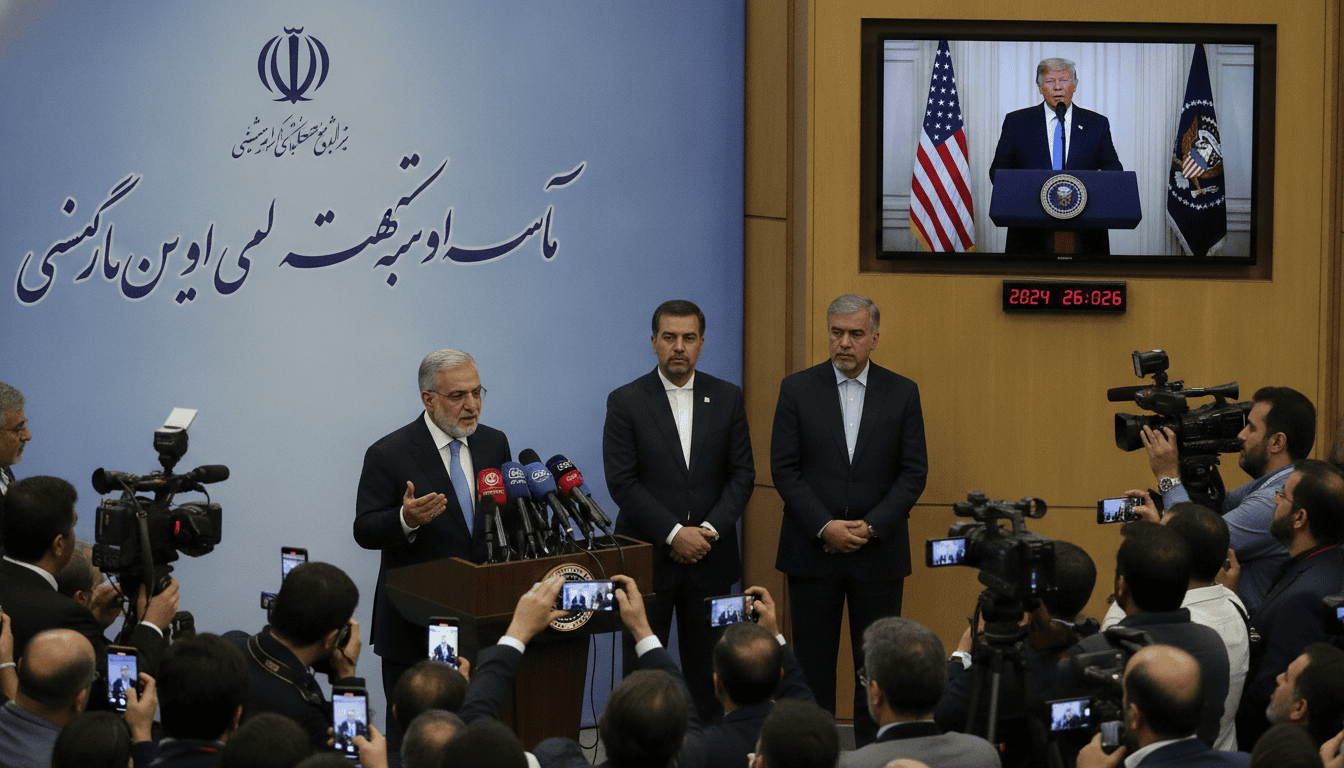
Iran denies requesting US-Iran talks after Trump says negotiations agreed
Iran says it did not seek talks with the US after President Trump announced continued US-Iran talks; Tehran accepted a Qatari mediator visit, officials say.
The Iranian government denied on Friday that it had asked Washington to resume direct negotiations after President Donald Trump said the two countries had agreed to continue talks following a period of heightened tension. Iranian foreign ministry spokesperson Esmaeil Baghaei told state television Tehran had not sought negotiations with the United States, but had accepted a visit by a Qatari mediator. President Trump had said the June ceasefire between the two sides was over while indicating that talks would continue.
Trump’s public account of negotiations
President Trump told reporters on Friday that the United States and Iran had agreed to continue discussions, describing an understanding to keep diplomatic channels open despite recent hostilities. He also said the ceasefire declared in June was no longer in effect, framing the talks as separate from any formal truce. The president’s comments set off a swift public clarification from Tehran, creating a mismatch between the two capitals’ narratives.
Tehran’s denial and the role of the Qatari mediator
Iranian state television quoted Esmaeil Baghaei as saying that Tehran had not requested negotiations with Washington, contradicting the White House account. Baghaei said Iran had accepted a visit by a Qatari mediator, emphasizing that the visit did not equate to bilateral talks or a request for direct negotiations. Officials in Tehran have frequently relied on third-party mediators, including Qatar, to relay messages without engaging in direct US-Iran diplomacy.
Ceasefire remarks and the status of hostilities
Mr. Trump’s statement that a June ceasefire was over underscored the fragile nature of recent de-escalation efforts between Tehran and Washington. The president’s framing suggested military and political pressure would remain options alongside any diplomatic engagement. Iranian officials, however, have described their own posture as conditional and often linked to third-party mediation rather than bilateral concessions.
Diplomatic dynamics with Gulf mediators
Qatar has acted in recent years as an intermediary between Iran and Western capitals, and its envoy’s accepted visit illustrates the continued importance of Gulf states in any thread of diplomacy. Tehran’s acceptance of the Qatari mediator visit signals openness to indirect communication while stopping short of confirming direct US-Iran talks. Regional mediators face the challenge of conveying positions without being seen as negotiating parties themselves.
Implications for regional security and policymaking
The divergent accounts by Washington and Tehran could complicate crisis management and create uncertainty for allied capitals tracking developments in the Gulf. If misaligned public statements become the norm, they risk undermining backchannel confidence and make it harder for intermediaries to calibrate proposals. Governments in the region and beyond will likely monitor subsequent statements and movements by mediators to assess whether talks are substantive or purely procedural.
Questions over next steps and verification
Analysts say the coming days will be critical for confirming whether exchanges are substantive and whether either side intends to formalize any dialogue. Verification will depend on further public statements, the mediator’s reported account, and any observed confidence-building measures from either side. Until more concrete reports emerge, the conflicting messages will sustain ambiguity about the trajectory of US-Iran relations.
The discrepancy between President Trump’s claim of agreed talks and Iran’s categorical denial highlights the opaque and often performative nature of diplomacy between Washington and Tehran, and it leaves open the question of how indirect mediation will translate into tangible progress.
