
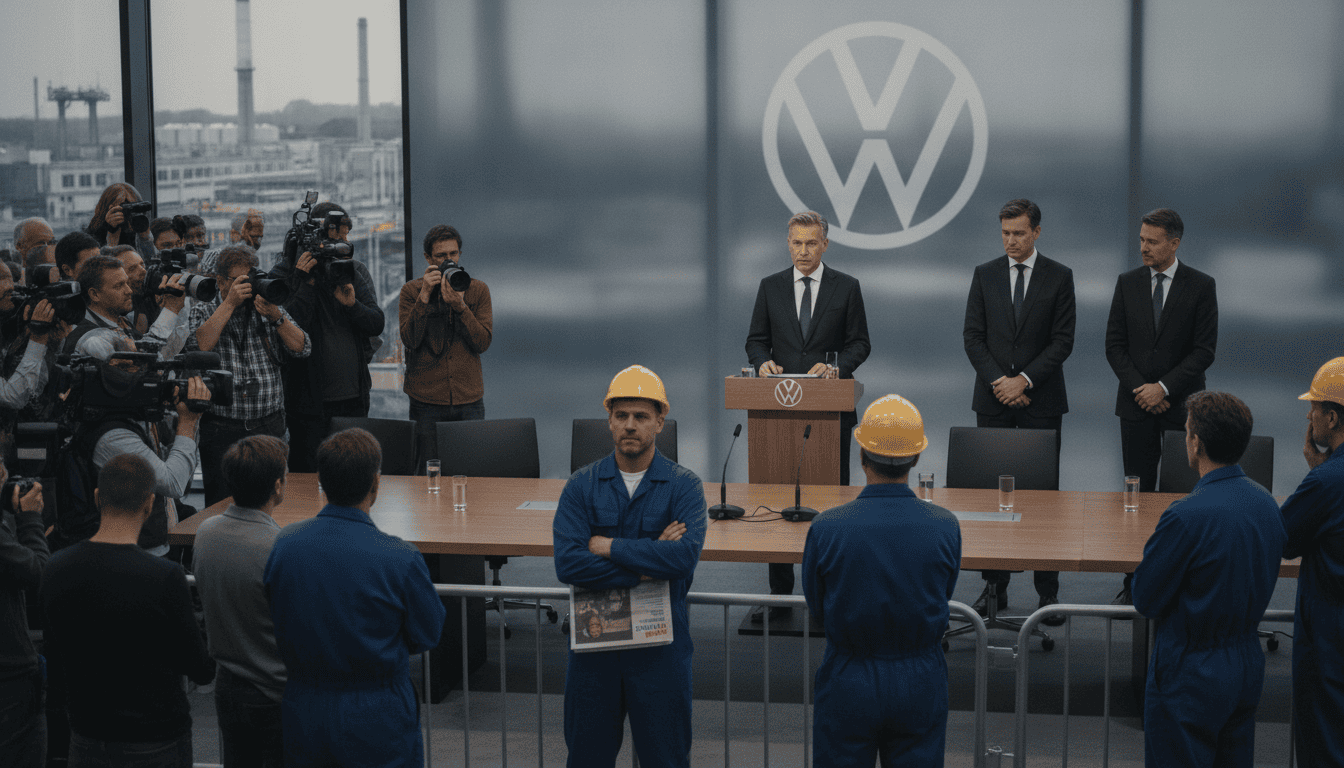
Volkswagen model range to be halved as supervisory board defers plant and job decisions
VW to halve model range while supervisory board postpones decisions on plant closures and job cuts; stakeholder talks to resume in September.
Volkswagen said on Friday that it will cut its Volkswagen model range roughly in half, but the supervisory board left major decisions on plant closures and potential job losses to a wider stakeholder process. The announcement to slim the model lineup came at a meeting that yielded no immediate commitments on factory shutdowns or the threatened tens of thousands of job cuts, and management acknowledged it does not have the sole authority to implement deeper structural changes. CEOs, government representatives and employee representatives will now need to negotiate a path forward within the group’s complex governance framework.
Supervisory Board Leaves Major Choices to Stakeholders
The supervisory board signaled that it can only endorse structural shifts after agreement with key stakeholders, notably employee representatives and the state of Lower Saxony, which holds substantial influence in the company. That governance arrangement means management proposals require broad support before they can be executed, limiting the board’s immediate ability to order closures or layoffs. Company officials framed the decision as a procedural step that preserves room for a negotiated compromise rather than an immediate mandate for sweeping cuts.
Announcement to Halve Volkswagen Model Range, No Immediate Plant Decisions
Executives presented a plan to reduce the number of models offered under the Volkswagen brand, a move intended to simplify production and cut costs amid weaker demand. The supervisory board issued the announcement without endorsing consequential measures, leaving questions about how the model reduction will translate into factory use and workforce levels. For now, the plan is a strategic signal rather than an operational directive, and concrete implementation timelines were not provided.
Management Proposal by Oliver Blume Rejected for Now
A package put forward by CEO Oliver Blume did not secure the necessary backing at the meeting, and the supervisory board has asked for further work before any approvals are granted. Company insiders say the proposal failed to satisfy concerns from worker representatives and governmental stakeholders, who worry about preserving industrial jobs and local economic stability. Management has been tasked with refining the proposal and returning to the table in September to continue the negotiations.
China Sales Slide Highlights Structural Problems
Volkswagen’s decision to slim its model range comes amid continuing sales weakness in China, once a major source of profit for German manufacturers. Market share pressures from local electric-vehicle makers and muted consumer demand in the region have eroded the premium margins Volkswagen once enjoyed there. Industry analysts point to structural shifts in China’s auto market—strong domestic competitors, shifts to electric mobility and persistent demand softness—as key drivers behind the company’s strategic reassessment.
Overcapacity at German High-Wage Plants Raises Risks
Executives acknowledged that a reduced model lineup will leave the group with production capacity that no longer matches demand, particularly at higher-cost sites in Germany. That overcapacity creates pressure to reallocate production, redeploy personnel, or consider consolidations, but any move faces political sensitivity given the social and regional implications. State leaders and unions, mindful of the social contract around well-paid industrial employment, have emphasized negotiations to protect jobs where possible.
Trade Tensions and Competitive Dynamics Compound Challenges
Volkswagen’s struggles are amplified by global trade frictions and changing competitive dynamics in electric vehicles, which have advantaged some domestic manufacturers in key markets. Tariff policies and broader geopolitical shifts have altered supply chains and margins, compounding the company’s need to shrink complexity and costs. Management argues that a leaner model range will help concentrate investment on profitable product lines and the transition to electric mobility, but implementing that strategy requires buy-in from multiple parties.
The supervisory board set a timetable for further talks, with formal negotiations scheduled to resume in September, leaving a narrow window for management to build consensus on any restructuring steps. Stakeholders have signaled readiness to engage but also warned that time is needed to evaluate social safeguards and regional impacts. As Volkswagen moves toward a smaller portfolio of vehicles, the company faces a pivotal period in which political, labor and commercial calculations will determine whether the changes are orderly or lead to deeper disruption.
