
Stranded Humpback Whale at Poel Triggers Complex Rescue Operation in the Baltic Sea
Rescue teams off the island of Poel have launched a complex operation to free a stranded humpback whale from the Baltic Sea mud, using nets, airbags and underwater jets, involving crews.
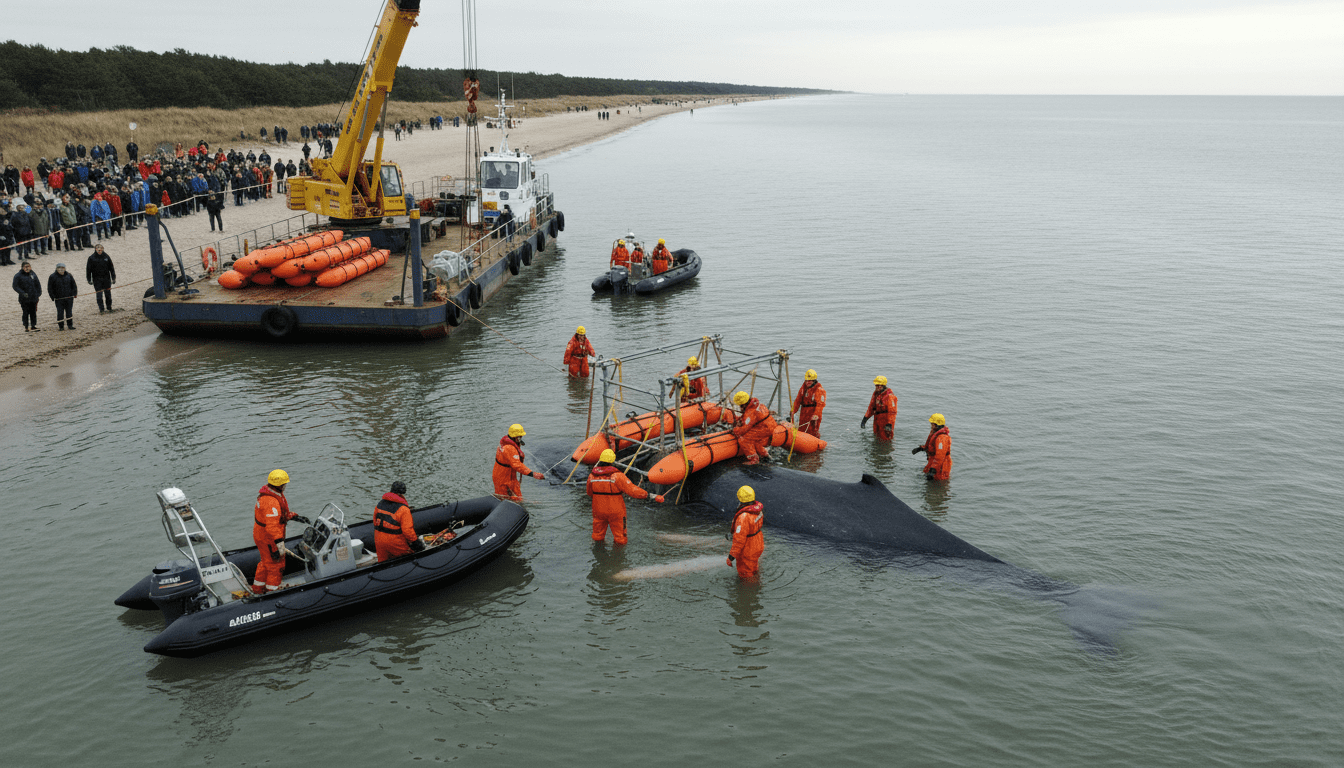
The stranded humpback whale was located in shallow water near Poel after local observers reported its presence, prompting authorities and volunteers to mobilize specialized equipment for a potential refloat and transport. Crews moved a platform with an excavator into position, deployed diving teams, and prepared an engineered “whale bed” to lift and stabilize the animal for further action.
Rescue Scene and Initial Response
At midday, rescue vessels pushed a platform with an excavator into the Poeler Bucht and slowed as they neared the whale, which was stuck in silty seabed less than 20 meters from shore. Teams lowered a green containment net into the water and draped a blue plastic sheet above it to form a temporary enclosure around the animal.
Stand-up paddleboarders and divers entered the water to work closely with the whale while crews prepared underwater air jets intended to dislodge the animal from the suction of the mud. Organizers described the effort as entering a decisive phase: if the jets freed the animal, airbags and a pontoon assembly would be used to lift and secure it for a possible transport.
Tactical Plan: Nets, Airbags and Underwater Jets
Rescuers plan to thread a reinforced net beneath the whale and attach it to a pontoon structure, creating a makeshift cradle capable of supporting the animal’s weight. The technique relies on coordinated timing: underwater jets to loosen the mud, then airbags to generate buoyancy while the net and pontoon bear the load.
Specialists emphasized the risks of moving a tonnage of this scale, noting that a humpback’s body can be injured by uneven lifting or prolonged stress. The operation therefore balances speed with careful monitoring of the whale’s breathing and posture during each step.
Logistics and On-Site Coordination
Organizers marshaled a mix of municipal crews, conservation groups and volunteer helpers to stage the equipment along Poel’s shoreline, while small boats controlled water access and safety perimeters. A mobile command area coordinated divers, crane operators and technicians running compressed-air systems and winches.
Local authorities also arranged veterinary support on standby and laid plans for a holding pontoon should the whale be successfully refloated. Officials stressed that weather, tidal conditions and seabed composition would inform the timing of any final lift and tow.
Environmental and Animal Welfare Considerations
Marine biologists and rescue veterinarians at the scene underscored the welfare concerns that accompany moving a large cetacean, including stress, overheating and internal injuries. Medical teams prepared to assess the whale’s condition for wounds, dehydration or entanglement before and after any lifting attempt.
Experts noted that the Baltic Sea’s brackish water and shallow coastal mud can complicate a refloat, and that every intervention carries a trade-off between immediate survival chances and potential harm from handling. Observers cautioned that despite careful planning, outcomes in such operations are inherently uncertain.
Regulatory and Public Response
Authorities on Poel issued temporary access restrictions for certain stretches of the shore to allow rescue crews safe operating space, and encouraged the public to respect cordons and remain at a distance. Environmental agencies and local government representatives were present to document the procedure and ensure compliance with wildlife protection rules.
Local residents and volunteers provided logistical support, supplying fuel, food and materials, while social media posts captured the unfolding effort and drew attention from national conservation bodies. Officials asked citizens to avoid interference that could endanger rescuers or the animal.
Contingency Options and Next Steps
If the initial lifting attempt succeeds, the plan calls for securing the whale in the pontoon cradle and towing it to deeper water where it could be monitored and, if fit, guided back toward open sea. A longer-term option would involve transfer to a specialized transport vessel, but that step would require clearance and careful veterinary assessment.
Should the whale not be freed or prove too injured to survive transport, authorities will pivot to recovery and necropsy protocols to determine cause of stranding and gather data for future incidents. Investigators said they would examine possible triggers, including illness, human activity, or navigational disorientation.
Public safety officers and rescue coordinators emphasized that decisions would be made on the whale’s welfare and feasibility of transport rather than public pressure. They said the situation demanded both technical expertise and flexible judgment as conditions evolve.
Teams continue to work into the afternoon, adjusting tactics as needed and awaiting optimal tidal windows for any lift. The outcome will provide lessons for similar rescue efforts in shallow, brackish coastal zones and inform protocols for responding to large cetacean strandings in the region.
