
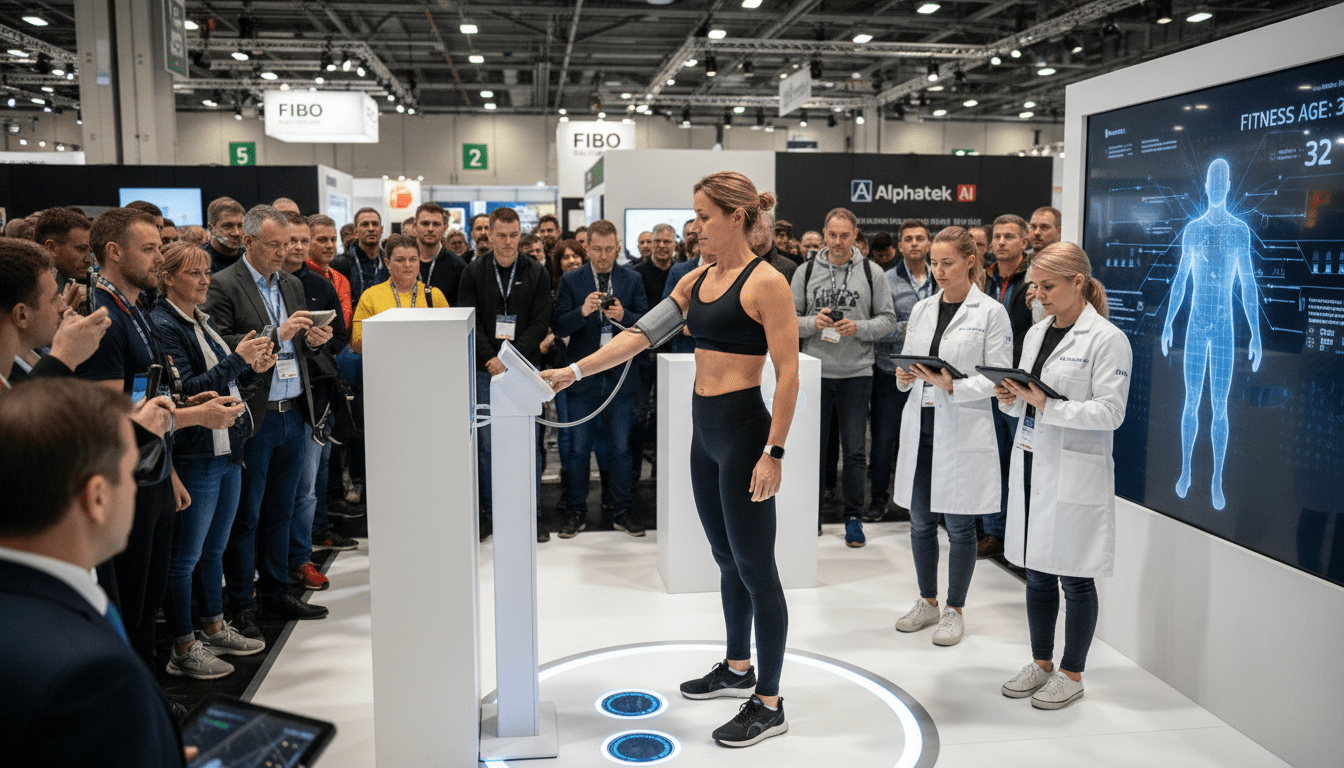
Alphatek’s AI Calculates Fitness Age in Seconds at FIBO 2026
Alphatek unveils an AI-powered system that assesses personal “fitness age” from three short exercises, delivering real-time results at FIBO 2026 in Cologne.
Alphatek presented an artificial intelligence tool at FIBO 2026 in Cologne that tells users their “fitness age” after only three brief exercises on a sensor plate. The company’s algorithm analyzes balance, pull strength and jump power to produce an individualized fitness-age estimate in real time. Visitors at the trade show lined up to test the device and receive an immediate readout of their physiological profile.
Alphatek debuts fitness-age AI at FIBO 2026
Alphatek positioned the system as a consumer-facing evaluation that can fit into gym floors and wellness centers. Company representatives demonstrated how one short session yields a composite score the algorithm converts into an age-equivalent fitness metric. Organizers at FIBO framed the display as part of a broader trend toward data-driven health experiences at trade shows this year.
How the three-exercise protocol works
Users step onto a single sensor plate and perform three guided actions designed to capture complementary physical capacities. Balance tests measure postural stability, a pull action records strength and force generation in the upper body, and a jump assessment quantifies explosive leg power. The tests are short and standardized so the system can compare individual outputs against the algorithm’s normative models.
Metrics behind the fitness-age calculation
The AI aggregates balance, pull and jump parameters into a composite index that the company maps to an estimated “fitness age.” Balance contributes information on neuromuscular control, while pull strength and jump power give insight into muscular capacity and power output. According to Alphatek’s presentation, the algorithm weights these variables to reflect both aerobic and neuromuscular components of functional fitness.
Real-time processing and user experience
Alphatek emphasized that the processing happens on-site and results appear within seconds, enabling immediate feedback for users. The interface displays the calculated fitness age alongside raw metric bars, allowing users to see which domains influenced their score. Staff at the booth guided participants through the short protocol and explained the interpretation of scores for training or rehabilitation planning.
Potential applications in gyms and clinics
Industry observers say a rapid fitness-age assessment could be useful for personal trainers, wellness programs and clinical screenings. A one-minute check could help trainers tailor programs or flag individuals who might benefit from targeted balance or strength interventions. Clinics focused on preventive care could also use such tools as an initial triage to prioritize more comprehensive testing when needed.
Questions on validation and data privacy
Experts cautioned that any fitness-age metric requires transparent validation against longitudinal outcomes before it is adopted widely. How the algorithm was trained, the diversity of the reference population and the device’s error margins are key to understanding its reliability. Additionally, the collection and retention of biometric data raise privacy considerations that operators and vendors must address through clear policies and compliance with data protection laws.
Alphatek said its demonstration model runs comparisons against an internal dataset and is intended for consumer engagement rather than as a clinical diagnostic. Company staff told visitors that the product will evolve through additional testing and external validation as it moves toward broader deployment.
Industry reaction and next steps
Fitness and wellness companies at FIBO viewed the device as part of a growing suite of quick-assessment tools that can enhance member engagement. Some operators described interest in pilot programs that would embed the sensor plate in onboarding routines. Others urged caution, calling for peer-reviewed studies to confirm that the fitness-age metric predicts important outcomes such as functional decline or injury risk.
Alphatek indicated plans to expand testing cohorts and to refine the algorithm’s models, while exploring partnerships with gym chains and rehabilitation centers. The company did not announce pricing or a commercial rollout schedule at the show, instead focusing on live demonstrations and gathering user feedback.
The arrival of rapid, AI-driven fitness assessments reflects a broader shift toward measurable, personalized wellness services in the leisure and healthcare markets. As vendors bring these tools to gyms and clinics, the balance between user convenience, scientific validation and data protection will shape how broadly “fitness age” metrics are adopted.
