
Gordon Schnieder Elected Rhineland-Palatinate Minister-President in Historic CDU–SPD Coalition
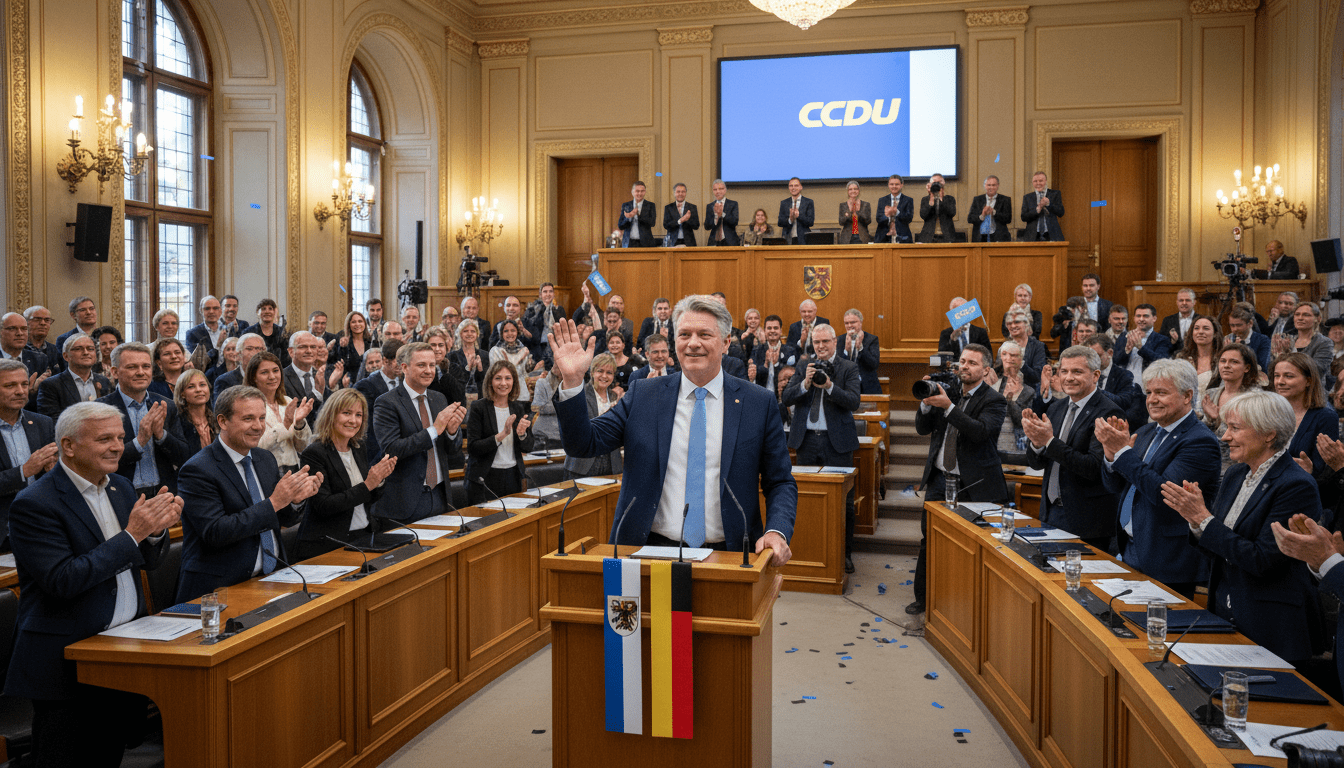
Gordon Schnieder elected Rhineland-Palatinate minister-president on May 18, 2026, leading a historic CDU‑SPD coalition after a narrow parliamentary vote.
Gordon Schnieder, 50, was elected minister-president of Rhineland-Palatinate on Monday, May 18, 2026, receiving 63 votes in the state parliament against 38 no votes and two abstentions. The tally fell eight votes short of the combined strength of the CDU and SPD, underscoring early fissures within the governing alliance. Schnieder’s election marks the first time since 1991 that the CDU holds the state’s top executive post.
Vote outcome and parliamentary arithmetic
Schnieder secured 63 affirmative votes in the Landtag, while 38 members voted against him and two abstained, a result that immediately drew attention to party discipline within the coalition. The CDU and SPD together command a majority on paper, but the eight missing votes suggest dissenters likely came from the SPD ranks. Observers said the result exposes a fragile majority at the outset of the new government.
The March state election delivered 31 percent to the CDU and 25.9 percent to the SPD, leaving both parties with the numerical basis to form a coalition. Those figures translated into the first black‑red alliance in Rhineland‑Palatinate’s postwar history and created expectations that the new executive would need careful internal management to avoid legislative deadlock.
Historic political shift in Rhineland‑Palatinate
The CDU’s ascent to the minister‑presidency ends more than three decades of the party’s exclusion from the state’s top office. Since 1991, the CDU had been in opposition, making Schnieder’s election a symbolic reversal and a significant political milestone for the party at the regional level. Party leaders framed the result as a recovery of voter trust after the March vote.
For the SPD, the outcome represents a rapid transition from leading government to junior partner, altering its internal dynamics and public posture. SPD officials have signaled a willingness to cooperate in government while stressing the need to protect core social policy priorities, but unease among some rank‑and‑file legislators was evident in the parliamentary vote.
Cabinet composition and leadership changes
Alexander Schweitzer, the outgoing SPD minister‑president who assumed the post roughly 18 months ago, did not join Schnieder’s cabinet and has been elected parliamentary leader of the SPD group in the Landtag. Schweitzer’s decision to step back from the executive reflects the party’s reorientation as it adapts to the junior role within the coalition.
Sabine Bätzing‑Lichtenthäler of the SPD was appointed deputy minister‑president and will head the Ministry for Labour, Social Affairs, Health and Demography, a portfolio she held until 2021. The new cabinet lineup blends experienced ministers with new faces and will be watched closely for signals on health, labor and demographic policy priorities in the coming legislative session.
Parliamentary presidium reorganization
The newly constituted Landtag elected CDU politician Matthias Lammert as its president, triggering a reshuffle of the assembly’s presidium. Because the two largest parties now govern together, the assembly expanded the presidium to include a third vice‑presidential slot for the opposition. The AfD’s nomination for the position was rejected by CDU, SPD and Greens, who instead elected Green politician Katharina Binz as a vice‑president.
The change to the presidium marks a procedural response to the altered majority landscape and aims to preserve representation for opposition voices while accommodating the new coalition’s governance needs. Analysts note the arrangement is intended to prevent a single opposition party from monopolizing vice‑presidential influence over parliamentary business.
Opposition realignment and constitutional change
The new Landtag has four parliamentary groups following the election: CDU, SPD, AfD and Greens. The AfD, with 19.5 percent of the vote, emerged as the largest opposition force and immediately signaled intent to use its strengthened position to push for multiple investigative committees. The Greens fell to 7.9 percent and, for the first time in 15 years, moved into opposition.
FDP and Free Voters failed to clear the five percent electoral threshold and will not be represented in the current assembly. In the final days of the previous legislature, a cross‑party amendment to the state constitution lowered the quorum required to initiate certain parliamentary proceedings to one quarter of votes. Supporters argued the change modernized procedures, while the AfD criticized it as a “self‑demolition of democracy,” alleging the amendment targeted its parliamentary rights.
Early tests and governing challenges ahead
Schnieder enters office with a narrow working majority and immediate expectations to govern on a platform shaped in coalition talks. The eight‑vote gap on his election night will be an early test of the CDU‑SPD pact’s ability to marshal support for legislation, especially on contested issues such as health, labor and oversight of state institutions. Coalition leaders have emphasized dialogue and compromise as central to delivering stable governance.
The presence of a strong AfD opposition and a reduced Green presence in government will shape parliamentary debates and the coalition’s legislative calculus. Schnieder’s immediate priorities will include consolidating party support, finalizing cabinet plans, and setting a legislative agenda that can pass a somewhat uncertain Landtag, all while responding to calls for transparency from both allies and critics.
The state’s political landscape has shifted decisively, but the tight arithmetic of the new Landtag suggests that early cooperation and discipline within the CDU‑SPD coalition will be decisive for Schnieder’s ability to govern effectively.
