
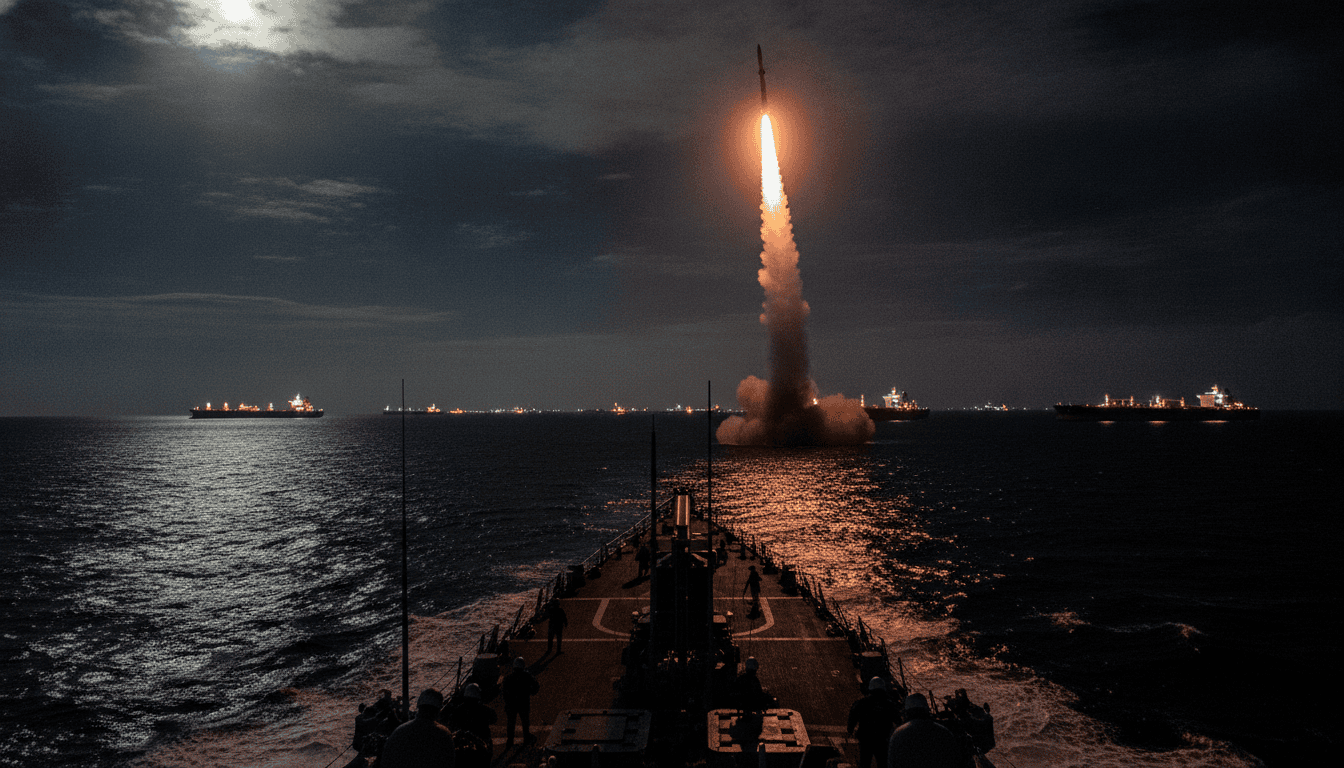
US strikes Iran after ship attacks; explosions reported near Bandar Abbas
US strikes Iran near the Strait of Hormuz after ship attacks: U.S. forces struck 80+ targets as President Trump ended the ceasefire and reimposed oil sanctions.
The United States launched strikes against targets in Iran overnight, saying the operations were intended to blunt Tehran’s capacity to threaten freedom of navigation in the Strait of Hormuz. The phrase “US strikes Iran” quickly circulated in official statements and on social platforms after both American military authorities and Iranian state media reported explosions and defensive activity in southern Iran. The developments follow renewed tensions after attacks on commercial vessels in the gulf that Washington has attributed to Iran.
U.S. regional command confirms strikes
The U.S. regional command in the Middle East confirmed the strikes and described them as a defensive measure aimed at degrading Iranian capabilities used to threaten shipping. In a brief post on the social platform X, the command said the operations targeted sites linked to maritime harassment and posed risks to international navigation.
U.S. officials framed the strikes as proportional and focused, saying the goal was not to start a broader conflict but to remove immediate threats to vessels transiting the Strait of Hormuz. Washington also announced the reinstatement of oil sanctions earlier as part of its pressure campaign against Tehran.
Explosions and air-defence activity near Bandar Abbas
Iranian state media reported explosions in the southern province and said Iranian air-defence units engaged what they described as “hostile targets” in the area around the port city of Bandar Abbas. Local accounts and official broadcasts said authorities detected incoming threats and took defensive measures to protect critical coastal infrastructure.
There was no independent verification of the damage in the immediate aftermath, and international monitors had not published assessments at the time of reporting. Satellite imagery and third-party confirmations are often used in such incidents, but those sources had not been released publicly when military statements were issued.
Trump ends ceasefire and orders strikes from Ankara
President Donald Trump, speaking in Ankara, said he had terminated a previously agreed ceasefire with Iran and authorized the strikes. “We will hit them hard tonight,” he said, adding that Tehran was violating the framework agreement “every day,” a reference to a recent pact intended to halt hostilities.
Trump’s comments marked a sharp turn in U.S. policy three weeks after the signing of a framework agreement that had briefly reduced direct military engagements. Administration aides said the president concluded that the ceasefire had been undermined by continued Iranian actions against maritime traffic and therefore warranted renewed military pressure.
Attacks on ships prompted U.S. response
U.S. officials have pointed to a series of recent attacks on commercial vessels near the Strait of Hormuz as the proximate cause for the strikes. American military statements accused Tehran of orchestrating or supporting operations that endangered merchant shipping and regional stability.
In response to those attacks, U.S. forces moved to strike more than 80 Iranian-linked targets around the Strait, according to military briefings. The strikes were described as aimed at infrastructure and assets used to carry out or coordinate maritime harassment rather than at urban population centers.
Sanctions and the pressure campaign
Alongside the kinetic operations, the U.S. announced it was reinstating oil sanctions against Iran, tightening economic pressure on Tehran. Officials indicated the dual track of military action and economic measures was designed to compel Iran to cease behaviors that the U.S. says threaten international commerce and security.
Analysts say the combination of strikes and sanctions increases leverage but also raises the danger of escalation, especially if Tehran elects to retaliate against U.S. forces or allied shipping. Markets and shipping firms typically respond to such developments with route adjustments and insurance reassessments, amplifying the economic fallout of military moves.
The strikes and the abrupt end to the ceasefire inject fresh uncertainty into a region already strained by years of confrontation. Observers warned that further exchanges could broaden quickly, especially if either side miscalculates or if proxy actors become more active.
The situation remains fluid, and independent verification of all reported strikes and damage is pending; international responses and any diplomatic initiatives to de-escalate will be closely watched in the coming days.
