
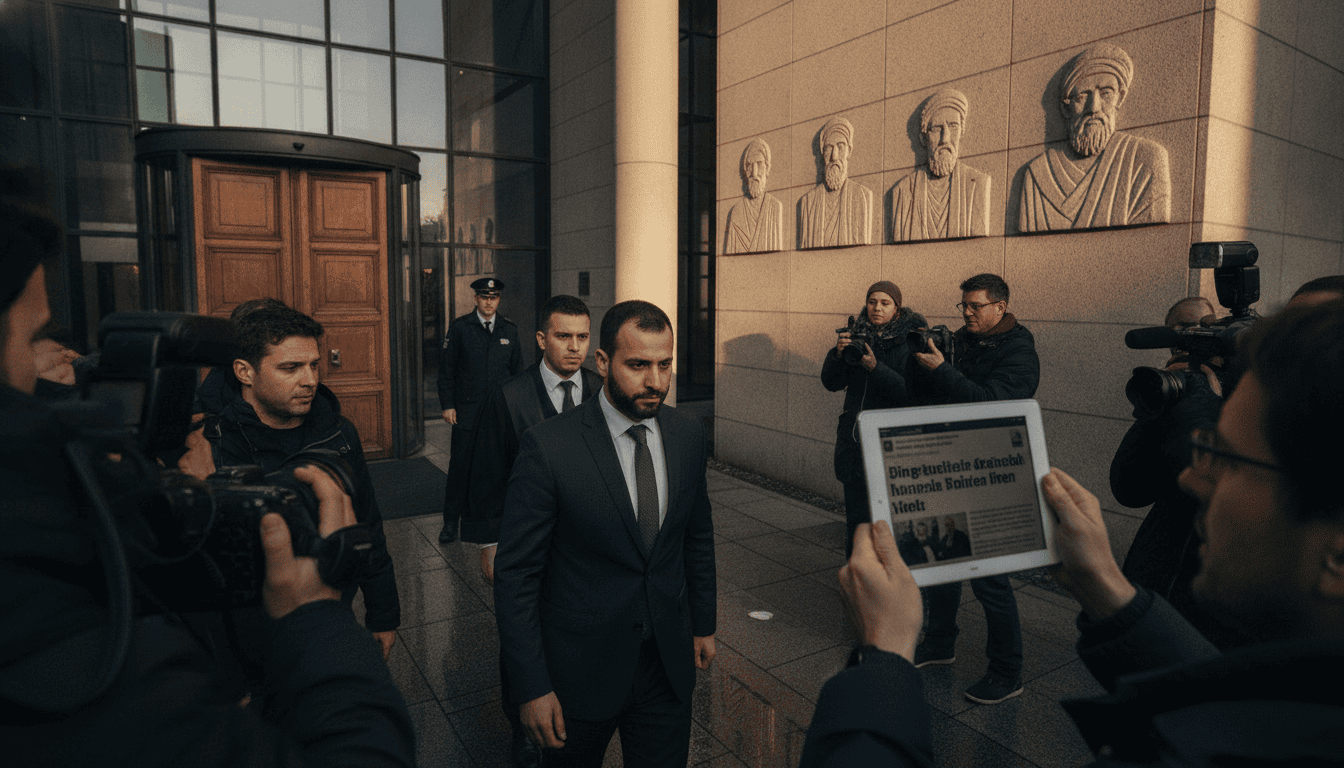
Hudhaifa Al‑Mashhadani fined €17,100 by Berlin court over false U‑bahn assault claim
Hudhaifa Al‑Mashhadani fined €17,100 by Berlin court for a false November 2025 U‑bahn claim; media scrutiny, investigations and honors now under review.
Director issued penal order by Tiergarten court
The head of the Deutsch‑Arabische Schule Ibn Khaldun, Hudhaifa Al‑Mashhadani, has been hit with a penal order from the Amtsgericht Tiergarten ordering payment of €17,100. The court converted the sanction into 90 day‑rates of €190 following its finding that Al‑Mashhadani made a materially false report to police about an alleged attack in November 2025. According to the court spokesperson, the claim—of being struck and nearly pushed in front of an oncoming U‑bahn—was not supported by evidence gathered during the inquiry. Al‑Mashhadani’s lawyer has lodged an objection to the penal order, meaning the matter is likely to proceed to a public hearing.
Investigation opened then dropped against accused man
Berlin prosecutors initially opened an investigation against a man identified by Al‑Mashhadani, after the school director shared the individual’s social‑media profile with police. The man, described in reporting as a well‑known pro‑Palestinian activist, was investigated for assault but the public prosecutor later discontinued the proceedings for lack of sufficient evidence. Court records and statements indicate the alleged conduct amounted, at most, to a brief and non‑violent hand gesture while boarding the train. The discontinuation exposed a mismatch between the original complaint and the material facts documented by investigators.
Media attention and subsequent fact‑checking
The purported U‑bahn attack generated nationwide media coverage and political reaction when Al‑Mashhadani first publicised the incident on social platforms and in interviews. The case prompted commentary from public figures and profiles in several major German outlets, reflecting Al‑Mashhadani’s visibility as a school founder and public opponent of antisemitism. Subsequent reporting by other newsrooms reviewed surveillance footage and witness accounts, which raised questions about the accuracy of the original account. One major newspaper withdrew portions of its earlier coverage after internal review, and later investigative pieces detailed additional inconsistencies in Al‑Mashhadani’s statements.
Honours and awards now at stake
Al‑Mashhadani’s public recognition—recent awards and civic honours—has come under renewed scrutiny since the court’s penal order became known. He received the “Band für Mut und Verständigung” and a borough honorary pin in late 2025, distinctions that prompted public praise at the time. Officials from the awarding bodies and the Neukölln district have announced they will reconvene to consider possible responses if the penal order becomes final. Representatives said there is no automatic mechanism for revocation and that each case will be reviewed on its particular facts.
Questions about résumé and documentary evidence
Investigations by reporters have also cast doubt on elements of Al‑Mashhadani’s biography and professional background, including claims about academic titles and prior employment with foreign ministries. Former Iraqi officials have disputed assertions he made about personal connections and past roles, and reporting has raised the possibility that at least one document submitted in his name may have been falsified. Prosecutors have declined to comment publicly on whether those specific allegations have prompted separate criminal inquiries. The school’s office has said Al‑Mashhadani is currently on a long‑term absence, and it cannot confirm his immediate role in day‑to‑day operations.
Legal course and institutional consequences
The objection to the penal order triggers the standard process that converts the written sanction into a contested hearing before a judge, where evidence and witness testimony will be examined. A penal order is a procedural tool intended to resolve minor offences efficiently, but an objection brings the case into full public process and gives both sides an opportunity to present proof. Beyond the courtroom, the dispute has prompted civic institutions, donors and partner organisations to reassess associations with the school while facts are being established. Community leaders and education officials have said they will await the outcome of formal legal steps before taking definitive administrative action.
The case of Hudhaifa Al‑Mashhadani has thus moved from a high‑profile allegation of violence to a broader inquiry into the accuracy of public statements and personal credentials, with potential repercussions for his standing and for the institution he founded. As the objection to the penal order advances, both legal proceedings and institutional reviews are expected to determine whether the contested facts lead to further charges, disciplinary measures, or the confirmation of prior awards.
