
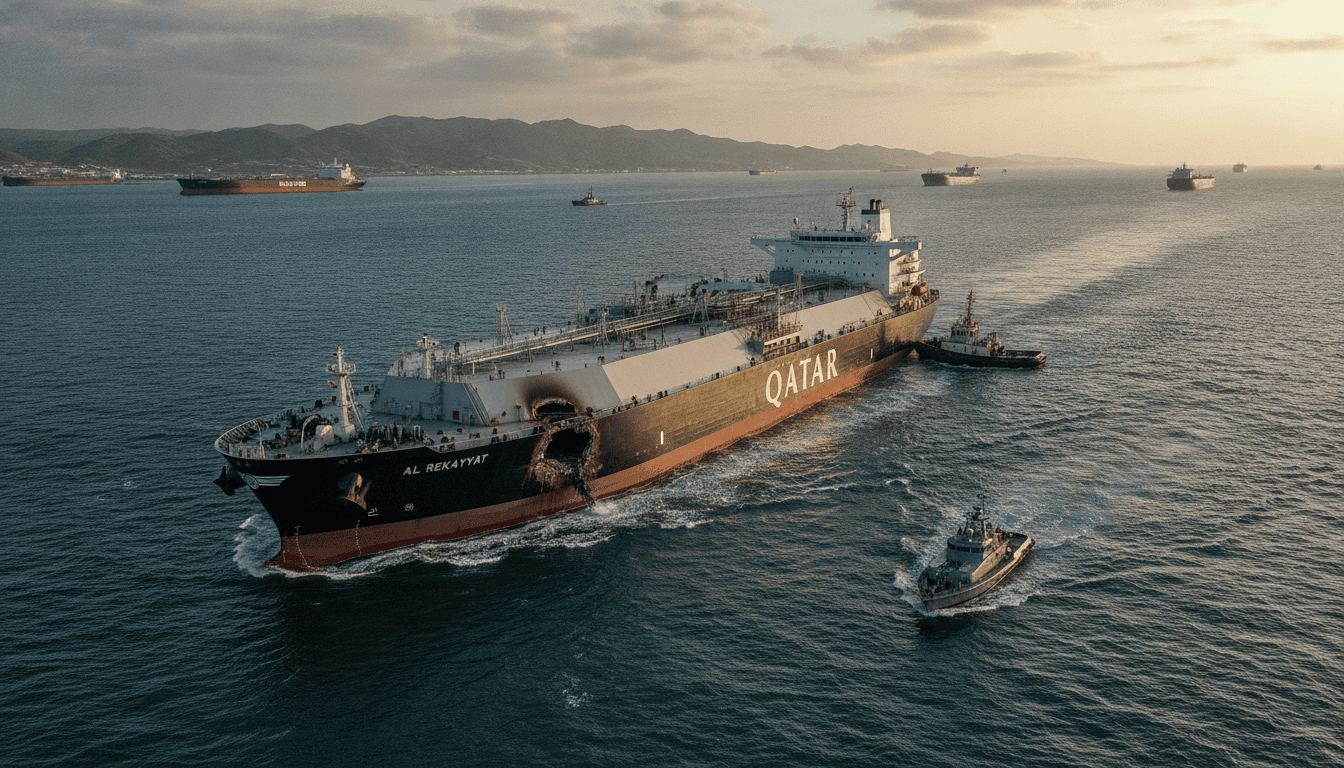
Qatar’s LNG tanker Al Rekayyat hit near Strait of Hormuz; crew evacuated amid engine-room fire
Qatar’s LNG tanker Al Rekayyat was struck near the Strait of Hormuz and evacuated after an engine-room fire raised the risk of explosion, Reuters reported, with Doha blaming Iran for the attack.
The Qatar-flagged liquefied natural gas (LNG) carrier Al Rekayyat was struck while transiting the Strait of Hormuz, setting off a fire in the engine room and prompting a full evacuation of its crew, Reuters cited insiders as saying. The incident occurred during the night and the vessel issued a distress call reporting a drone strike that hit above the engine compartment. Qatar’s government publicly blamed Iran for the strike, while Iranian authorities had not commented as of the latest reports.
Crew Evacuated After Distress Call
A recorded radio message from the Al Rekayyat, provided to Reuters, included repeated “Mayday” calls and described the engine room as burning and filled with smoke. The ship’s captain reported being struck by a drone on the port side above the machinery spaces and said the crew could not assess further damage. Insiders and rescuers confirmed the crew were brought to safety following the distress signal.
Officials and rescuers at the scene prioritized the removal of personnel amid concerns that the blaze could trigger a catastrophic detonation because the vessel was carrying liquefied natural gas. Local maritime interceptors assisted in the evacuation, according to sources cited by Reuters, and the rescued crew were reported to be in stable condition pending further medical checks.
Fire in Machinery Spaces Heightens Explosion Concerns
Sources told Reuters the fire in the Al Rekayyat’s engine room created a significant risk because of the cargo type and the location of the blaze relative to critical systems. LNG carriers are designed with extensive safety systems, but fires in or near the engine room can endanger those protections and complicate firefighting efforts. Insiders warned that if the fire reached fuel lines or volatile areas, the ship could face a detonative scenario.
Maritime experts reached by other outlets after the initial reports noted that firefighting access and cooling systems are essential to prevent escalation on LNG vessels, and that rapid action by trained teams is critical in the first hours after impact. Authorities and classification societies typically investigate whether damage-control systems functioned as intended in such events.
Saudi Oil Tanker Also Reported Damaged
Reuters said a Saudi-flagged crude oil tanker was also damaged in the same incident, although details about the extent of its damage and whether it suffered casualties were limited in the initial reporting. Both vessels were in the same corridor near the Strait of Hormuz when the attacks were reported, a chokepoint for global energy shipments. Maritime traffic in the area is highly concentrated, which amplifies risks when a security incident occurs.
Shipping firms and insurers routinely monitor such developments closely, and an incident involving multiple tankers typically triggers rapid assessments of route safety and insurance exposures. Local authorities and regional navies often step in to coordinate responses when multiple commercial vessels are affected.
Qatar Attributes Strike to Iran; Tehran Silent
Qatar’s government publicly blamed Iran for the attack on the Al Rekayyat, a rare direct accusation involving a Gulf state whose diplomacy has frequently positioned it as a mediator. Doha has been involved in shuttle diplomacy and back-channel negotiations in recent months, and the targeting of a Qatari vessel represents a potentially significant escalation. Reuters reported the attribution citing Qatari statements and insider accounts.
Iranian officials did not immediately respond to the allegations, and no official statement had been released by Tehran at the time of Reuters’ reporting. International actors and maritime agencies typically seek corroboration from technical investigations, including analysis of weapon fragments, drone telemetry, or satellite imagery, before making conclusive attributions.
First Qatari Ship Hit Since Regional Escalation Began
According to Reuters, this is the first time a Qatari vessel has been struck since a broader pattern of maritime attacks and retaliatory operations intensified in late February. The targeting of a Qatar-flagged ship is notable given the emirate’s role as a major LNG exporter and as an intermediary in regional diplomacy. The incident may complicate Qatar’s position and its ability to act as a conduit for talks between other parties.
Regional analysts cautioned that while isolated incidents at sea have occurred previously, an attack on an LNG carrier raises particular alarm because of the potential for humanitarian and environmental consequences as well as implications for energy security. Investigators will likely examine whether the attack was deliberate, misdirected, or part of a wider campaign targeting energy infrastructure.
Possible Effects on Energy Routes and Markets
The strike near the Strait of Hormuz, one of the world’s busiest maritime energy corridors, has the potential to influence shipping decisions and market sentiment, even if direct supply disruptions are limited. Market participants and transportation planners often react swiftly to perceived increases in transit risk, which can lead to short-term rerouting or higher insurance premiums for vessels calling at or passing through high-risk areas.
Authorities in the region and international naval partners may increase patrols or convoy protocols in response to the incident, steps that can mitigate near-term risks but also complicate commercial scheduling. Energy traders and ports will monitor developments and official investigations for indications of prolonged risk to LNG and crude shipping lanes.
The incident is under continued investigation, and maritime authorities, insurers and governments are awaiting forensic examinations and official statements to clarify responsibility, the exact sequence of events, and the full scale of damage to the vessels involved.
