
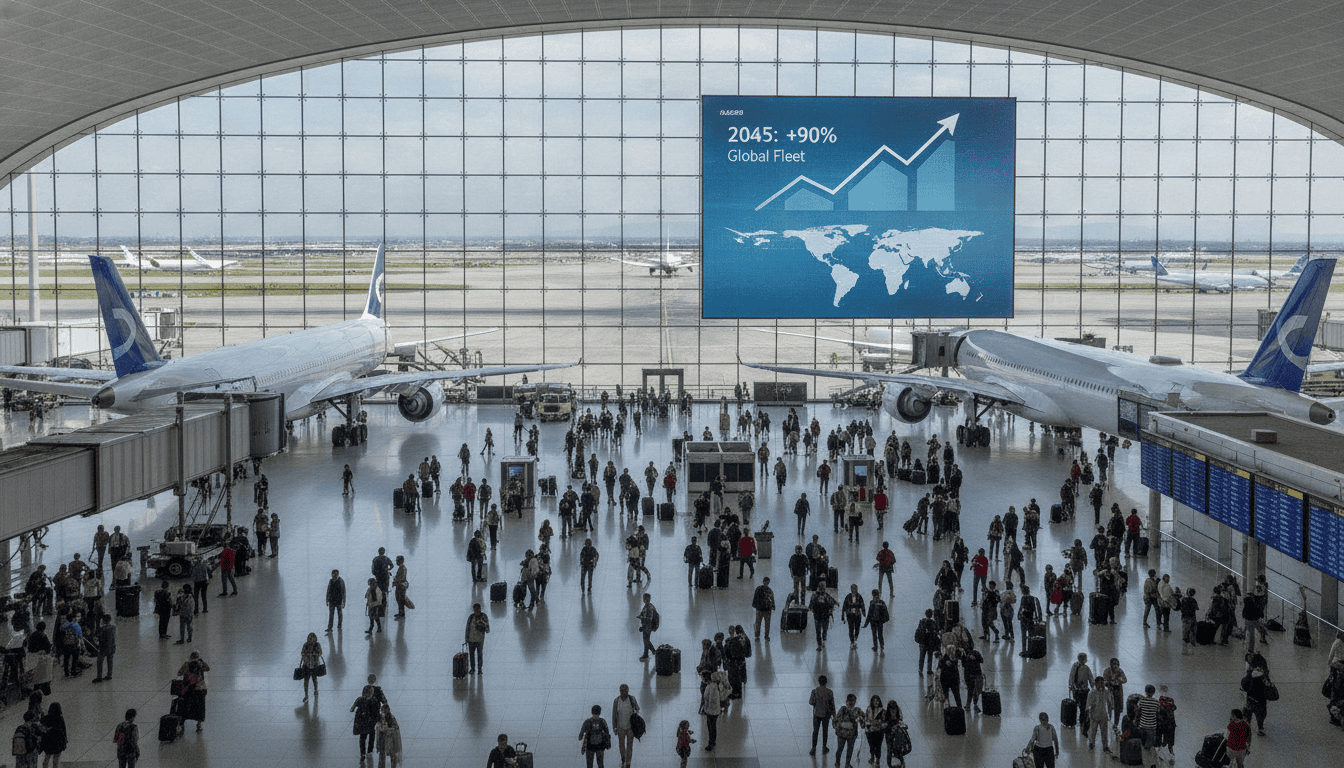
Airbus forecast: Global passenger jet fleet to nearly double to 45,550 by 2045
Airbus forecast predicts the global passenger jet fleet will climb from about 23,000 today to roughly 45,550 by 2045, driving demand for some 42,060 new aircraft. The manufacturer attributes the surge to growing air travel demand, urban expansion, and fleet renewal, with implications for manufacturers, airlines and regional capacity.
Global fleet expansion and new-aircraft demand
Airbus projects the world will need 42,060 new passenger aircraft with more than 100 seats through 2045, a requirement that combines replacements and growth. Of that total, roughly 19,820 jets would replace older machines while about 22,240 would be added to support sector expansion. If these projections materialize, the shipments will sustain both Airbus and Boeing production lines for decades and reshape airline networks worldwide.
Economic growth and urbanisation as demand engines
Airbus links much of the forecasted demand to steady economic growth, a rising global middle class and ongoing urbanisation trends. The company highlights a fast-growing number of mid-sized cities — those with more than 250,000 inhabitants — which it expects to increase by over 600 to more than 2,800 by 2045. That densification is expected to create new city-pair travel demand that supports more direct services and higher aircraft utilization.
A220 role in opening new city pairs
Airbus’s analysis finds that smaller, more fuel-efficient types such as the A220 could unlock numerous routes that are uneconomic with larger jets. The manufacturer’s market team calculates some 2,200 additional city-pair combinations could become viable with the A220 family in airline fleets. Marketing lead Joost van der Heijden says those smaller aircraft help carriers offer more nonstop services, reflecting a passenger preference for direct flights.
Regional distribution and Europe’s shrinking slice
The Airbus outlook predicts a shifting regional demand pattern, with Asia — from the Middle East to the Pacific — absorbing the largest share of new jets at nearly 23,000 aircraft. By contrast, Europe’s share is forecast to be comparatively modest, with an estimated requirement of about 8,190 new aircraft. The industry association IATA has also signalled slower growth in Europe, citing market maturity, airport constraints and higher taxation as restraining factors.
Deliveries, backlogs and production capacity
Airbus expects to deliver about 870 aircraft this year, with internal assessments suggesting the possibility of exceeding 900, and reported first-half deliveries near 351. Boeing delivered roughly 600 aircraft in 2025 and had completed about 250 deliveries through May of this year, according to manufacturer disclosures. Both makers carry substantial backlogs — Airbus around 9,200 unfilled orders and Boeing approximately 6,700 — creating a multi-year pipeline that will test supply chains and assembly capacity.
Fleet renewal, efficiency and airline strategy
A significant portion of the demand reflects airlines replacing older, less efficient jets to cut fuel costs and emissions, after pandemic-era deferrals and production delays raised average fleet ages. Airbus assumes that by 2045 most carriers will have transitioned to the newest generation types such as A320neo-family, A330neo and A350, alongside Boeing’s 737 MAX, 787 and 777X models. That transition is expected to reduce per-flight fuel burn and make new nonstop markets commercially viable, accelerating route proliferation.
Outlook uncertainties and operational implications
The company’s baseline assumes passenger traffic grows at close to 4 percent annually, a pace steeper than some other forecasts and one that substantially influences aircraft demand totals. Should growth follow more conservative scenarios like IATA’s 3.1 percent baseline, fleet expansion would still be significant but the timing and scale of orders could shift. Airlines, airports and regulators will need to weigh investments in infrastructure, slot capacity and environmental measures as the market evolves.
Airlines and manufacturers face a prolonged period of high demand for both new jets and replacement aircraft, with regional shifts favouring Asian markets and new-generation types enabling expanded nonstop connections. The scale of projected orders and backlogs suggests the next two decades will be defined by production ramp-ups, route network realignments and continued pressure to decarbonise operations.
