
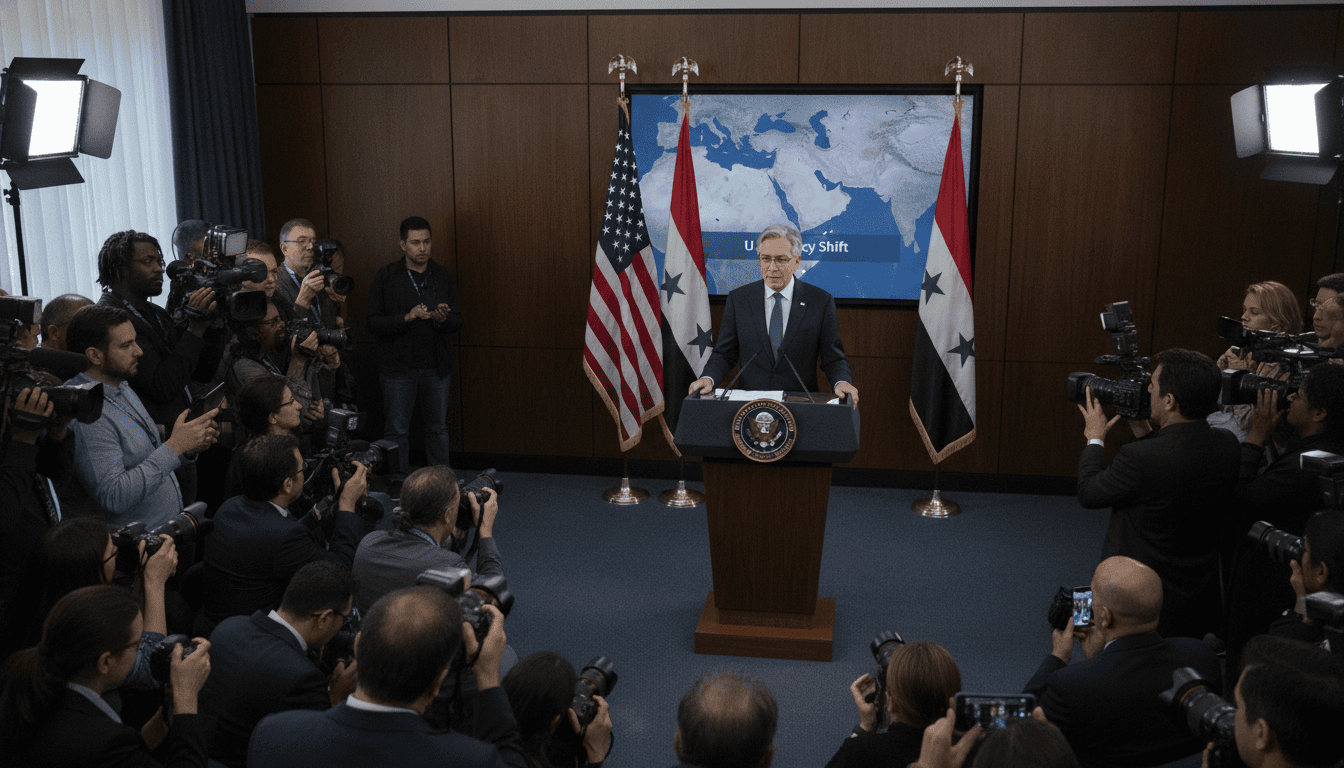
US Begins Process to Remove Syria from State Sponsors of Terrorism List After Ankara Meeting
The US has formally begun removing Syria from the State Sponsors of Terrorism list, a move that opens sanctions relief and new avenues for reconstruction, trade and aid. President Trump notified Congress after a 45‑day pre‑notification period, initiating the statutory process to rescind Syria’s four‑decades‑old designation. Officials say the step follows an executive order last year, formal assurances from Damascus, and recent counterterrorism actions by Syria’s government.
U.S. announces formal delisting process
The Trump administration publicly signaled on Wednesday that it will start rescinding Syria’s State Sponsors of Terrorism designation, a status in place since 1979. Administration officials framed the action as a pivotal shift in bilateral relations that removes a major legal obstacle to expanded US engagement and economic activity. The decision was announced after high‑level talks in Ankara and formal notification to Congress, beginning a process set out in US law.
Sanctions relief and export changes
Removing Syria from the SST list primarily lifts export restrictions on defense‑related items and other controlled goods, while easing barriers to some forms of foreign assistance. The change would allow broader US exports and could permit a wider scope of aid, including support that touches on security forces and reconstruction efforts. Economic analysts say delisting alone will not immediately flood Syria with investment, but it clears a significant hurdle that previously deterred international banks and commercial partners.
Political calculus in Washington and Ankara
The announcement followed a meeting between President Trump and Syrian leader Ahmed al‑Sharaa on the sidelines of the NATO summit, a summit that Turkish officials helped broker in support of Sharaa’s reemergence. The White House cited an executive order issued on June 30, 2025, and said it had obtained formal assurances from Damascus that it will not endorse international terrorism. Congressional leaders were pre‑notified as required, and the administration formally communicated its intent to rescind the designation after the 45‑day notice period.
Reactions from analysts and Syrian advocacy groups
Observers and advocacy groups offered mixed reactions to the move, praising the potential for reconstruction while warning about accountability and inclusion. An associate fellow at Chatham House described the shift as consequential for Syria’s economic recovery but cautioned that civil society concerns about justice and political inclusion remain unaddressed. Syrian‑American advocacy groups that lobbied for delisting welcomed the decision as a necessary step to enable reconstruction and to integrate Syria into regional economic activity.
Security and reconstruction implications
Officials argue that stabilizing Syria through economic reintegration will serve broader regional and US national security interests by reducing the need for prolonged external military involvement. The delisting clears the way for some US assistance programs and for international financial mechanisms that have been constrained by the SST status. At the same time, humanitarian organizations and rights monitors say removal of the designation must be accompanied by robust safeguards to ensure aid reaches civilians and that reconstruction does not entrench impunity.
Next steps in the delisting timeline
Following the formal notification to Congress, the delisting process moves through administrative and possibly congressional review phases, during which lawmakers and agencies can examine the legal and policy implications. The administration indicated it expects to pursue expanded diplomatic and economic engagement with Syria contingent on continued implementation of counterterrorism commitments. International actors and private investors will also weigh legal, reputational and security factors before re‑entering Syrian markets.
This decision marks a turning point in US policy toward Syria, with long‑term outcomes depending on compliance, oversight and the pace of political change in Damascus. The delisting removes one of the most significant remaining legal barriers to reconstruction and trade, but experts emphasize that reopening economic ties will be gradual and conditional. As Washington and its partners move forward, the balance between stability, accountability and humanitarian needs will shape the next phase of Syria’s international reintegration.
