
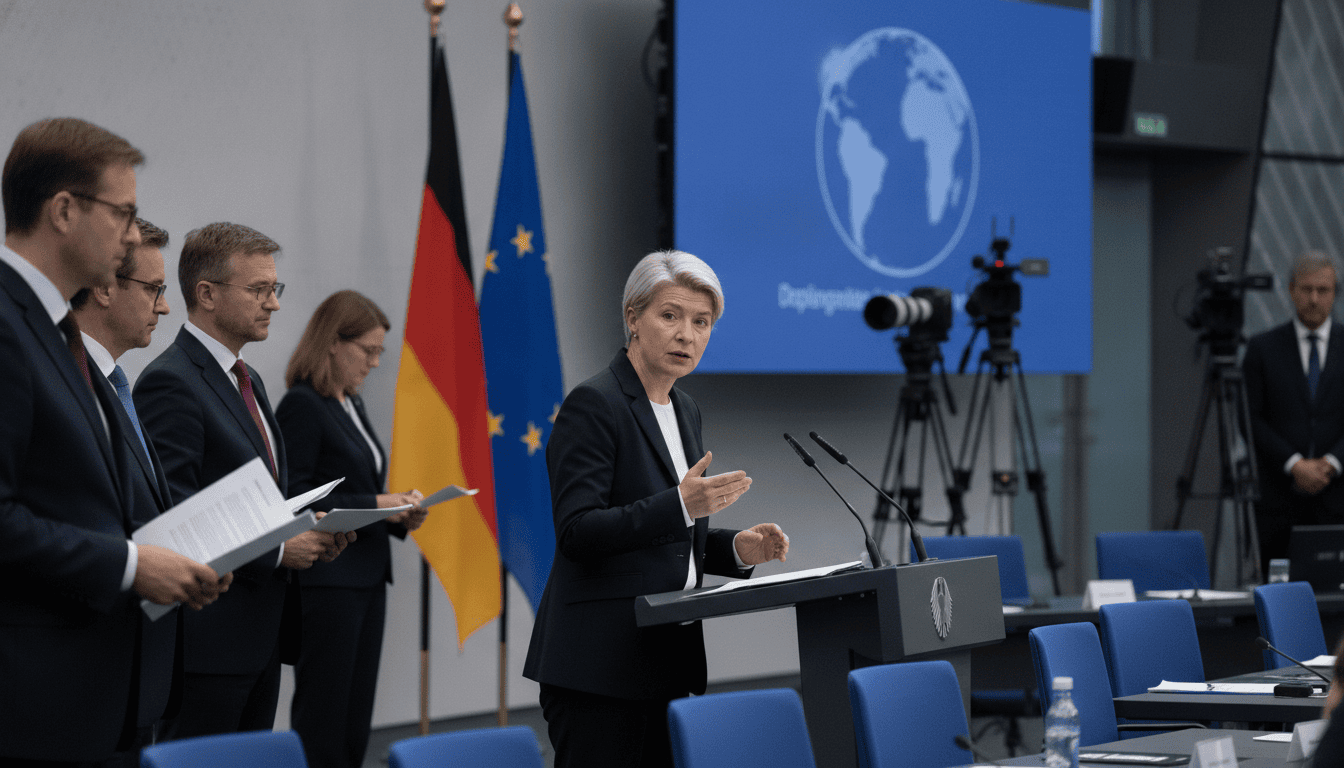
Wadephul Calls for Iran Negotiations After US Strikes
German FM Johann Wadephul urges Iran to start serious negotiations after US strikes; says April ceasefire can be a basis and warns Strait of Hormuz stay open.
Germany’s foreign minister Johann Wadephul said diplomacy has not yet failed and urged Iran to enter serious Iran negotiations following recent US strikes, telling NDR Info that Tehran must grasp the moment for meaningful talks. Wadephul, a CDU politician, stressed that the April ceasefire remains a potential foundation for deeper negotiations and that the international community needs immediate assurances about maritime security. He added that Iran must abandon any pursuit of nuclear armament to create a credible path toward ending the conflict. The minister also warned that continued interference with shipping in the Strait of Hormuz would violate international law and imperil global trade.
Wadephul: Diplomacy still viable despite strikes
Wadephul told NDR Info that the series of US attacks had not rendered diplomatic efforts pointless and that negotiators should not yet declare failure. He framed the current moment as one in which Iran must decide whether to commit to a diplomatic solution or further escalate tensions. The minister emphasized the need for Tehran to accept clear limits on any nuclear program as part of the bargaining framework. He described a negotiated settlement as still achievable if Iran responds with a sincere willingness to engage.
April ceasefire seen as negotiation foundation
The April ceasefire, negotiated earlier in the year, remains central to Germany’s diplomatic approach, Wadephul said. He argued that the agreement can serve as a pragmatic starting point for more comprehensive talks between Tehran and Washington. According to the minister, abandoning that framework now would remove the most realistic channel for de-escalation. Wadephul urged partners to preserve the ceasefire as a diplomatic lifeline and to use it to rebuild confidence step by step.
Nuclear restraint a precondition for talks
A clear message of Wadephul’s remarks was that Iran must abandon any ambition to acquire nuclear weapons if negotiations are to succeed. He said the Iranian leadership still appears not to have accepted the requirement to forego nuclear armament, a stance that complicates trust-building. For Wadephul, a binding commitment on the nuclear question would be a decisive confidence-building measure. He suggested that without such a pledge, deeper negotiations would lack credibility for many international stakeholders.
Strait of Hormuz and maritime security concerns
Wadephul singled out the Strait of Hormuz as an area where immediate relief is essential for global trade, saying the waterway must remain accessible to international shipping. He accused Iranian actions of routinely obstructing passage and described this conduct as a violation of the law of the sea. The minister warned that sustained disruption in the narrow, strategically vital channel would have widespread economic consequences. Ensuring safe navigation, he argued, is not only a regional issue but a matter of global economic stability.
Implications for Germany and international partners
Wadephul’s comments signal a dual-track approach by Berlin: press for renewed diplomacy while underscoring security concerns that affect international commerce. His emphasis on the April ceasefire and on nuclear restraint aligns with a broader European interest in preventing further military escalation. The minister’s statements also indicate pressure on Tehran to make demonstrable concessions if it seeks relief from sanctions or normalization of relations. Berlin appears to be positioning itself as both a mediator and a critic, urging immediate steps that would lower the risk of broader conflict.
Obstacles and pathways to renewed talks
Wadephul acknowledged that significant obstacles remain, including mutual mistrust, recent military actions, and Tehran’s posture on sensitive security matters. He nonetheless maintained there is still a window for negotiations provided Iran signals seriousness with concrete commitments. Experts and diplomats would likely press for verification mechanisms, phased concessions, and international guarantees as part of any renewed process. For Wadephul, the alternative to negotiations is a prolonged period of instability that would threaten both regional security and international trade routes.
Germany’s foreign minister framed the current juncture as a critical test of Iran’s willingness to choose diplomacy over escalation. He left open the possibility that negotiations could still take place on the basis of the April ceasefire, but he made clear that such talks require Tehran to abandon nuclear armament ambitions and to stop obstructing the Strait of Hormuz. The minister’s intervention sets a tone for Berlin’s next steps: preserve diplomatic channels while pressing for tangible actions that restore stability and protect global maritime commerce.
