
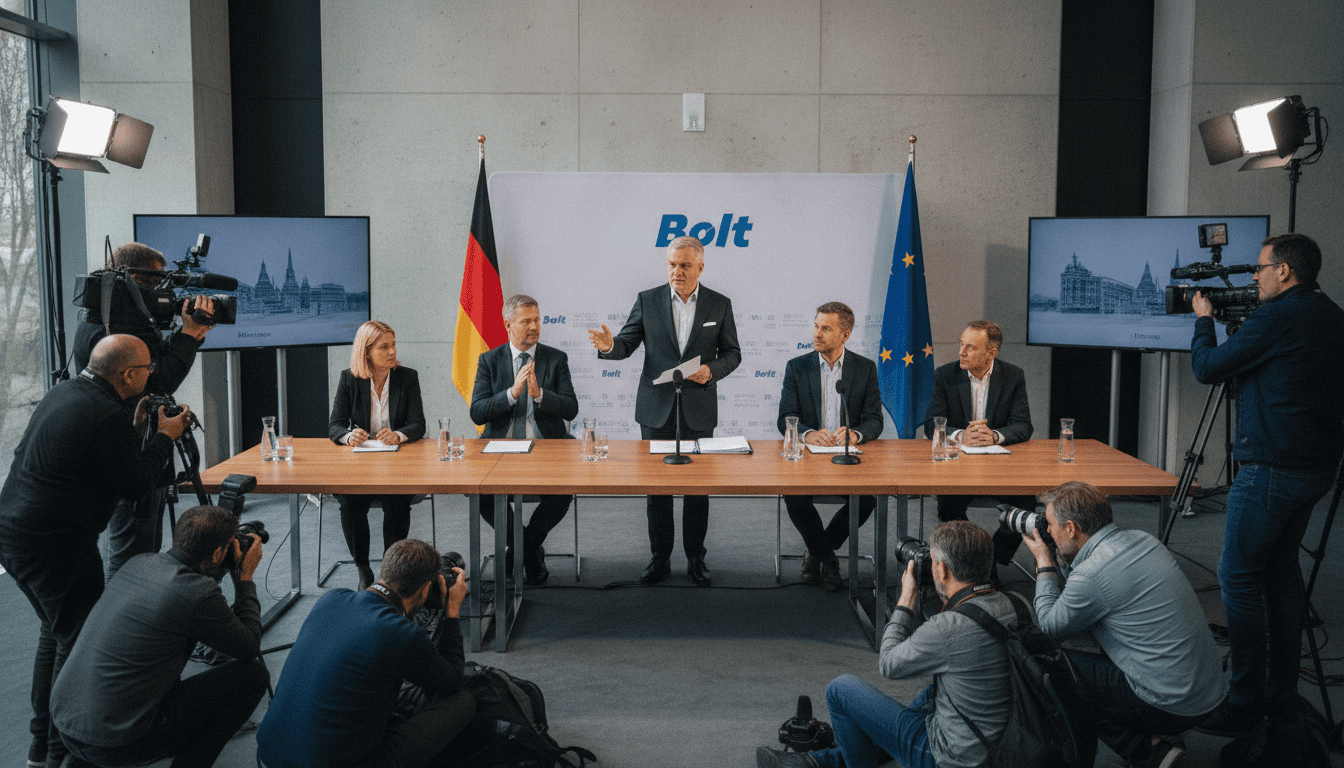
Minimum fares ignite legal showdown between Bolt and German cities
Bolt Germany head Christoph Hahn says city minimum fares curb ride-hailing options and has opened legal battles, saying the rules limit affordable access.
Bolt’s Germany chief, Christoph Hahn, has escalated a dispute with multiple German cities after municipal councils imposed minimum fares on ride-hailing services. The new rules, in force in cities including Cologne (from June 1) and Munich (from July 4), require platform rides to track taxi tariffs and limit how much cheaper they may be, a move Bolt says will reduce affordable ride options for many residents. Hahn and his team have filed suits in several municipalities and warn that demand and driver incomes are already being affected.
Bolt challenges minimum fares in Cologne, Munich and other cities
Bolt has launched legal challenges against municipal minimum fares, saying the measures disadvantage platform-based rental-car-with-driver services. Company figures cited by Bolt show that demand in Cologne fell sharply after rules took effect and that average trip prices there rose markedly. Hahn argues the regulations, designed to protect the taxi sector, effectively force ride-hailing services into a taxi pricing model and restrict dynamic pricing that platforms use to match supply and demand.
Bolt has confirmed filings in Cologne and Essen and says it intends to sue in other cities considering similar measures. The company frames litigation as a reluctant response, maintaining it would prefer constructive talks with local authorities but sees court action as necessary to defend its business model.
Cities defend minimum fares as protection for public services and taxis
Municipalities introducing minimum fares frame the policy as preserving reliable public transport functions performed by taxis. City officials contend that unregulated price competition from platforms undermines taxi operators’ ability to provide continuous, universal service. A legal opinion commissioned by Dortmund warned that competitive conditions for taxis had deteriorated so far that the sector risked being displaced by ride-hailing intermediaries.
The regulations vary by location: some require platform fares to align closely with the statutory taxi base and per-kilometer rates, while others set caps on allowable discounts. Municipal statements say negotiations with platform companies failed to produce an agreed pricing corridor, leaving councils to act in the public interest.
Court rulings and legal uncertainties across municipalities
German courts have issued varied decisions as disputes reach the judiciary, creating a mixed legal landscape. In Leipzig, an administrative court found that minimum fares can be permissible provided they do not exceed ordinary taxi tariffs. Essen temporarily suspended its minimum fares amid litigation over how the rules were drafted, though the city later applied fares to trips both starting and ending within its boundaries.
These rulings have given both sides selective legal confidence: taxi associations welcome decisions that leave minimum fares intact, while platforms point to legal ambiguity and inconsistent application across jurisdictions as grounds for continued challenges. Lawyers say future higher-court rulings will be decisive in setting a uniform standard.
Market effects: demand shifts and driver responses
Bolt reports tangible market effects since the introduction of minimum fares, with lower trip volumes in some cities and higher average prices for riders. The company warned that customers who previously relied on lower-cost platform rides may face reduced options when prices are aligned with taxi tariffs. In response, some platforms and drivers have staged visible protests, and a small number of drivers have used app features to highlight higher-than-usual fares as demonstration actions.
Taxi associations argue minimum fares help stem customer losses to the rental-car segment and protect central dispatch centers that organize many rides for traditional operators. At the same time, taxi drivers have also taken to the streets in some cities to protest what they view as unfair competition, underscoring the political sensitivity of the debate.
Failed talks in Munich and competing proposals on pricing models
Bolt says early discussions with Munich officials were initially constructive but broke down before a final agreement could be reached, leading the city council to adopt minimum fares. Munich officials told local media and councils that platforms were unwilling to orient prices to taxi tariffs without stretching those tariffs beyond sustainable levels. Bolt countered with proposals to allow more flexible pricing for licensed taxis instead of imposing rigid minimums on platforms.
Company executives advocate broader adoption of dynamic pricing and greater flexibility for taxis, arguing that such changes could increase availability and reduce surges in demand. Meanwhile, city leaders maintain that fixed standards are necessary to ensure continuity of service and consumer protection across all operators.
Minimum fares spark wider debate on mobility policy and access
For Bolt and other platform operators, the fights over minimum fares have become shorthand for a larger national discussion about the mobility transition. Company representatives say the debate should focus on how to integrate ride-hailing, taxis, carsharing and public transport into a cohesive, climate-friendly system that preserves accessibility for vulnerable groups. Municipal policymakers counter that protecting universal, regulated taxi services is a legitimate public-policy goal when market changes risk leaving gaps in essential transport.
Stakeholders on both sides frame the conflict as more than a commercial dispute: it is a clash over how cities determine who bears the costs and responsibilities of mobility provision in an era of digital platforms. As legal challenges proceed and more councils weigh similar measures, the outcome will influence pricing, availability and the role of platform intermediaries in Germany’s urban transport mix.
The coming months are likely to bring further municipal decisions and court rulings that will clarify how minimum fares can be applied and whether national-level guidance will be needed to reconcile competing goals of service continuity, fair competition and wider mobility transformation.
