
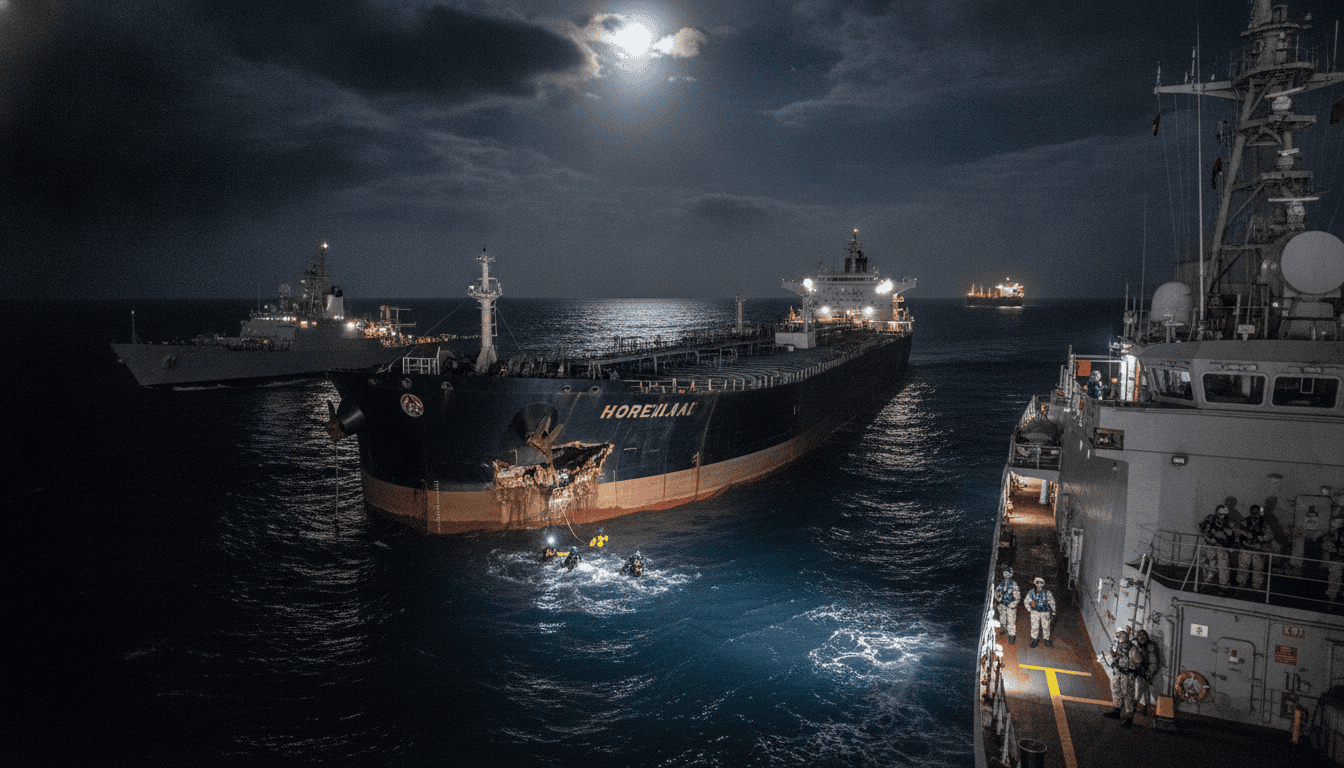
Strait of Hormuz diversions after tankers damaged prompt ‘severe’ maritime threat alert
QatarEnergy LNG tankers and an India‑flagged VLCC altered course after nearby damage; maritime authorities raised the threat risk for transiting vessels to “severe,” triggering Strait of Hormuz diversions.
Tankers Diverted After Near-Strike Incidents
Two separate incidents near the Strait of Hormuz on Tuesday damaged a Qatari liquefied natural gas tanker and a Saudi‑flagged crude oil tanker, prompting immediate course changes by multiple vessels. Maritime authorities monitoring the region raised the threat risk for ships transiting the waterway to “severe,” a designation that has prompted diversions and heightened caution. Shipping data from analytics firms showed several tankers turned away or executed U‑turns as operators sought safer routing or awaited clearer guidance. The moves underline the sensitivity of one of the world’s busiest energy chokepoints to localized incidents.
QatarEnergy LNG Ships Reverse Course Toward Ras Laffan
Three LNG tankers controlled by QatarEnergy — Al Ghariya, Duhail and Al Ruwais — were reported inching westward toward the Strait of Hormuz before changing course late on Tuesday. All three vessels were empty and en route to Qatar’s Ras Laffan export facility to load cargoes when they altered their tracks, according to Kpler and LSEG vessel‑tracking data. The decision to turn away reduced immediate exposure to the area of concern and delayed their scheduled loadings at Ras Laffan. Operators emphasized safety and adherence to maritime advisories while arranging revised arrival windows.
VLCC Lila Vadinar Makes U‑Turn Off Oman
An Indian‑flagged Very Large Crude Carrier, the Lila Vadinar, carrying roughly 2 million barrels of Kuwaiti crude, executed a U‑turn off the tip of Oman in the Strait of Hormuz on Wednesday. The vessel had loaded crude late last week and had been transiting the strait when it reversed course, according to the same vessel‑tracking sources. Such maneuvers are increasingly common when perceived risk levels rise; they additionally complicate voyage planning and scheduling for both shippers and charterers. Industry observers noted the U‑turn as a clear signal that operators are prioritizing crew safety and cargo security over maintaining tight delivery schedules.
Maritime Authorities Elevate Threat to ‘Severe’
Regional maritime authorities elevated the transit threat level to “severe” following the two damaging incidents, a move that triggers enhanced restrictions and advisory notices for vessels bound through the strait. That status typically prompts ships to increase stand‑off distances, delay transits, change course, or seek alternative routing until the situation stabilizes. Authorities coordinating with shipping companies and flag states continue to update guidance for vessels in or approaching the area. The higher threat designation also carries implications for insurance, port calls and shipowner liability assessments.
Export Flows Continue Despite Reroutings
Despite the disruptions and diversions, data indicate that a stream of energy shipments has continued to exit the strait since the escalation of related regional tensions in late February. At least 16 LNG cargoes from Ras Laffan and 10 cargoes from Abu Dhabi National Oil Company’s Das Island terminal have transited the waterway and proceeded to destination markets, according to analysts. These departures suggest that while operators are exercising caution, they are also working to preserve export flows and contractual commitments. Nonetheless, diversions and delays can add transit time and costs, and market participants remain attentive to potential ripple effects.
Market and Operational Consequences for Shipowners
Shipowners and charterers face a range of operational decisions when threat levels rise, including rerouting to longer courses, waiting in designated safe areas, or suspending voyages temporarily. Such choices can affect freight rates, voyage expenses and cargo delivery timelines, particularly for crude and LNG shipments concentrated through the Strait of Hormuz. Analytics firms tracking the incidents said their vessel‑movement data will be used by insurers and cargo owners to reassess risk exposure and adjust coverage terms where necessary. The immediate industry focus is on maintaining safe passage while minimizing interruptions to global energy supplies.
Maritime security officials, vessel operators and energy companies will continue to monitor conditions in and around the Strait of Hormuz closely, with further course adjustments possible if additional incidents occur or if authorities change the threat assessment.
