
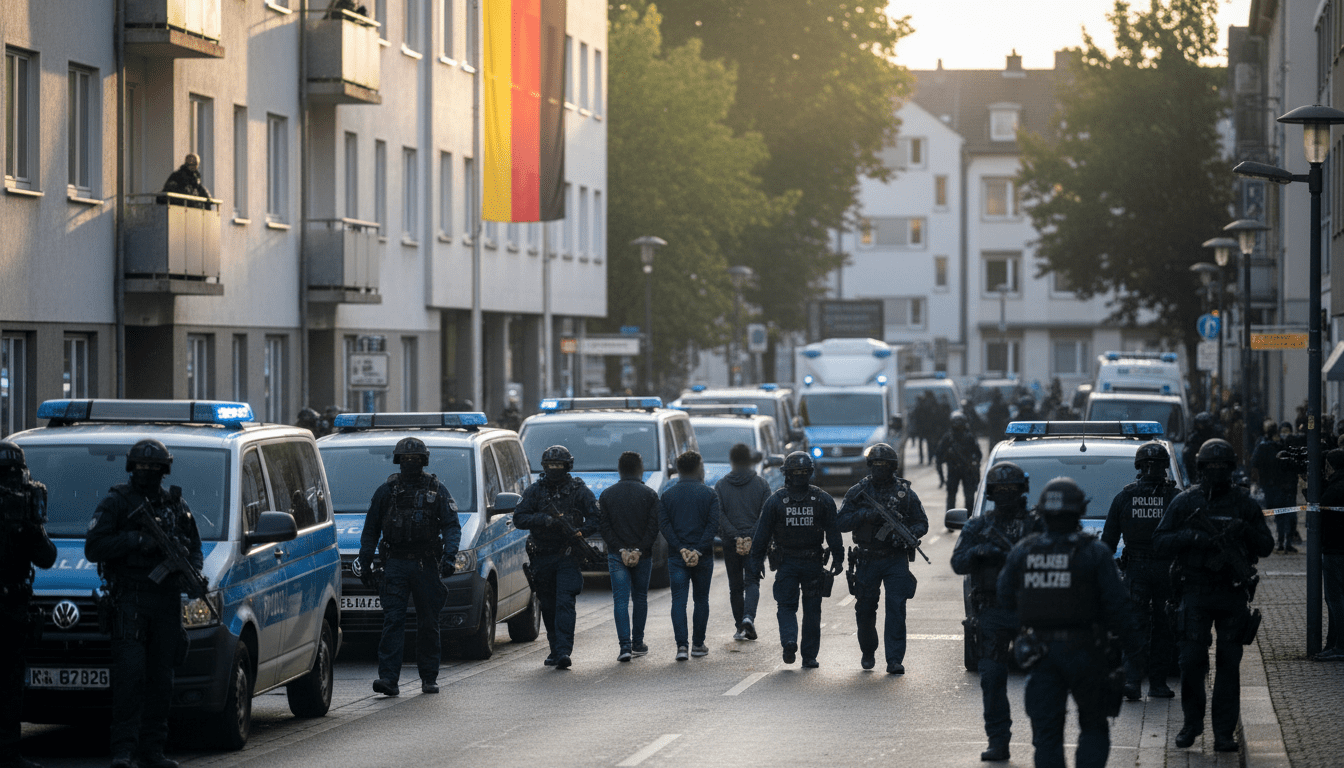
German neo-Nazi raids target suspected youth militants in 12 states
Police across 12 German states searched 50 locations in dawn raids targeting suspected members of two neo‑Nazi groups; 36 people are under investigation.
The federal police and state authorities launched coordinated German neo-Nazi raids in the early hours of Wednesday, executing searches at roughly 50 addresses in a nationwide operation. Officials say the actions focus on alleged members of two extremist groups and aim to disrupt networks accused of violent plotting and organizational criminality. The Federal Public Prosecutor’s Office has opened an investigation that, according to security sources, names 36 suspects suspected of leadership or membership in a criminal association.
Early-morning operations across 12 federal states
Police units moved at first light to carry out coordinated warrants across 12 of Germany’s federal states, deploying local and federal officers in parallel. Authorities said the timing was chosen to limit the chance of suspects destroying evidence and to maximize operational safety for investigators.
Search teams included specialists in digital forensics and explosives disposal, reflecting concerns about both online coordination and the potential for violent activity. Spokespersons for several state police forces confirmed the presence of federal investigators at key locations during the raids.
About 50 locations searched, authorities say
Investigators carried out searches at roughly 50 properties linked to the suspected network, including private residences and other premises under suspicion. Officials have not disclosed precise addresses or the full list of sites to preserve the integrity of the inquiry.
Items seized during the actions reportedly include electronic devices, documentation and material that investigators will now examine for links to extremist planning. Officers emphasized that seizures and searches are part of a preliminary phase that may lead to further steps depending on forensic findings.
Federal Prosecutor opens probe into 36 suspects
The Federal Public Prosecutor’s Office (Generalbundesanwalt) is leading the criminal probe and has named 36 individuals as suspects, according to security sources familiar with the investigation. Those named face allegations ranging from leadership of an extremist cell to membership in a criminal organization, authorities said.
Prosecutors declined to confirm individual identities while searches and evidence analysis continue, citing the need to avoid jeopardizing ongoing measures. The office will now decide on potential arrests, detention requests and charges after reviewing the material collected by police.
Alleged groups and charges under review
Investigators say the operation targets two small but reportedly militant neo‑Nazi groups whose members are alleged to have engaged in structured activity beyond individual crimes. Authorities are examining whether the groups’ internal organization and actions meet the legal threshold for a criminal association under German law.
Charges under consideration include leadership roles in a criminal organization, membership in such an organization and other offences that may be revealed by documentary and digital evidence. Legal specialists note that proving organizational intent requires demonstrating coordinated planning, roles within the group and activities that go beyond isolated acts.
Police tactics and evidence gathering
Law enforcement agencies used a mix of traditional and technical investigative tools, combining physical searches with forensic analysis of seized devices. Officers are prioritizing encrypted communications, social media contacts and financial traces that could show coordination or procurement of weapons and materials.
Forensic teams will take weeks to process the volume of data, and officials warned that new investigative actions or arrests could follow as evidence is authenticated. Counsel for some of the named suspects has not publicly commented, and civil liberties groups have urged transparency to ensure that investigations respect legal safeguards.
Security concerns over youth radicalization
Authorities characterized the targeted suspects as young and potentially prone to violent escalation, underscoring anxiety about radicalization among younger demographics. Security officials said that recruitment efforts and rapid dissemination of extremist content online have amplified the risks of coordinated youth violence.
Experts on extremism cautioned that dismantling networks requires both criminal investigations and preventive measures, including community outreach and monitoring of online spaces. Political representatives across parties called for sustained investment in deradicalization programs alongside firm law-enforcement responses.
The raids mark a significant enforcement action against organized right-wing extremism and reflect growing scrutiny of networks that authorities say combine ideological indoctrination with operational planning. Investigators will now review seized evidence to establish links, intent and the scope of any criminal activity.
As prosecutors and police continue forensic analysis, officials said they will provide periodic updates when legal and operational considerations allow further disclosure.
