
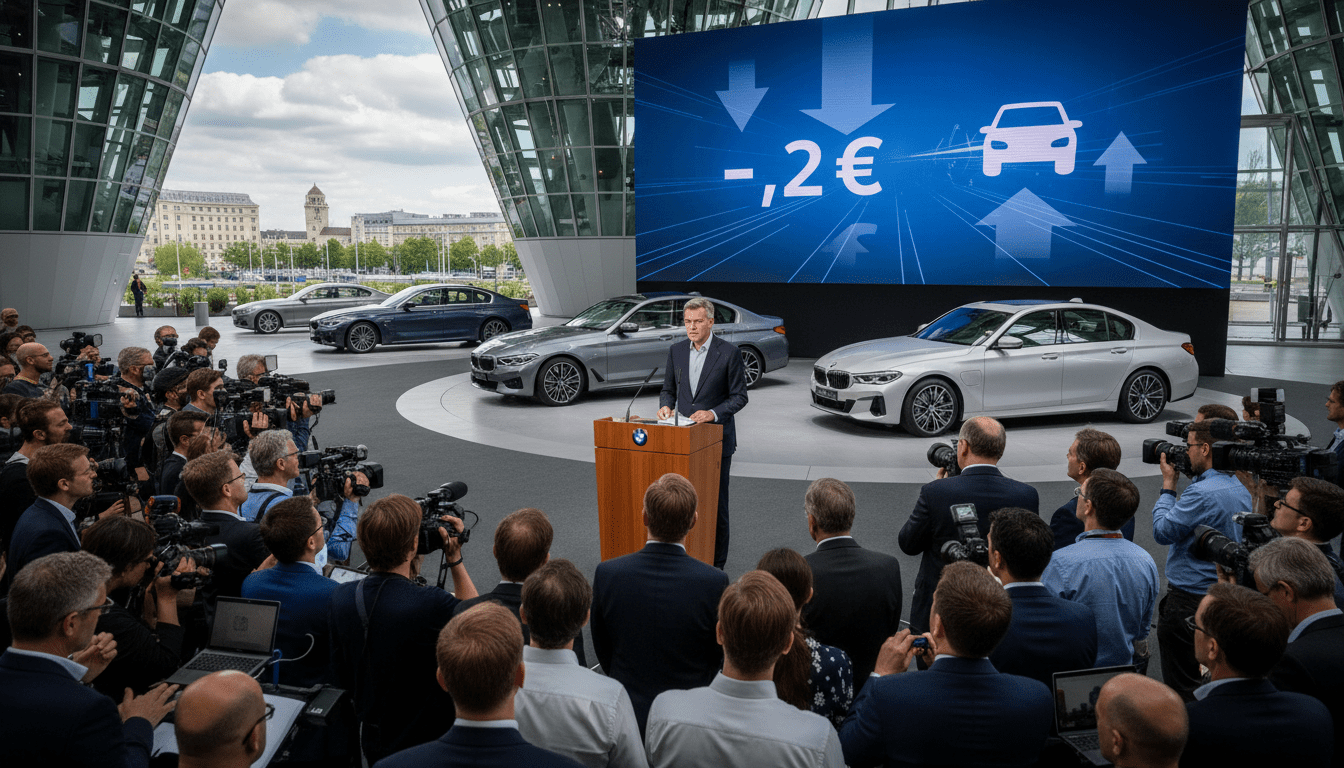
BMW Q1 results: Net profit falls 23% to €1.67bn as Zipse prepares to step down
BMW Q1 results show a 23% drop in net profit to €1.67bn and an 8.1% revenue decline; strong European EV orders contrast with soft China demand; AGM set
BMW reported a sharp decline in first-quarter earnings as the company prepares for a leadership transition, with net profit falling to €1.67 billion for January–March 2026. The BMW Q1 results reveal a roughly 23% year‑on‑year drop in net income and an 8.1% fall in revenue to €31 billion, the Munich-based automaker said. Management cited currency effects, weaker demand in China and the continuing impact of US tariffs introduced last year as key drivers of the downturn. Despite the top‑line weakness, BMW flagged unusually strong order intake in Europe, driven largely by electric vehicles.
Quarterly results in detail
BMW reported net profit of €1.67 billion for the first quarter of 2026, down about 23% from the same period a year earlier. Revenue declined 8.1% to €31 billion, with the company pointing to adverse currency movements and lower overall vehicle deliveries. Vehicle shipments fell 3.5% to roughly 566,000 units in the quarter, reflecting a slowdown that management said was most pronounced in China. The company cautioned that the US tariffs imposed during 2025 continue to weigh on margins and will affect results through the year, albeit less severely than in full‑year 2025.
Sales and regional performance
BMW said the fall in deliveries was concentrated in China, where demand remains soft across several German automakers. European sales strengthened but were not sufficient to offset the slowdown in Asia, according to the company’s figures. The group also highlighted that currency headwinds—principally a stronger euro versus some trading partners—reduced reported revenue when translated back into euros. Management emphasized that the mix effect from higher margins on certain models was insufficient this quarter to compensate for the volume and currency shortfalls.
Electric vehicle demand surges
Amid the headline declines, BMW recorded a record level of order intake in Europe during the first quarter, the company said. Electric vehicle orders rose by more than 60% year‑on‑year for January–March, underscoring a shift in consumer preference on the continent. The iX3, introduced in September 2025, sold in excess of 50,000 units, the company reported, and electrified models helped sustain order momentum despite the broader market headwinds. BMW described the pipeline of EV orders in Europe as “very strong,” suggesting a healthier demand outlook for its electrified portfolio.
Tariffs, currency effects and margins
BMW reiterated that the tariffs implemented by the US administration in 2025 remain a recurring drag on profitability, though management expects a smaller net effect for the full 2026 year compared with 2025. The company also pointed to negative currency translation effects that reduced euro‑denominated revenue and margins in the quarter. These combined pressures contributed to the decline in net profit even as the company maintained investments in electrification and production capacity. Executives framed the quarter as a demonstration of resilience amid external shocks rather than a reversal of long‑term strategy.
Leadership transition ahead of the annual meeting
The first quarter marks the final full reporting period under outgoing CEO Oliver Zipse, who will lead the company until the BMW annual general meeting on 14 May 2026. Milan Nedeljković, currently board member responsible for production, is scheduled to succeed Zipse at the meeting, returning to the role that Zipse held prior to becoming CEO. Management said the succession plan is aimed at ensuring continuity in operational execution as BMW pursues its electrification goals and adjusts to shifting global demand. The handover comes at a sensitive time as the company navigates tariff impacts, regional demand swings and capital expenditures.
In the coming quarters, BMW plans to lean on robust European EV demand and a refreshed product mix to stabilize margins and recover volumes where possible. The company’s comments after the results stressed that it is positioned to remain “sustainably successful” even under challenging market conditions, a phrase used by outgoing CEO Zipse to describe the group’s standing. Investors and industry watchers will be closely monitoring the new CEO’s early moves, especially on pricing, production allocation and responses to trade measures.
BMW expects the remainder of 2026 to reflect ongoing external pressures but signaled confidence that strong EV order books in Europe will temper near‑term headwinds.
