
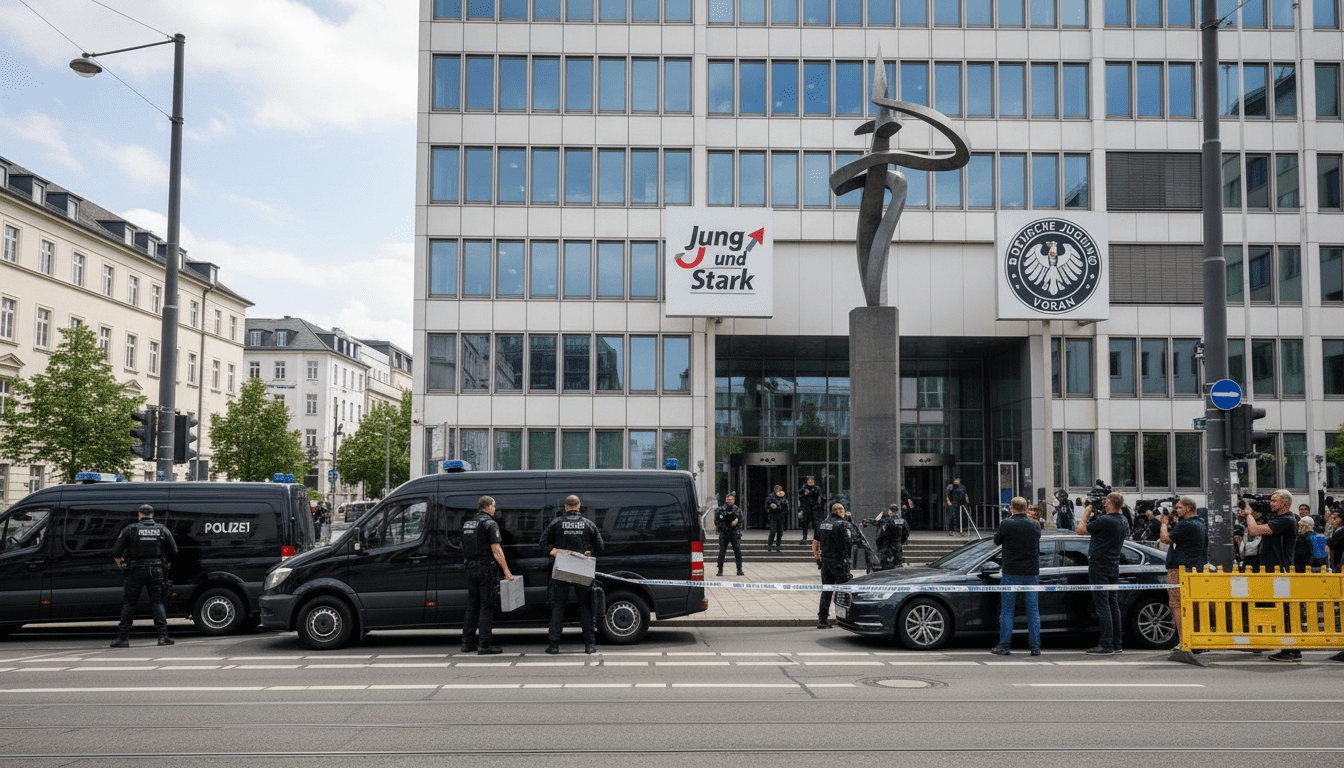
Right-wing extremist raids target young groups across 12 German states
Federal prosecutors ordered searches early Tuesday in a nationwide operation against youth groups tied to violent far-right activity, part of widening investigations into growing militant networks.
German federal prosecutors and state police carried out coordinated right-wing extremist raids in the early hours, searching roughly 50 locations in 12 federal states as investigators targeted two youth movements, Jung und Stark and Deutsche Jugend Voran. The Federal Prosecutor’s Office in Karlsruhe said more than 600 officers from federal and state forces were deployed and described the measures as searches only, with no immediate arrests planned.
Scope of the nationwide searches
Search teams executed warrants in Bavaria, Berlin, Brandenburg, Hesse, Mecklenburg-Western Pomerania, Lower Saxony, North Rhine-Westphalia, Rhineland-Palatinate, Saarland, Saxony, Saxony-Anhalt and Schleswig-Holstein. Authorities said around 50 properties were examined as part of the operation.
The Federal Prosecutor’s Office reported the probes are focused on 36 suspects alleged to belong to a criminal organization. Investigators said many of the suspects are accused of leadership roles within the groups under scrutiny.
Allegations against Jung und Stark and Deutsche Jugend Voran
Prosecutors allege the accused are prominent members of the groups Jung und Stark and Deutsche Jugend Voran, a formation that also operates under the name Neue Deutsche Welle. The organizations have been active for roughly two years, according to investigators.
Authorities say the groups used online channels to recruit and to incite violence, and that some members have taken part in physical attacks. Eight of the 36 suspects are additionally under investigation for dangerous bodily harm in connection with assaults that left victims with significant injuries.
Details on violent incidents and victim reports
Federal investigators described multiple incidents in which victims were beaten by groups of attackers and sustained not insignificant injuries. The prosecutions center on allegations that the attacks were coordinated and that several suspects acted as ringleaders during assaults.
Law enforcement sources linked some episodes to demonstrations and public events, including targeted actions at LGBTQ+ gatherings such as Pride demonstrations. The Federal Criminal Police Office (BKA) has said new youth-oriented right-wing groups have moved from virtual spaces into public activity and street-level violence.
Official response from government and security agencies
Federal Justice Minister Stefanie Hubig called the developments alarming and reiterated the government’s view that militant right-wing extremism poses a major domestic threat. Hubig said the scale of the searches underscores a nationwide danger that must be taken seriously.
The BKA has monitored the emergence of multiple small, mobile groups since mid-2024 and alerted state police forces to an increase in activity among young militants. The Federal Prosecutor’s Office emphasized the current action involves searches to collect evidence and build cases against alleged organizers and perpetrators.
Broader trend in right-wing violence and policing data
Police recorded 1,598 right-wing motivated violent crimes in 2025, the federal government reported, the highest yearly total since 2016. Most of those incidents were classified as bodily injury or dangerous bodily injury, signaling a pronounced uptick in physical attacks linked to far-right actors.
Authorities identified Jung und Stark as the largest of the recent youth groups, with membership estimated in the mid-three-digit range, while Deutsche Jugend Voran numbered at over one hundred adherents. Other groups cited by investigators include Der Störtrupp and the so‑called Letzte Verteidigungswelle, whose alleged members are currently facing trial in Hamburg on multiple violence charges.
Next steps in investigations and judicial process
Prosecutors said the searches aim to secure digital devices, documents and other evidence that could substantiate charges of forming and participating in a criminal organization as well as specific violent crimes. The Federal Prosecutor’s Office will determine whether the evidence supports further action, including arrests or formal indictments.
State and federal investigators will likely continue to analyze seized materials and coordinate with the BKA and domestic intelligence services to map the networks’ structures, sources of recruitment and potential links to broader extremist milieus. Officials warned that court proceedings and investigative work may take months as forensic examinations proceed.
The coordinated actions reflect an intensified national effort to disrupt youth-oriented far-right networks that investigators say have moved from online radicalization to organized, violent activity in public spaces. Authorities emphasized the operation is evidence-led and part of ongoing criminal inquiries that remain active.
