
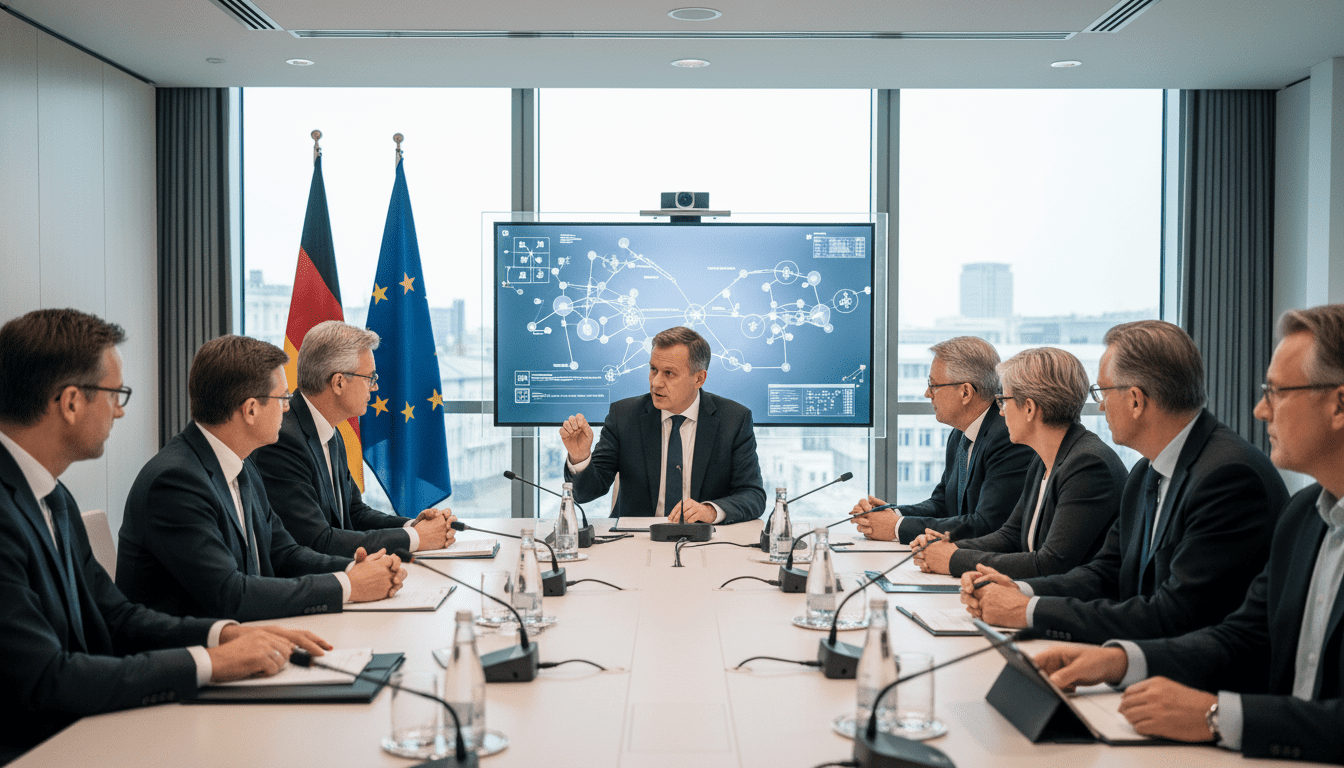
German defence ministry AI policy shifts from “man in the loop” to pragmatic human control
Germany’s defence ministry AI policy is moving away from a strict “man in the loop” model toward a pragmatic approach that separates human control from direct human interaction, the ministry’s internal paper states.
The Federal Ministry of Defence (BMVg) has signalled a notable change in how it intends to govern artificial intelligence on the battlefield, saying human oversight does not necessarily require hands-on intervention at every step. The shift comes as AI capabilities advance and military planners weigh operational needs against ethical and legal constraints.
Defence ministry revises AI guidance
A recently circulated BMVg paper reframes the ministry’s stance on AI deployment, replacing a strict “man in the loop” doctrine with a more flexible doctrine of human control. The document explicitly notes that “human control is not equal to human interaction,” drawing a line between oversight and continuous manual input.
Officials describe the change as pragmatic rather than permissive, aimed at ensuring commanders retain meaningful authority while allowing AI systems to perform routine or time-critical tasks. The paper seeks to balance responsiveness in operations with safeguards required by international law and national policy.
From “man in the loop” to pragmatic control
The original “man in the loop” philosophy presupposed a human operator actively involved in each decision produced by an AI system. The ministry’s new language recognises that modern systems may act autonomously within defined limits while still operating under human-directed control frameworks.
Under the revised approach, human control is framed as a spectrum: humans set objectives, define constraints, and retain responsibility for outcomes even when automated systems execute certain functions. This conceptual shift aims to preserve accountability without negating the benefits of machine speed and scale.
Implications for weapons and operations
The policy adjustment carries direct implications for how the Bundeswehr tests, fields, and uses AI-enabled equipment, including surveillance, target identification, and logistics management. Systems that make rapid tactical assessments might be permitted to act autonomously under predefined rules of engagement, with human commanders retaining the ability to intervene or override as necessary.
Procurement and testing procedures are expected to be updated to verify that autonomy is constrained, explainable, and auditable. Military planners will likely accelerate investment in human-machine teaming tools that enable commanders to monitor AI behavior and maintain situational awareness without micromanaging every function.
Legal and ethical oversight challenges
The ministry’s paper places legal and ethical considerations at the center of the debate by emphasising that distance from manual interaction does not absolve human responsibility. Lawyers, ethicists, and defence planners will need to clarify how existing international humanitarian law applies when AI systems operate with delegated authority.
Transparency, traceability, and robust verification processes are highlighted as necessary safeguards to ensure compliance with Geneva Convention principles and national legal obligations. The ministry’s stance suggests future regulations and oversight mechanisms aimed at preventing misuse while enabling operational effectiveness.
Allies, industry and research responses
NATO partners and European allies are watching the German shift closely, as similar debates over autonomy and control are playing out across allied defence establishments. The paper’s pragmatic tone may open avenues for coordinated standards on acceptable levels of autonomy and shared testing protocols among partners.
Defense firms and technology researchers are likely to accelerate development of systems that incorporate built-in control layers, explainability features, and rigorous testing suites. Industry engagement will be critical in providing tools that meet military specifications while satisfying ethical and legal requirements.
Next steps for implementation and oversight
The ministry plans to translate the conceptual shift into concrete directives, updating doctrine, procurement rules, and certification processes over the coming months. Training and doctrine revisions will be required to ensure commanders understand when to delegate tasks to AI and how to maintain meaningful oversight.
Independent evaluations, red-team exercises, and public reporting mechanisms may be used to demonstrate compliance with the new approach. The ministry’s choice to emphasise accountability while permitting pragmatic autonomy indicates a phased implementation that balances innovation with caution.
The BMVg’s revised language marks a consequential step in Germany’s handling of military AI, acknowledging technological realities while seeking to retain human responsibility for lethal and non-lethal decision-making. The paper’s distinction between control and interaction sets the stage for policy and procurement changes that will shape how Germany and its allies integrate artificial intelligence into defence operations.
