
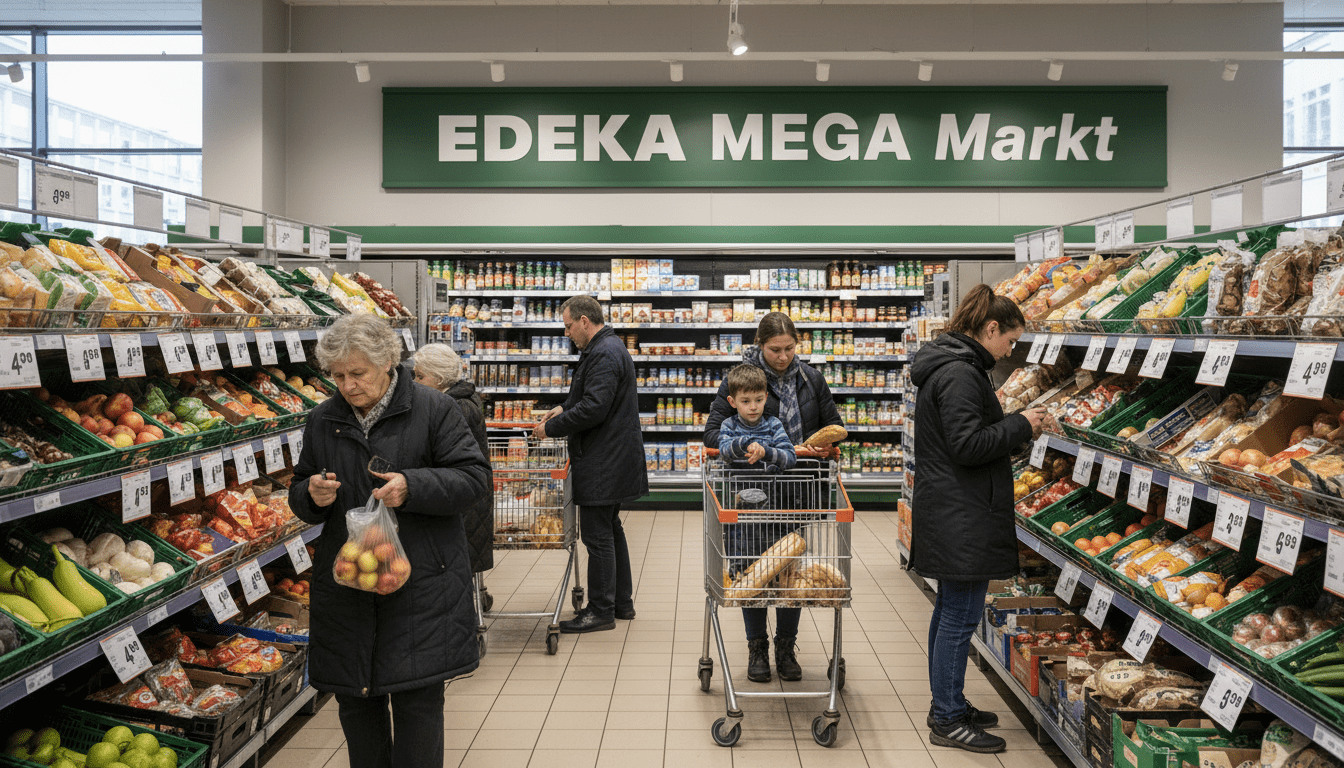
Food prices in Germany soar for low‑income households as supermarket dominance raises debate
Rising food prices in Germany have hit low‑income households hardest, prompting scrutiny of supermarket concentration, farmer hardship and calls for targeted social and agricultural policy.
The sharp rise in food prices has left many shoppers feeling the strain, with low‑income households spending a much larger share of their budgets on groceries. Prices for basic food items consumed by poorer households have increased by about 37 percent since 2019, while gains in nominal wages have lagged behind, eroding purchasing power. The surge in demand at food banks after the outbreak of the war in Ukraine illustrated how acute the pressure became for households on restricted incomes. At the same time, critics point to the concentrated market power of a small number of retail groups as a possible factor in sustained price levels.
Prices Bite Low‑Income Households
Low‑income families now spend a disproportionate amount of their disposable income on groceries, making food price inflation a social as well as an economic issue. That 37 percent rise since 2019 has translated into real hardship for many, particularly where wage growth has not kept pace with living costs. Food banks and charitable organizations reported sharp increases in demand when energy and commodity prices spiked, signaling that food insecurity has expanded beyond traditional at‑risk groups. Policymakers and social advocates say this demands targeted relief measures rather than broad, untargeted subsidies.
Retail Concentration and Market Shares
Germany’s supermarket landscape is heavily concentrated, with major groups dominating the market and shaping retail practices. In 2024, the combined market share of the largest chains — including the Schwarz Group (Lidl and Kaufland), Rewe (and Penny), Edeka (and Netto) and Aldi Nord and Süd — amounted to roughly 87.5 percent. That level of concentration has intensified suspicions that retailers could be leveraging market power to protect margins rather than passing cost reductions on to consumers. Consumer groups and some economists argue that such a structure reduces competitive pressure and increases the importance of regulatory scrutiny.
Supply Shocks, Energy Costs and Geopolitics
Retail prices are not set in a vacuum; they reflect underlying costs across agriculture, processing and logistics. Energy and commodity price surges in recent years — driven by global shocks and supply constraints — substantially raised input costs for producers and manufacturers. While those increases can justify some rise in retail food prices, questions remain about the scale and duration of price transmission. Fresh geopolitical tensions, including conflicts beyond Europe, threaten to add further volatility to energy and freight costs and could push retail prices higher again, renewing pressures on consumers and distributors alike.
Margins, Transparency and the ‘Black Box’ Problem
One central difficulty in the debate is a lack of detailed public information about profit margins along the food supply chain. Analysts describe the breakdown of costs — from farm gate to shelf — as a “black box,” making it hard to determine how much of the price increase reflects genuine input cost growth versus higher markups. Without transparent accounting from manufacturers and retailers, regulators and consumer advocates struggle to assess whether prices are fair. Calls for greater disclosure and more granular reporting on margins are growing louder as a way to inform competition policy and social interventions.
Small Farmers Caught Between Low Retail Prices and High Costs
The effects of current price dynamics are uneven, with many small and medium‑sized farms bearing the brunt of input cost inflation while facing pressure to keep sale prices low. Farmers report rising expenses for fuel, fertilizer and feed, which eat into profitability when wholesale and retail prices remain depressed or volatile. This presents a paradox for consumers who express support for local farming yet resist paying higher prices at the checkout. Agricultural organizations and rural advocates are calling for targeted measures to improve farm resilience, including investments in efficiency and supply‑chain bargaining power.
Policy Options and Targeted Social Support
Policymakers face a trade‑off between protecting consumers on low incomes and ensuring viable returns for producers. Experts caution against blanket subsidies that favor scale over sustainability, arguing instead for targeted social transfers, temporary price relief for essentials, and measures to enhance market transparency. Competition authorities may need to review retail practices where market concentration could harm consumers, but breaking up large chains is not presented as a simple solution. Strengthening support for small producers, promoting diversified supply chains and improving benefit systems for vulnerable households are among the remedies under discussion.
The trajectory of food prices in Germany will depend on a mix of global cost pressures, retail market behavior and political choices. Ensuring that low‑income households can afford basic groceries while maintaining a viable agricultural sector requires clearer data, focused social policy and careful regulatory oversight. As geopolitical risks continue to influence energy and commodity markets, the need for pragmatic, targeted responses to food price inflation remains urgent.
