
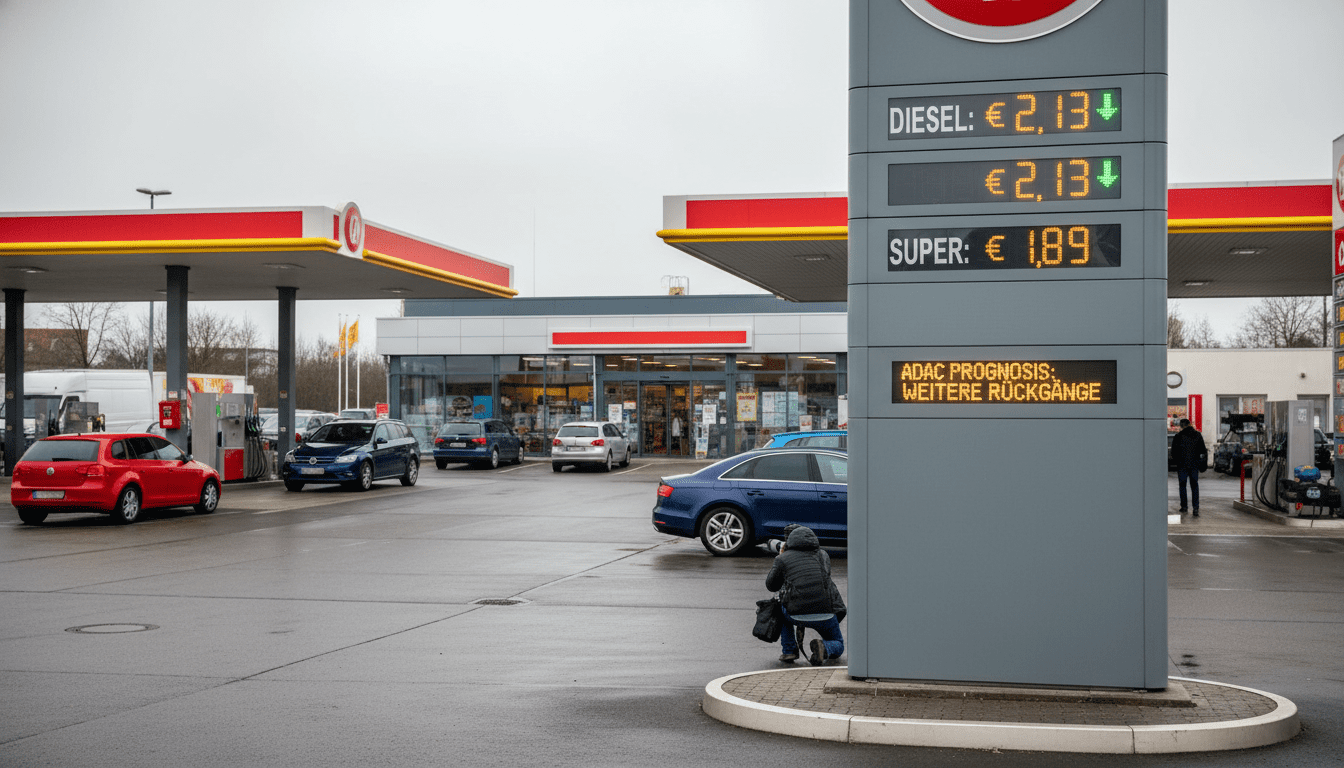
Diesel price falls to €2.13 per litre in Germany, ADAC flags potential further drops
Diesel price in Germany falls to €2.13/l, down 15.7¢ week-on-week. ADAC expects further drops amid oil and dollar shifts; Austria model affects timing.
Germany’s diesel price has dropped sharply over the past week, with the national average now about €2.13 per litre, a decline of 15.7 cents from seven days earlier, the ADAC reports. The decline in the diesel price is occurring alongside a slightly higher Brent crude valuation, while gasoline (Super E10) sits near €2.06 per litre. Motorists are seeing lower pump prices, but the motoring association warns that retail pricing still reflects broader market distortions.
ADAC links price movement to oil and currency dynamics
The ADAC said the principal driver of retail fuel costs remains the global crude oil price and the euro-dollar exchange rate, even as pump prices move downward. Although Brent crude is trading higher than last week at about $98 a barrel, the association believes current retail prices contain room for further reductions. ADAC officials point to recent weeks when Super E10 was cheaper despite less favourable market conditions, suggesting retail margins or timing of price changes may be keeping prices elevated.
Weekly changes and current price levels
According to the ADAC’s weekly snapshot, diesel fell by 15.7 cents compared with the previous seven days and now averages around €2.13 per litre nationwide. Petrol prices have also eased slightly, with Super E10 averaging roughly €2.06 per litre. These movements reverse part of the steep rises seen earlier in the year and provide immediate relief to commuters and haulage operators facing high fuel bills.
Brent crude at roughly $98 and market context
Trading for Brent crude around $98 a barrel remains the dominant external cost factor shaping German pump prices. Dealers and analysts say oil fundamentals, including supply concerns and geopolitical developments, continue to feed volatility in wholesale markets. In addition, a stronger or weaker US dollar against the euro affects import costs for euro-area refiners and dealers, which in turn influences the retail diesel price.
Austria model changes timing and daily price rules
Since April 1, 2026, Germany has implemented a system modelled on the Austrian approach to fuel pricing, a change that affects when and how often stations may raise prices. Under the new rules, fuel retailers are permitted to increase pump prices only once per day, while discounts remain permitted at any time. The ADAC notes that the new regime has concentrated price adjustments and made the best time to fill up, on average, shortly before 12:00.
Daily averages remain above pre-model levels
Despite the daily cap on price increases, the ADAC points out that the average price level across the day remains higher than before the Austria-style rules took effect. That indicates that while intra-day spikes may have been constrained, the overall retail level has not yet fallen to earlier benchmarks. Analysts say this could reflect a range of influences, from wholesale contract timing and dealer margins to slower transmission of lower crude costs into pump prices.
Implications for drivers and the transport sector
Lower diesel prices offer immediate cash flow relief for long-distance drivers, freight companies and businesses with large vehicle fleets, who face significant fuel expenditure each month. However, the ADAC’s forecast of possible additional declines suggests more savings may come if wholesale oil costs ease and the euro-dollar relationship shifts in consumers’ favour. For households and small businesses, any further drop in diesel would directly reduce operating costs and commuting expenses.
The tightened daily price-change rule means motorists may want to watch intra-day price patterns to find the lowest window for refuelling, while fleet managers might revise purchasing schedules to capitalise on expected declines. At the same time, fuel retailers must balance profitability with competitive pricing pressure if wholesale costs continue to fall.
Looking ahead, the diesel price in Germany will hinge on developments in global oil markets, currency movements and how quickly lower wholesale prices are passed on to consumers. The ADAC’s assessment suggests further declines are possible, but drivers should remain alert to short-term volatility as market factors and retail practices interact.
