
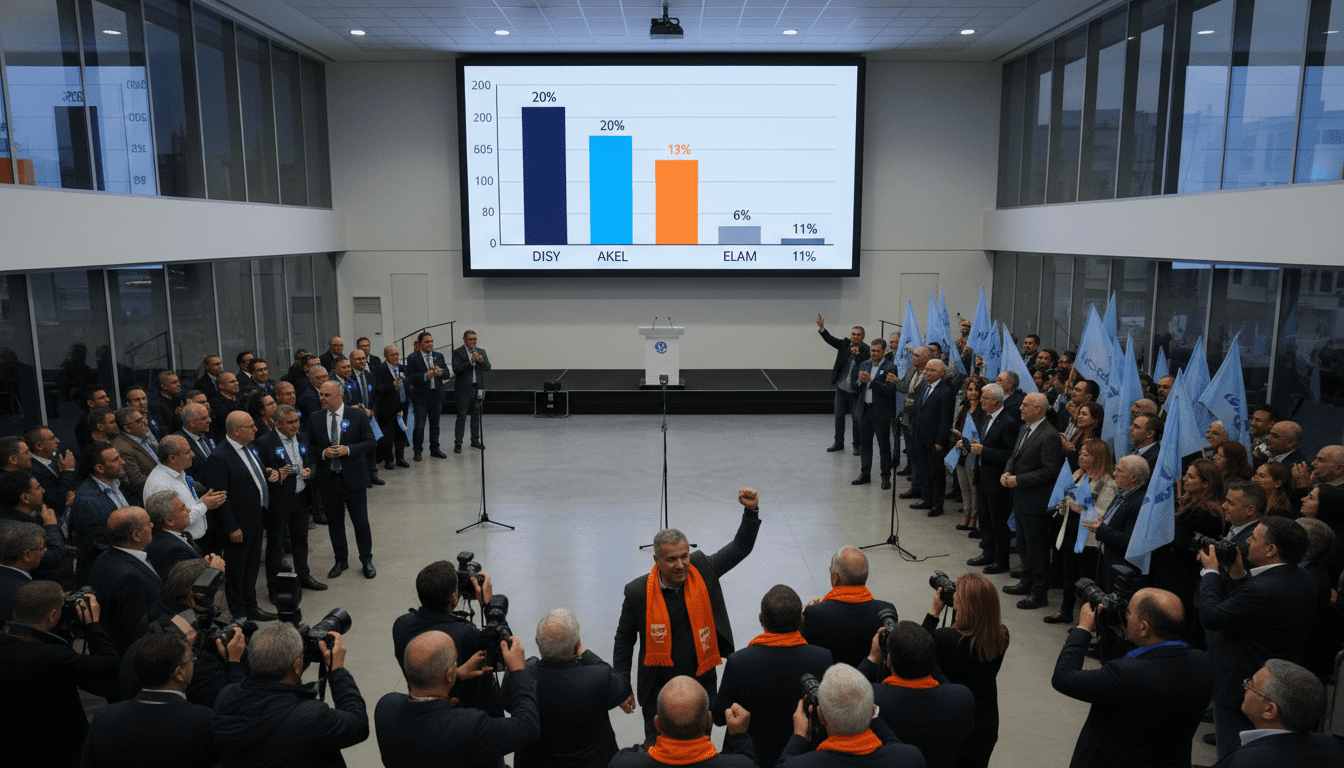
Cyprus parliamentary election projections show ELAM rising to about 11%
Early projections in the Cyprus parliamentary election show the far-right National People’s Front (ELAM) rising to roughly 11%, while center-right DISY and leftist AKEL contend closely for first place in a vote shaped by housing and migration issues.
The initial results from voter surveys place ELAM as the third-largest force, nearly doubling its 2021 share and marking a significant shift in the island’s parliamentary arithmetic. Projections put DISY between about 22.5% and 25.5% and AKEL between 21% and 24%, with a new direct-democracy movement also expected to enter the chamber.
ELAM projected as third force
Early voter-projection tallies indicate ELAM has increased its support to around 11% of the vote, up from 6.8% in 2021. This gain would make the ultranationalist party the third-strongest parliamentary group and expand its influence in debates over migration and national identity.
Political analysts said the jump in ELAM’s support reflects broader regional trends of far-right gains, while also responding to specific domestic concerns on Cyprus such as housing pressure and perceptions of immigration policy. The result is likely to complicate coalition arithmetic in a fragmented chamber where no single party commands a majority.
Close contest between DISY and AKEL for the top spot
Projections based on exit surveys show a narrow race for the top position between the conservative Democratic Rally (DISY) and the left-wing Progressive Party of Working People (AKEL). DISY’s forecast range of roughly 22.5–25.5% sits marginally ahead of AKEL’s 21–24%, with the final ranking hinging on small shifts in urban and rural turnout.
Both parties have historically been two of the island’s dominant forces, but analysts noted both appear to have lost ground compared with previous cycles, a factor that underscores voter volatility. The closeness of the contest will shape committee assignments and legislative priorities when the new parliament convenes.
New direct-democracy movement wins entry
A newly formed movement advocating direct democracy, led by a political newcomer and prominent YouTuber, is projected to win approximately 6% of the vote and secure parliamentary representation. The movement campaigned heavily on anti-corruption measures and a platform of citizen-driven decision-making, drawing support from younger and digitally connected voters.
Election forecasters also expect at least four other smaller parties to pass the threshold and enter the legislature, creating a more fragmented assembly. That fragmentation will increase the importance of negotiation, informal alliances, and cross-party agreements on key pieces of legislation.
Housing shortage and migration dominated the campaign
Voters identified housing affordability and migration as the central issues driving their choices in the Cyprus parliamentary election, with rising costs and limited supply highlighted repeatedly during the campaign. Parties on both the left and right sought to outline measures to expand housing stock, regulate rentals, and relieve pressure on first-time buyers.
Migration, especially concerns over asylum processing and integration, became a mobilizing topic for parties across the spectrum and helped fuel support for ELAM’s tougher stance. Meanwhile, the direct-democracy movement’s emphasis on corruption resonated in a campaign season marked by public frustration over transparency and governance.
Implications for governance and the 2028 presidential race
The island’s political structure vests significant executive authority in the directly elected president, who since 2023 has been conservative Nikos Christodoulides, while the House of Representatives primarily performs legislative and oversight functions. The projected losses for the two largest parties and the rise of smaller groups will shape parliamentary scrutiny of the executive and influence lawmaking on economic and social policies.
Observers have framed the parliamentary vote as an important bellwether ahead of the 2028 presidential election, testing the standing of major parties and revealing shifting voter priorities. The composition of the new parliament may force broader coalitions on specific bills and could affect how the president’s agenda is advanced or contested in the coming years.
Turnout patterns and regional variations in support will determine how the new legislature distributes committee chairs and how effectively it can pass contentious measures addressing housing, migration, and anti-corruption reforms. Negotiations among centrist blocs and smaller parties will be decisive in forming working majorities for key legislation.
The projected outcome reflects growing political fragmentation on the island and sets the stage for a parliament where compromise will be necessary to address pressing domestic challenges. As final counts are completed and official results are certified, parties will begin horse-trading over committee posts and legislative priorities while stakeholders assess what the new balance of power means for governance through 2028.
