
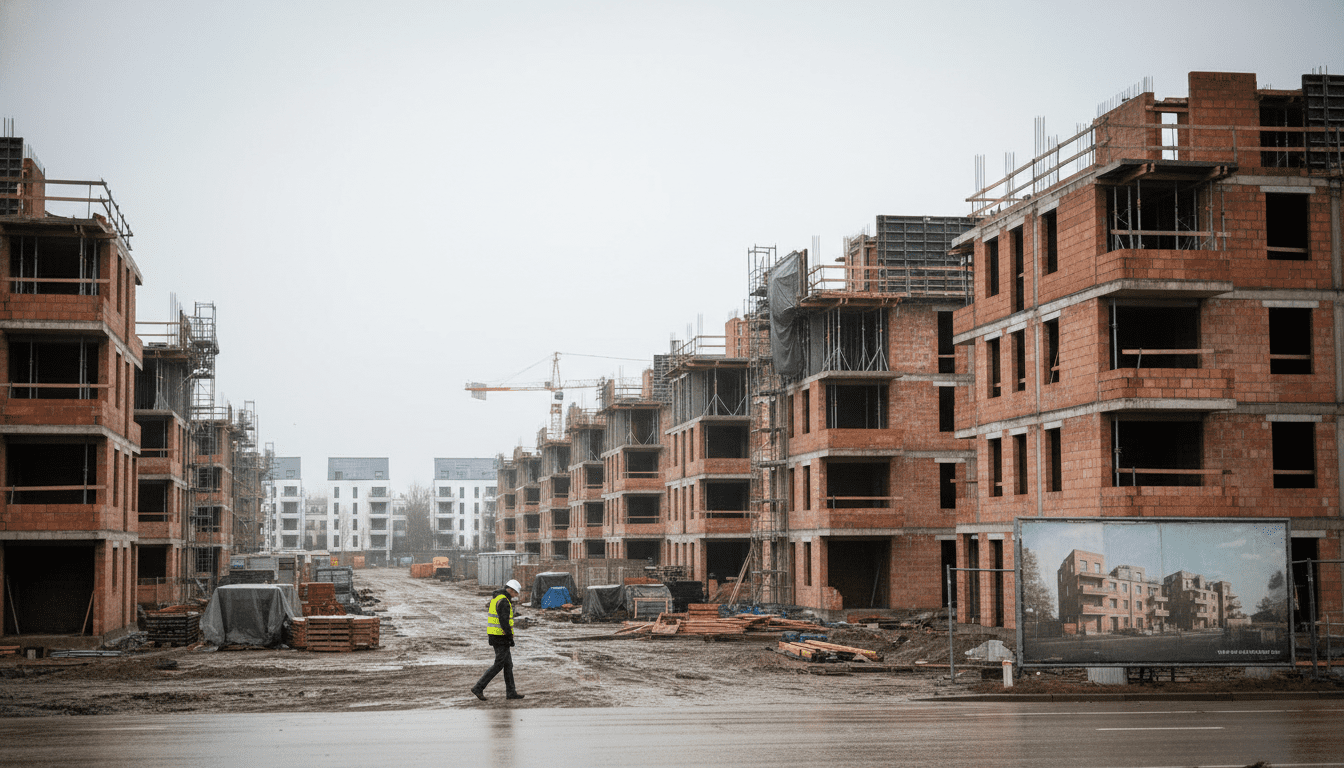
Housing construction in Germany plunges to lowest level since 2012 as completions fall to 206,600
Housing construction in Germany fell to 206,600 completed homes in 2025, an 18% drop from the previous year, as permits rise but project suspensions and lapsed approvals deepen the supply squeeze.
The national tally for housing construction in Germany showed a sharp decline last year to 206,600 finished dwellings, marking the second consecutive annual fall and the weakest output since 2012. After a pandemic-era surge that peaked in 2020 at roughly 306,400 completions, the sector has retraced much of those gains amid mounting cost, regulatory and geopolitical pressures. Industry groups, government officials and economic institutes warn the shortfall will keep upward pressure on rents and strain affordability unless structural barriers are addressed.
Record decline in annual completions
Last year’s drop of 18.0 percent — a fall of about 45,400 units — brought completions down to 206,600, reversing the temporary boom seen earlier in the decade. The figure follows a 14.4 percent decline recorded the year before, after three years in which completions had hovered around 294,000. Analysts note the swing from the 2009 low of roughly 159,000 to the 2020 high demonstrates how sensitive housing construction in Germany is to financing conditions and policy settings.
The decline was broad-based across building types and regions, eroding the momentum that had been expected to ease the housing shortage in many urban areas. Officials stressed that one battered year should not be taken as the only indicator of long-term capacity, but the scale of the fall has nevertheless alarmed both policymakers and market participants.
Government response and social housing investments
Federal housing authorities described the figures as unacceptable and vowed to push measures intended to revive building activity and expand social housing. The minister responsible for building called the numbers disappointing while pointing to a rise in building permits and record funding earmarked for subsidised housing as hopeful signs. Officials said higher allocations to social housing programmes and streamlined approvals are central to preventing further deterioration in supply.
Ministry spokespeople also emphasised that the increase in permits signals developer interest remains, but that translating permissions into completed homes requires addressing cost and planning hurdles. The government framed its response as a two-track approach: immediate support for affordable projects and longer-term regulatory adjustments to speed delivery.
Industry groups issue alarm and demand reforms
Construction and housing associations reacted strongly, labelling 206,600 completions a “shockingly low” outcome and declaring a structural crisis in the sector. Representatives from unions and trade bodies warned that overregulation, persistent high construction costs and uncertainty about planning rules are deterring project realisation and investment. Senior industry figures argued that those pressures have already translated into higher rents and constrained housing availability for many households.
Trade bodies pressed the government for clearer, faster permitting processes and measures to reduce building costs, saying piecemeal initiatives to date have failed to produce a nationwide breakthrough. The consensus among industry voices was that without meaningful policy changes, the gap between need and supply will continue to widen.
Permits rise but a growing number lapse
Despite falling completions, the number of building permits for housing increased by 10.6 percent to 238,100, indicating that planning approvals outpaced finished construction. At the same time, the “building backlog” — already permitted but unfinished units — stood at about 760,700 at the end of 2025, with some 307,200 of those actively under construction. Officials and analysts cautioned that a substantial share of approvals does not guarantee eventual completion.
Alarmingly, roughly 35,700 permits expired last year, the highest level since 2002 and up by about a quarter from the prior year, signaling developers cancelling or postponing projects. That divergence between rising permits and rising permit expirations underscores the bottlenecks that keep planned units from reaching the market.
Variation by building type and region
The shortfall affected single-family, two-family and multi-family construction alike, but the scale varied by category. Completions of single-family houses fell by 23.3 percent to 41,800, while two-family dwellings dropped 21.4 percent to 13,800. Multi-family housing — a key source of urban apartments — recorded 109,800 new units, down 18.9 percent, and purpose-built residential homes also declined by roughly 15 percent to about 7,200 units.
Regionally, the decline was sharper in eastern parts of the country than in the west, with the east seeing more than double the percentage fall in completed new flats compared with western regions. Observers say differences in local land availability, planning capacity and market demand help explain the uneven impact on housing construction in Germany.
Economic and geopolitical headwinds weighing on projects
Economic headwinds — including higher inflation, rising material and labour costs and tighter real incomes — have compounded structural obstacles and damped builders’ appetite to start new projects. An economic research institute projected further weakness in the current year, forecasting completions could fall to roughly 185,000 if adverse conditions persist. Analysts also pointed to heightened geopolitical risk and disrupted supply chains as additional factors that may undercut a modest recovery in construction activity.
Surveys of industry sentiment showed a marked deterioration in confidence, with business climate indicators for the housing sector plunging in recent months to their weakest levels in years. Market participants warned that a combination of cost pressures, regulatory complexity and external uncertainty could prolong slow output and push housing construction in Germany further below the levels required to meet demand.
The scale of the shortfall has reignited debate over which mix of incentives, regulatory reform and public investment can most quickly translate permissions into completed homes and stabilise rent trends in the years ahead.
