
CHP leadership crisis deepens as police storm Ankara headquarters after court reinstates Kılıçdaroğlu
Court ruling voiding CHP’s 2023 congress and restoring Kılıçdaroğlu spurred police to clear the Ankara headquarters with tear gas, sparking protests in Turkey.
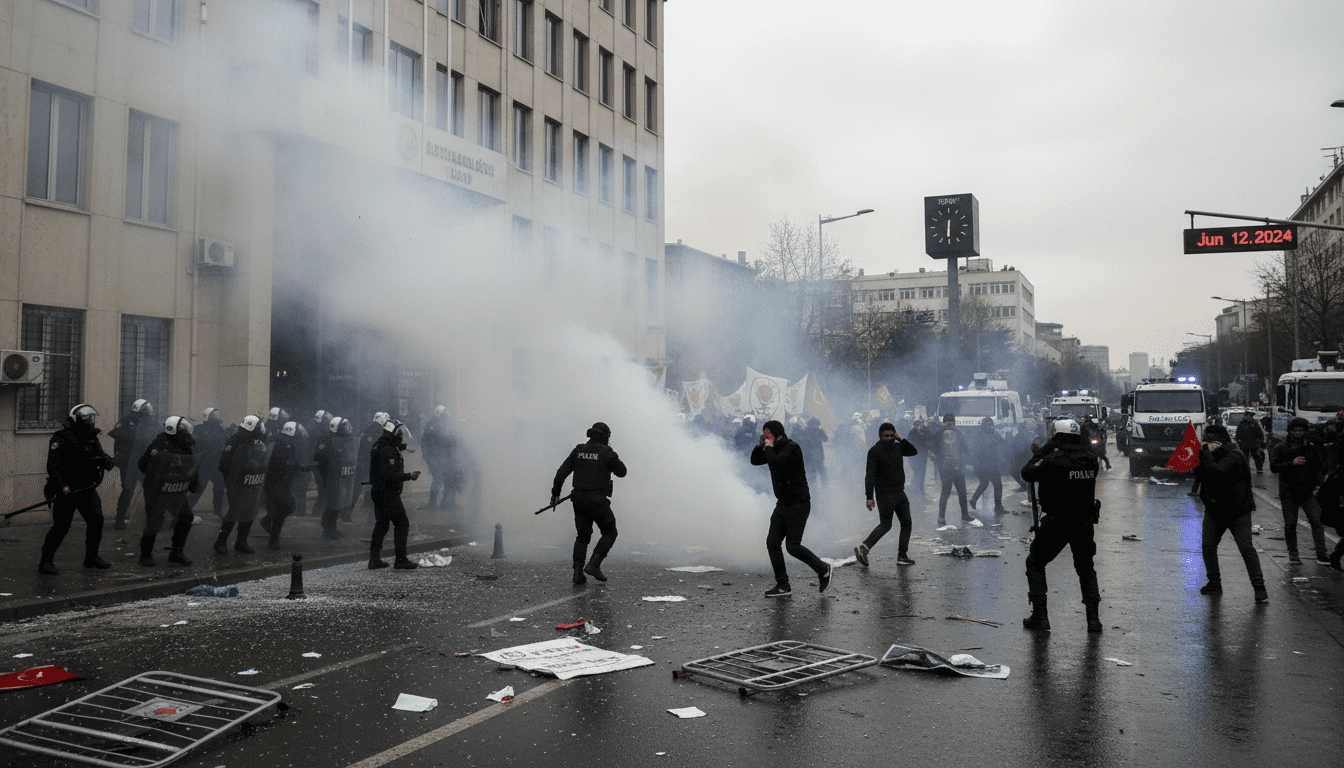
A sudden escalation in Ankara marked a new phase of the CHP leadership crisis after a court overturned the party’s 2023 congress and ordered the reinstatement of Kemal Kılıçdaroğlu. Police entered the Republican People’s Party (CHP) headquarters in the afternoon, using tear gas and reportedly rubber bullets while breaking through barricades around the building. The party’s ousted leader, Özgür Özel, briefly barricaded himself inside his office before exiting to the applause of supporters and leading a march toward the parliament.
Police operation at CHP headquarters
Police entered the CHP’s central offices in Ankara amid dense smoke and chaotic scenes inside the building. Television footage showed officers removing barricades and deploying tear gas in corridors where thick plumes were visible, while witnesses described stun and rubber rounds being fired. Özel, who initially sheltered on the 12th floor, left under applause and was flanked by deputies as he departed the headquarters.
Court ruling that prompted the intervention
A court in Ankara declared the 2023 party congress, which had elected Özel as CHP leader, retroactively invalid after a lawsuit alleged that delegates had been bribed. The legal challenge, brought by a former party member, was initially dismissed in October but was later reopened and ultimately led the court to install Kılıçdaroğlu provisionally. Local authorities cited that ruling when they ordered the evacuation of the CHP headquarters.
CHP appeals and party leadership response
The CHP leadership has rejected the allegations and lodged an appeal with the Supreme Court, arguing that electoral disputes at party congresses should be resolved by the election board rather than ordinary courts. Party officials framed the intervention as a political move and vowed to pursue all legal avenues. After leaving the building, Özel declared the CHP would take to the streets and public squares, signaling plans for sustained mobilization.
Widening protests and domestic political repercussions
The court decision and the subsequent police action triggered protests not only in Ankara but in other cities as well, where supporters rallied outside municipal offices and party branches. Critics warned that the judicial move could deal a heavy blow to the CHP—one of Turkey’s founding political parties—prompting fears about the narrowing space for organized opposition. The dispute has also exacerbated internal divisions and public anger toward party veterans who were reinserted into leadership roles.
International concern and diplomatic fallout
European officials publicly criticized the legal steps against CHP figures, warning about implications for Turkey’s democratic credentials and its ambitions toward EU membership. Germany’s foreign ministry and other Western capitals expressed unease at developments that appear to target opposition leadership through the courts and security forces. Turkey experts have pointed to broader geopolitical dynamics, arguing that Ankara’s rising strategic importance in regional conflicts has complicated the willingness of some international actors to press harder on democratic backsliding.
Longer-term risks for Turkish politics
Analysts say the episode could have enduring effects on Turkey’s political landscape by weakening institutional opposition and reshaping electoral dynamics ahead of future votes. Observers note that moves to reconfigure party leadership through judicial rulings set a precedent that could alter the balance between political parties and state institutions. Supporters of President Recep Tayyip Erdoğan view the outcome as a legal affirmation of the rule of law, while opponents see it as part of a pattern of narrowing political competition.
The CHP leadership crisis remains unresolved as the party pursues appeals and mobilizes supporters across the country, leaving open the prospect of further clashes and legal battles. Observers say the coming days will be crucial for how the judiciary, security forces and international partners respond, and whether the episode deepens fault lines in Turkey’s already polarized political environment.
