
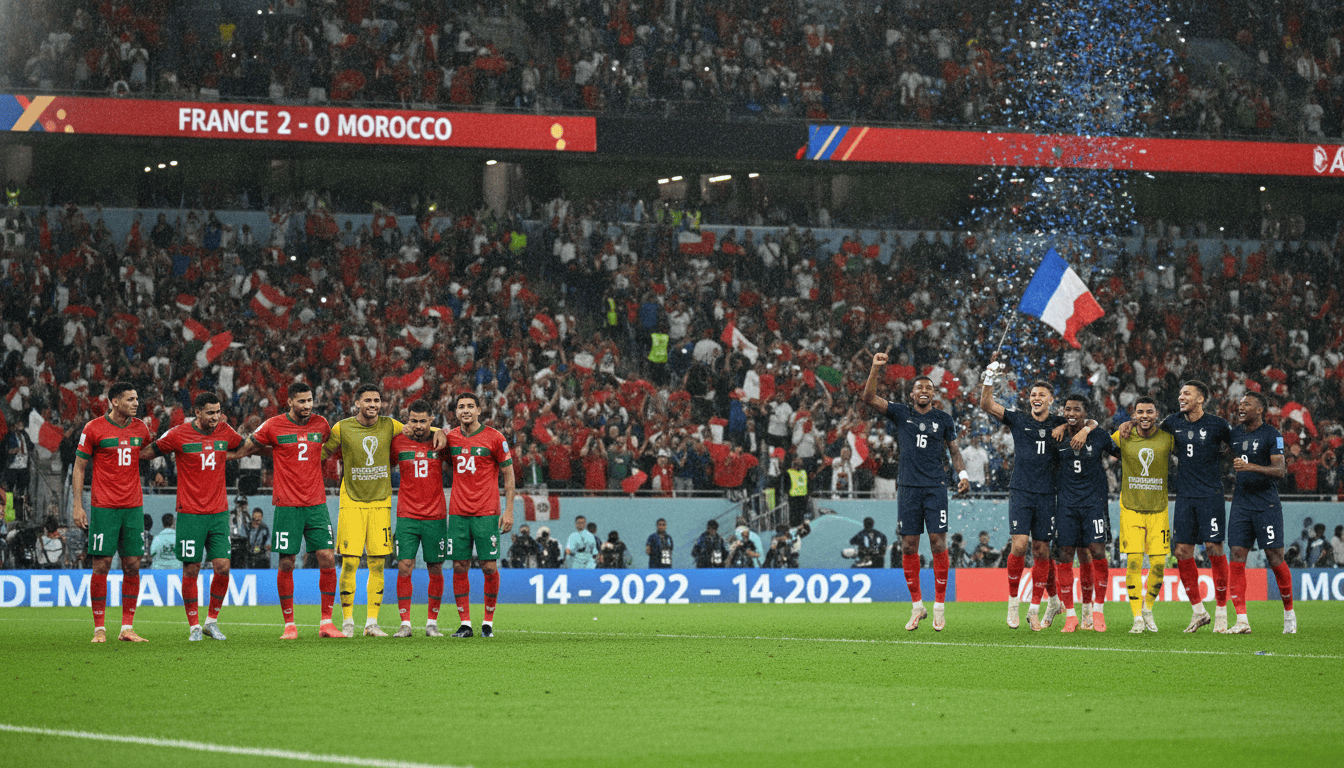
Morocco World Cup exit: France ends historic run with 2-0 quarter-final victory
Morocco’s World Cup exit was sealed as France beat the Atlas Lions 2-0 in the quarter-finals, ending a tournament that marked the nation’s best-ever performance on the global stage.
Match summary and decisive moments
France secured a 2-0 win over Morocco in a tightly contested quarter-final that saw moments of control from both sides but ultimately favored the European champions. The match featured a crucial early advantage for France and a second goal that extinguished Morocco’s hopes of a comeback. Morocco pushed forward in the closing stages but were unable to break through a disciplined French defense.
The result left Morocco eliminated from the tournament while France moved on to the semi-finals, underscoring the narrow margins that separated the teams. Refereeing decisions and tactical switches played a role in the game’s flow, with both coaches reacting visibly from the touchlines.
Tactical battle and how France found openings
France approached the game with a compact midfield and rapid transitions, seeking to exploit spaces behind Morocco’s wing-backs. That plan paid off as France’s movement disrupted Morocco’s rhythm and created the openings that led to the two goals. Defensive solidity allowed France to absorb pressure and react quickly on the counter.
Morocco attempted to maintain possession and build attacks through short passing and wing play, but France’s pressing at key moments forced turnovers in dangerous areas. Set pieces and quick combinations were decisive, and the French side converted its chances when they mattered most.
Morocco’s tournament run and historical significance
This World Cup campaign represented the furthest Morocco has advanced in the competition, surpassing previous bests and capturing global attention. The Atlas Lions reached the quarter-finals with resilient defending and several standout performances that galvanized national pride. Their run included victories that demonstrated tactical discipline and a cohesive team spirit.
Beyond the results on the pitch, Morocco’s progress resonated across the continent and among diaspora communities worldwide, sparking discussions about investment in domestic development and the rise of North African football on the world stage. The team’s players earned praise for their professionalism and the way they carried national expectations through successive rounds.
Player performances and standout contributors
Several Moroccan players drew acclaim for their work rate and technical contributions, keeping the team competitive against higher-ranked opponents. Goalkeeper and defensive leaders produced vital saves and clearances that had been a hallmark of Morocco’s earlier matches. Meanwhile, France’s attacking unit combined individual quality with incisive passing to create the decisive moments.
Coaches on both sides made tactical adjustments that influenced individual matchups, including substitutions aimed at changing tempo and reinforcing midfield control. Injury concerns and fatigue also factored into late-game choices, as coaches balanced the need for urgency with game management.
Responses from fans and football authorities
Fans across Morocco and in expatriate communities expressed heartbreak at the narrow defeat while celebrating the team’s unexpected achievements at this World Cup. Streets and public viewing areas filled with supporters after earlier wins, and the quarter-final exit prompted both mourning and pride in equal measure. Social media highlighted scenes of gratitude toward the squad and calls for recognition from national institutions.
Football officials and former players lauded the squad for raising Morocco’s profile on the international stage and urged sustained support for youth development. Political leaders and sports federations issued statements acknowledging the squad’s historic performance and signaling plans to build on the momentum generated during the tournament.
Implications for Moroccan football’s future
The outcome will likely prompt reflection within the Royal Moroccan Football Federation about infrastructure investment, coaching pathways and talent retention. The squad’s success has already increased interest among young players and sponsors, presenting an opportunity to convert short-term enthusiasm into long-term development. Analysts argue that targeted funding and expanded domestic leagues could consolidate gains made during this World Cup.
Clubs that provided national team players may see increased scouting attention and commercial interest, while the federation faces the challenge of translating visibility into structural improvements. Continued participation in high-level friendlies and youth competitions is expected to be prioritized to sustain progress.
Morocco leaves this World Cup with a legacy that extends beyond results, having showcased tactical acumen, collective resolve and the capacity to compete with the world’s best. The quarter-final defeat to France brings an end to a historic run but sets a clearer benchmark for the next generation of Moroccan football.
