
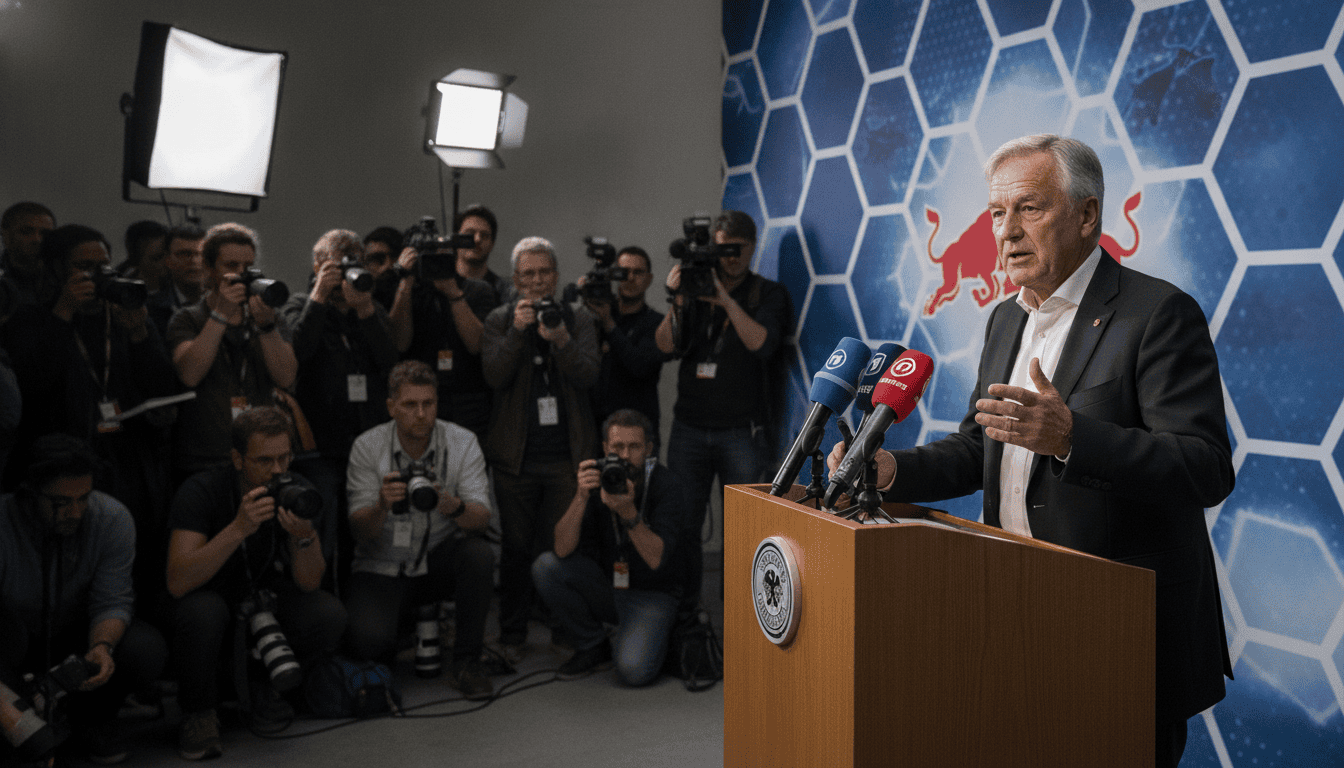
Theo Zwanziger warns Red Bull could “field Germany” as he criticises Infantino and DFB handling
Former DFB president Theo Zwanziger warns on July 10, 2026 that football is veering toward commercial domination, criticising FIFA chief Gianni Infantino, the German Football Association’s conciliatory approach, and errors around Julian Nagelsmann. Zwanziger said the sport’s governance and elite-club influence risk undermining national structures and sporting integrity. His comments frame a broader debate about power, governance and the future role of clubs and corporations in national teams.
Zwanziger frames the debate over football’s future
Theo Zwanziger used the interview to outline what he calls an accelerating shift in football governance driven by commercial actors and ambitious officials. He described this as a systemic problem that affects federations, leagues and national teams alike. Zwanziger argued that the cumulative effect of commercial deals and political manoeuvring is changing who makes decisions in the sport.
Criticism of Gianni Infantino’s leadership
Zwanziger singled out FIFA president Gianni Infantino for what he described as “measureless” behaviour that stretches the boundaries of acceptable influence. He said Infantino’s approach has fostered a climate where bold, unilateral initiatives override established norms and oversight. According to Zwanziger, that dynamic complicates efforts by national associations to defend long-standing football principles.
Concerns about the DFB’s conciliatory strategy
The former DFB chief was direct in his assessment of the German Football Association’s recent conduct, arguing that a “cushy” or overly conciliatory posture has weakened its capacity to push back. Zwanziger suggested the DFB has, at times, prioritised short-term harmony over robust defence of institutional autonomy and accountability. He warned this pattern risks sidelining the association’s role as a guardian of the national game.
Errors in managing the Nagelsmann episode
Zwanziger addressed the federation’s handling of Julian Nagelsmann, saying mistakes were made that reflected deeper problems in decision-making and communication. He indicated that unclear responsibilities and insufficient internal resolve contributed to a fraught process with long-term reputational costs. Zwanziger used the case to illustrate how organisational weaknesses can compound when clubs, agents and federations collide.
Commercialisation and the example of Red Bull
In a striking line of argument, Zwanziger raised the prospect that commercial groups could increasingly determine national football identities, using Red Bull as an example of corporate expansion in the sport. He warned that if current trends continue, conglomerates with multi-club ownership might exert decisive influence over player development and selection. Zwanziger argued this would blur the line between club and national interests and reshape how national teams are constituted.
Limits on appointing high-profile coaches like Klopp
Zwanziger addressed whether high-profile club managers should take national team roles, saying a boundary must be maintained to protect sporting balance. He argued that appointing someone like Jürgen Klopp to lead a national team would carry complex conflicts of interest and ethical questions, especially if club allegiances or commercial ties are strong. For Zwanziger, preserving the national team’s independence from club and corporate agendas is a key principle.
Zwanziger’s remarks link governance issues at the top of football with everyday consequences for fans, players and associations. He framed the debate as one where transparency, institutional courage and regulatory clarity are needed to prevent commercial actors from defining national football identities. The interview underscores growing tensions between traditional federation roles and the expanding power of clubs and investors.
Observers say Zwanziger’s comments will add momentum to calls for clearer rules on ownership, competition formats and the role of international officials. The former DFB president urged national associations to strengthen their voice within FIFA and UEFA and to insist on safeguards that protect sporting merit and public interest. His intervention is likely to influence discussions among policymakers, club executives and supporters about how the game should be governed.
The exchange on July 10, 2026 serves as a reminder that decisions made in boardrooms and at international congresses increasingly shape what happens on the pitch. Zwanziger concluded that without deliberate reform, national teams and the principles that underpin them risk being reshaped by actors whose primary accountability is commercial rather than civic.
