
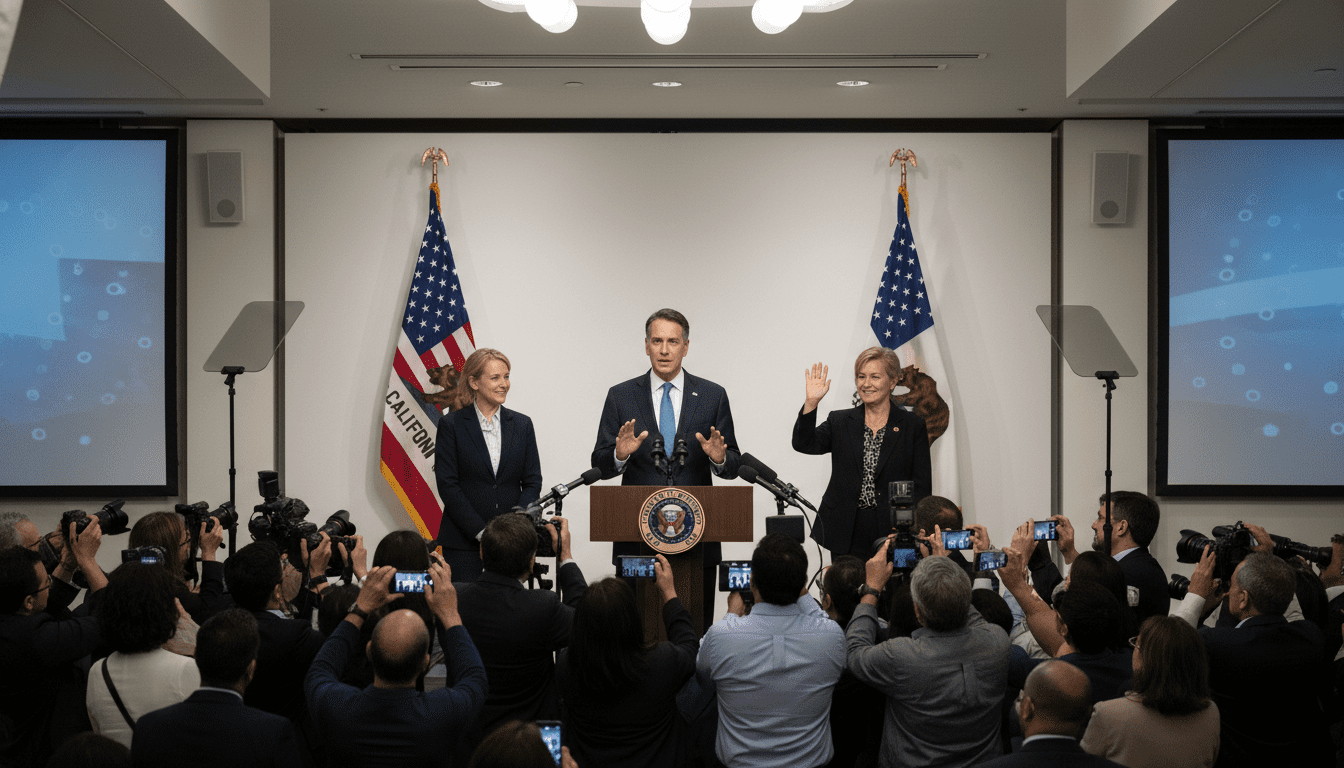
California primary produces surprise finalists: Republican Steve Hilton and Democrat Xavier Becerra advance
California primary shocks voters as Republican Steve Hilton and Democrat Xavier Becerra emerged as the top two finishers, setting up a November contest to replace term‑limited Gov. Gavin Newsom. (dp.electionresults.sos.ca.gov)
Primary Delivers Unexpected Finalists
In a crowded June 2 California primary, conservative commentator and businessman Steve Hilton led the field with roughly 27.6% of the vote while former U.S. Secretary of Health and Human Services Xavier Becerra finished a close second with about 25.5%, according to unofficial statewide returns. (dp.electionresults.sos.ca.gov)
The result means Hilton and Becerra will advance to the November 3 general election under California’s top‑two open primary system, turning what had been a diffused and unpredictable race into a direct head‑to‑head contest for the governorship. (sos.ca.gov)
Open Seat After Newsom Reaches Term Limit
The contest is for an open seat: Governor Gavin Newsom, who won re‑election in 2022, is ineligible to run for a third consecutive term under state law, leaving California’s most powerful statewide office vacant. (latimes.com)
That vacancy drew a sprawling field of candidates across party lines, elevating the stakes in a state whose economy ranks among the world’s largest and where the governor’s policy choices can have national ripple effects. (gov.ca.gov)
Top‑Two System Amplified Vote Splits
California’s top‑two primary places all candidates on a single ballot and advances the two vote‑getters regardless of party, a rule that critics argued would either consolidate or fracture major‑party coalitions depending on turnout and strategic voting. (sos.ca.gov)
This year a large Democratic bench and a roster of Republican contenders produced sharp vote dispersion, allowing Hilton to top the field even as several better‑known Democrats split the liberal vote across multiple campaigns. Observers warned before the primary that intra‑party fragmentation could create surprise pairings. (washingtonpost.com)
How the Vote Broke Down Across the Field
Unofficial returns show billionaire Tom Steyer finished third with roughly 19.6% and Republican Chad Bianco captured about 11.3%, while a number of prominent Democrats and moderates — from members of Congress to Bay Area mayors — failed to break into the top two. (dp.electionresults.sos.ca.gov)
The distribution underscored the unpredictability of a multiway contest in which name recognition, targeted advertising and regional bases of support mattered more than statewide organization in the early count. (latimes.com)
What the November Matchup Means for California and Beyond
A November duel between a high‑profile Democrat and a politically unorthodox Republican will put national attention back on California, a state whose gross domestic product places it among the world’s leading economies and whose governor often shapes policy debates on immigration, housing and climate. (gov.ca.gov)
The outcome will be watched by party strategists nationwide: Democrats seek to hold a seat in a state that has been reliably blue at the gubernatorial level for recent decades, while Republicans see an opening to make rare inroads if the party can consolidate suburban and rural support. (washingtonpost.com)
Next Steps: Counting, Certification and the Road to November
Vote‑by‑mail and provisional ballots will continue to be tallied in the weeks after the primary, and statewide results are expected to be certified by the state in July, a technical step that finalizes the primary standings ahead of the general‑election campaign. (dp.electionresults.sos.ca.gov)
With the finalists set, both campaigns are likely to shift from jockeying for primary positioning to building statewide coalitions, assembling resources and sharpening messages on cost of living, wildfires, the housing crisis and the state budget. Political advertising and outside spending typically surge after the primary concludes. (latimes.com)
The primary outcome leaves California’s November ballot as a referendum on competing visions for the state’s future, with voters now choosing between a Republican who harnessed a splintered conservative coalition and a seasoned Democratic official aiming to carry forward years of established governance.
