
Berlin vs Hamburg: Which German city should you visit?
Practical comparison of Berlin vs Hamburg to help travelers choose: attractions, nightlife, food, costs, transport and timing for planning a trip to Germany.
Quick summary: choosing between Berlin vs Hamburg for your trip
This article presents a practical, up‑to‑date comparison of Berlin vs Hamburg to help readers decide which city best fits their travel priorities. The guide highlights history, cultural scenes, food, costs, transport links and practical safety and seasonal considerations. It is aimed at visitors who must pick one city or who want to plan a combined itinerary across both destinations. The first paragraph identifies the main differences so you can make a rapid, informed choice.
Top attractions and historical highlights in both cities
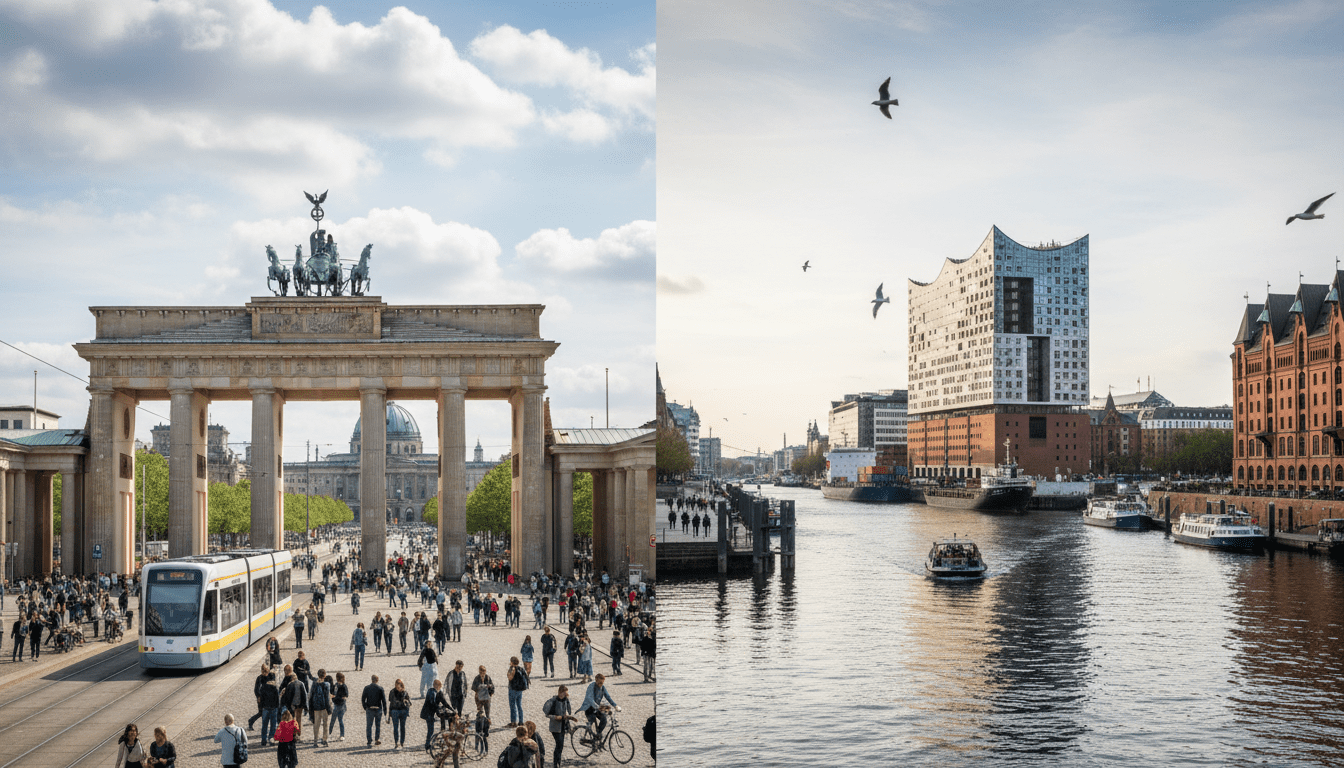
Berlin’s history is visible everywhere, from Cold War memorials to World War II sites and grand 19th‑century architecture. Key landmarks such as the remains of the Berlin Wall, Brandenburg Gate, Museum Island and the Reichstag tell the political and cultural story of modern Germany. Museums, memorials and guided tours make Berlin a primary destination for visitors focused on 20th‑century history and institutions.
Hamburg’s identity is shaped by its maritime past and port city role, and that legacy is on display in the Speicherstadt warehouses, port promenades and the historic fish market. The Elbphilharmonie is a contemporary architectural landmark that contrasts with the city’s Hanseatic brick buildings and canal networks. Miniatur Wunderland and music venues connected to the Beatles era make Hamburg especially attractive for families and music enthusiasts.
Both cities offer museums, churches and distinctive neighborhoods, but they emphasize different stories. Berlin leans toward political history, avant‑garde art and large, diverse museum collections. Hamburg foregrounds maritime commerce, urban waterways and a compact, navigable historic core that rewards walking and short boat trips.
Cityscapes, neighborhoods and atmosphere compared
Berlin is geographically larger and more varied in character, with sprawling districts that range from polished avenues to reclaimed industrial quarters. Neighborhoods such as Mitte, Prenzlauer Berg, Kreuzberg and Neukölln each present a unique mix of cafés, galleries and street art, contributing to a textured urban experience. The city’s scale and layered history often create a feeling of contrasts and unexpected discoveries.
Hamburg’s built environment often feels more orderly and maritime, with compact canals, brick warehouses and tree‑lined boulevards that reflect its Hanseatic wealth. The city’s center and harbor neighborhoods concentrate attractions in walkable clusters, which can suit shorter stays. Waterfront promenades, harbor ferries and the Reeperbahn nightlife district lend a distinctive coastal energy absent from landlocked Berlin.
Atmosphere also differs in pace and presentation: Berlin can feel grittier, experimental and expansive, while Hamburg projects a tidier, port‑city polish. Travelers should weigh whether they prefer the broad, sometimes raw cultural canvas of Berlin or the neater, water‑lined urbanism of Hamburg.
Music, nightlife and cultural scenes
Berlin is internationally known for its club culture, experimental music venues, and a vast live‑music circuit spanning electronic, indie and classical performances. The city supports everything from late‑night dance venues to intimate jazz clubs and world‑class orchestras, offering deep and varied options for evening entertainment. For many visitors, Berlin’s nightlife is a decisive draw.
Hamburg’s cultural identity is anchored by the Reeperbahn and a historic pop and rock scene that launched several major acts, alongside contemporary concert halls and theaters. The Reeperbahn mixes music venues, late‑night bars and a red‑light district atmosphere that many travelers find vibrant and theatrical. Concert programming at the Elbphilharmonie and other venues also attracts international audiences for high‑quality performances.
Both cities provide festivals, open‑air events and museum nights throughout the year, but Berlin offers greater diversity and volume in late‑night options. Hamburg compensates with concentrated, high‑caliber musical institutions and a distinctive portside cultural calendar that can be easier to navigate in a short trip.
Food, dining scenes and local specialties
Berlin and Hamburg both offer highly international dining scenes, but their culinary strengths differ in emphasis and local tradition. Berlin’s food landscape is shaped by migration, street food innovation and a strong café culture, making it easy to sample global dishes and casual local favorites like currywurst and döner kebab. The city also supports a growing fine‑dining scene and numerous small producers.
Hamburg benefits from its maritime proximity, showcasing fresh fish and seafood options in markets and small restaurants across the city. Local specialties such as fish sandwiches and seafood platters are readily available and reflect the port city’s German and Northern European culinary roots. Hamburg also supports an impressive roster of high‑end establishments alongside hearty traditional offerings.
For gourmets, both cities now host Michelin‑recognized restaurants and singular tasting experiences, though Berlin currently offers a larger number of starred venues. For travelers seeking regional flavors, Hamburg’s seafood traditions are a clear advantage, while Berlin’s variety and inventive casual dining will suit those looking for eclectic, inexpensive options.
Costs, transport options and traveling between the cities
Money matters often influence the decision to visit Berlin vs Hamburg, and cost differences can be meaningful for budget travelers. Berlin is frequently perceived as more budget‑friendly on accommodation and food, especially in the mid‑range and hostel markets, whereas Hamburg’s wealthier profile can translate into slightly higher prices for hotels and some restaurants. Public transport fares are broadly comparable in both cities, making daily mobility affordable regardless of base city.
Traveling between Berlin and Hamburg is straightforward and fast by rail; high‑speed services link the two cities in roughly two hours for the most direct connections. The distance between the cities is about 290 kilometers, and frequent trains provide flexibility for same‑day transfers or short multi‑city itineraries. Driving is an alternative that permits scenic detours to Lübeck, Schwerin or Lüneburg, but trains are typically quicker and more reliable for most visitors.
Practical planning should account for peak seasons when hotel rates and train reservations climb. Booking trains in advance can yield savings, and staying near central transport hubs reduces wasted time. For travelers with limited time, a direct train makes a combined Berlin–Hamburg itinerary realistic within a single trip.
Safety, best times to visit and seasonal considerations
Both Berlin and Hamburg are generally safe cities for visitors, with common urban precautions recommended in each place. Petty theft such as pickpocketing is the most common tourist concern, especially on crowded public transport and at major attractions, so keeping valuables secure and remaining vigilant in busy areas is wise. Standard travel safeguards—staying in well‑lit areas at night and avoiding obvious displays of expensive items—apply equally to both cities.
Seasonal timing affects experience more than basic safety. Summer brings warmer weather, long daylight hours and active street life in both cities, but it also attracts larger crowds and higher prices. Spring and early autumn often present a good compromise of milder weather, smaller crowds and many open cultural programs. Winter is quieter; late November and December are notable exceptions because Christmas markets transform both cities into popular festive destinations.
Weather differences are modest but perceptible: Berlin records more sunny days on average, while Hamburg’s maritime climate can feel damper and marginally colder in winter. Travelers sensitive to rain or seeking more consistent sunshine might favor shoulder seasons in Berlin, while those drawn to harbor scenery and seafood might accept Hamburg’s cooler maritime conditions.
Berlin vs Hamburg remains a choice of emphasis rather than quality—whether history, nightlife, waterfront charm, or culinary traditions matter most will determine which city fits a particular trip better.
Final paragraph summarizing recommendation and next steps
If you must choose one city, consider what you prioritize: Berlin for broad historical museums, cutting‑edge culture and unrivaled nightlife; Hamburg for a compact, maritime city with a strong music tradition and seafood specialties. For many travelers the best option is to include both cities when time allows, using a two‑hour train link to combine Berlin’s historical breadth with Hamburg’s portside character. Whichever you choose, both cities offer distinct, high‑quality experiences that reward exploration.
