
Magnus Hirschfeld’s Berlin: A walking guide to the city’s first LGBTQ+ landmarks
A guided route and history for visitors tracing Magnus Hirschfeld’s work across Charlottenburg, Tiergarten, Schöneberg and Moabit.
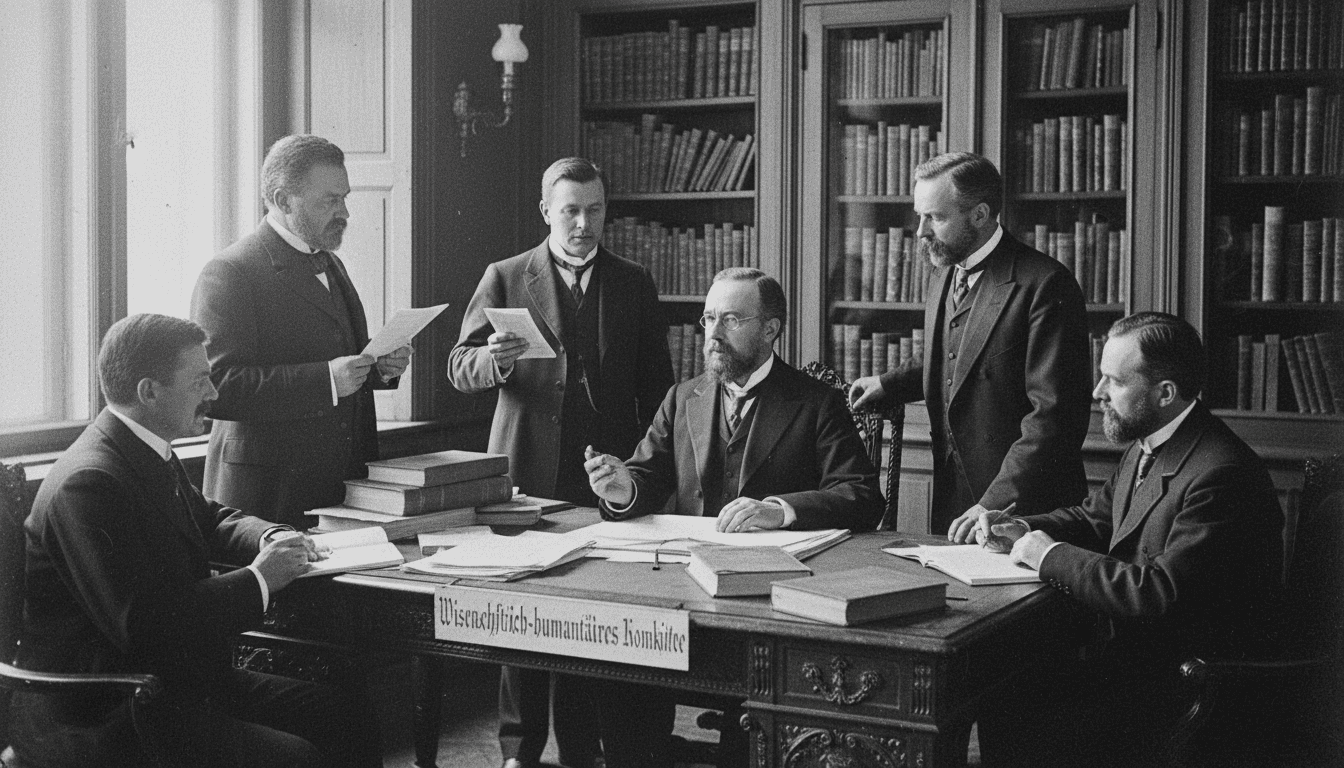
Magnus Hirschfeld remains a central figure in Berlin’s queer history, and the city still bears visible traces of his work and campaigns for sexual and gender minorities. The key moments of Hirschfeld’s career — from the founding of the Scientific‑Humanitarian Committee in 1897 to the creation of the Institut für Sexualwissenschaft in 1919 — are anchored to places that can be visited today, each carrying its own memorial and interpretive context. (en.wikipedia.org)
Magnus Hirschfeld’s legacy in the city
Magnus Hirschfeld was born in 1868 and became a physician and pioneering sexologist whose public interventions combined scientific research with social advocacy. He organised colleagues, published widely and used lectures, print and film to push for legal reform and medical recognition of sexual and gender diversity. (en.wikipedia.org)
Hirschfeld’s work crystallised in two institutions that defined modern queer activism in Germany: the Scientific‑Humanitarian Committee, founded in May 1897, and the Institut für Sexualwissenschaft, opened in 1919. Both mobilised medical authority and public outreach to challenge laws and popular misconceptions about same‑sex attraction and gender variance. (en.wikipedia.org)
During the Weimar years Hirschfeld’s institute attracted patients, scholars and activists from across Europe and became known for collections, counselling and early clinical work with transgender and intersex people. That combination of research and public advocacy is why many contemporary Berlin memorials frame his work as both scientific and civic. (berlingeschichte.de)
Where Hirschfeld began: Charlottenburg and the WhK founding site
The Scientific‑Humanitarian Committee — the world’s first organisation devoted to the rights of homosexual and gender‑variant people — was founded in Hirschfeld’s Charlottenburg apartment in mid‑May 1897. The event is commemorated by a stele and plaque on Otto‑Suhr‑Allee that marks the address associated with his practice and the committee’s origins. (en.wikipedia.org)
Today, Otto‑Suhr‑Allee 93 stands opposite Charlottenburg Town Hall and hosts the public memorial that was unveiled in 1995 to acknowledge Hirschfeld’s pioneering work. The city plaque and occasional commemorative events make the site a logical first stop on any walking route focused on early queer emancipation in Berlin. (berlin.de)
Visiting this Charlottenburg marker gives a compact introduction to Hirschfeld’s early strategy: to recruit respected voices from medicine, law, publishing and the arts as signatories in a petition to reform then‑current penal codes. The WhK’s combination of petitioning, public education and legal argument set a template for rights campaigns that followed. (en.wikipedia.org)
The Institute for Sexual Science: site, mission and destruction
Hirschfeld opened the Institut für Sexualwissenschaft in July 1919 as a private research and clinical centre devoted to the scientific study of human sexuality and to public education. The institute combined counselling, research, a medical clinic and a large library and archive intended for scholars and the public alike. (berlingeschichte.de)
The institute’s premises were located in the Tiergarten area of central Berlin; contemporary guides and historical accounts identify the building complex now occupied by the Haus der Kulturen der Welt (HKW) and adjacent sites as the institute’s location in the early 1920s. The institute’s presence in central Berlin made it accessible and highly visible in the cultural life of the Weimar capital. (archiv.hkw.de)
The Institut für Sexualwissenschaft was destroyed after the Nazi rise to power in 1933, its library and archives looted and burned, and its research program forcibly shut down. That act of cultural and scientific censorship is part of the institute’s historical arc and underlines why present‑day visits are also visits to a lost archive. (berlingeschichte.de)
Anders als die Andern and the campaign against Paragraph 175
Hirschfeld saw film as a medium for education and persuasion and co‑wrote and appeared in the 1919 silent film Anders als die Andern (Different from the Others). The film explicitly challenged Germany’s Paragraph 175, which criminalised sex between men, and used narrative and intertitles to argue that homosexual orientation was not a crime or a disease. (en.wikipedia.org)
The film’s premiere provoked debate and censorship pressures, but it also offered a visible example of how Hirschfeld linked scientific claims, preventive public health arguments and legal reform into a unified campaign. Contemporary screenings and retrospectives in Berlin frequently highlight Anders als die Andern as a landmark in queer cultural history. (dw.com)
For visitors today, references to the film appear at museum exhibitions and in guided town walks that emphasise how media, nightlife and medical reform intersected in Weimar Berlin. The film’s moral — an explicit plea against suicide and for social acceptance — remains a focal point in accounts of Hirschfeld’s public interventions. (en.wikipedia.org)
Walking the Hirschfeld trail: a practical route through the city
Start at Otto‑Suhr‑Allee in Charlottenburg to see the founding site of the WhK and the district’s public stele and plaque. Allow time to read the inscription and the municipal information panel; Charlottenburg’s local history offices sometimes host small commemorative events on May 14 and 15. (berlin.de)
From Charlottenburg, travel east toward the Tiergarten area to the approximate site of the Institut für Sexualwissenschaft. The institute’s footprint is associated with the Beethovenstraße/In den Zelten corner where the later cultural complex stands. Interpretive signs and exhibition programmes at cultural institutions nearby occasionally reference Hirschfeld and the institute’s destroyed archives. (archiv.hkw.de)
Continue south to Schöneberg and the Nollendorfplatz/Motzstraße quarter, long known for its gay and queer nightlife. Motzstraße was home to the famed Eldorado club and other venues that made the neighbourhood a focus for social life and for the networks connected to Hirschfeld’s work and patients. Guided queer walking tours regularly use Nollendorfplatz as either a starting point or a major stop. (berlin.de)
Finish the route in Moabit at the Magnus‑Hirschfeld‑Ufer and the Monument to the First Homosexual Emancipation Movement, a public sculpture and information panel that celebrates the broader movement with portraits and short biographies of figures such as Hirschfeld, Karl Heinrich Ulrichs and Anita Augspurg. The monument frames the local landmarks in a national and transnational history of early LGBTQ+ activism. (en.wikipedia.org)
Where to go for deeper context and visitor services
The Schwules Museum in Berlin and other queer cultural institutions offer rotating exhibitions and permanent collections that place Hirschfeld in a wider narrative of 19th‑ and 20th‑century sexual politics. Check museum opening hours and special programmes before visiting; many institutions run lectures or film nights that expand on Hirschfeld’s research and the institute’s history. (stadtmuseum.de)
Several Berlin organisations run guided “queer history” walks that incorporate small group interpretation, archival images and contemporary comment. The city’s cultural education offices and queer history maps published by civic bodies are reliable places to find timetables and suggested itineraries if you prefer a guided experience. (berlin.de)
If you plan to visit the Charlottenburg stele, the institute site near Tiergarten or the Moabit monument, allow for short detours to neighbourhood museums, neighbourhood cafés and small exhibitions that often display archival photographs or explanatory texts. These local contexts help transform isolated markers into a layered story about science, politics and everyday life. (berlin.de)
Interpreting Hirschfeld’s work in contemporary Berlin
Hirschfeld’s blend of clinical research and public advocacy can seem paradoxical to modern readers, yet it reflected a deliberate strategy to use medical authority to press for legal and social change. Visitors should expect discussions in museums and on tours that both praise his role in early activism and critically examine the limitations and historical context of sexological science. (en.wikipedia.org)
Contemporary Berlin’s queer memory is plural: it celebrates the social vibrancy of Weimar nightlife while remembering the institute’s destruction and the later persecutions under National Socialism. Public memorials and civic programming are explicit about both the achievements and the ruptures in this history, offering opportunities for reflection as well as celebration. (berlingeschichte.de)
For many visitors, Hirschfeld’s recognition of transgender and gender‑variant people as existing beyond narrow legal or medical categories is one of his most consequential legacies. His early clinical attention to trans and intersex individuals placed those experiences into public debate long before such language was standard in medical or legal discourse. (berlingeschichte.de)
Practical tips and historical etiquette for visitors
Berlin’s public plaques and memorials are usually free and accessible; plan your route using public transport since the sites lie across multiple districts. Nollendorfplatz and Charlottenburg are well served by U‑bahn and bus lines, while the institute area near Tiergarten is easiest reached on foot from central tram and S‑bahn stops. (berlin.de)
Respect local signage and private property: many commemorative plaques are mounted on private façades, and property owners sometimes restrict close access to building entrances. Municipal monuments on sidewalks and public squares are the best places for photographs and longer readings of explanatory text. (berlin.de)
If you would like guided interpretation, look for city tours marketed as “Queer Berlin,” “Hirschfeld trail” or “Weimar queer history.” Booking in advance is advisable during high season, and some tours require a modest fee to cover specialised guides and archival materials. (berlin.de)
Concluding note for visitors
Walking the Hirschfeld route in Berlin links specific addresses to a broader story about how medical language, legal reform and cultural visibility intersected in the turn‑of‑the‑century and Weimar eras. Each memorial and museum stop offers a chapter in that history, from the Charlottenburg stele marking the WhK’s founding to the institute site and the public monuments that commemorate the first organised emancipatory movement. (en.wikipedia.org)
Seeing these places in sequence helps visitors appreciate how a city’s streets and squares can preserve debates about rights, identity and the role of science in public life. The route also underscores a sobering lesson: institutions and archives once central to public knowledge can be lost, and civic remembrance is itself an ongoing act of recovery. (berlingeschichte.de)
Berlin’s commemoration of Magnus Hirschfeld binds local sites to an international history of sexual and gender emancipation, and a walk through Charlottenburg, Tiergarten, Schöneberg and Moabit remains one of the most tangible ways to experience that legacy.
