
Google Agrees to $920M-a-Month AI Compute Deal with SpaceX Ahead of IPO
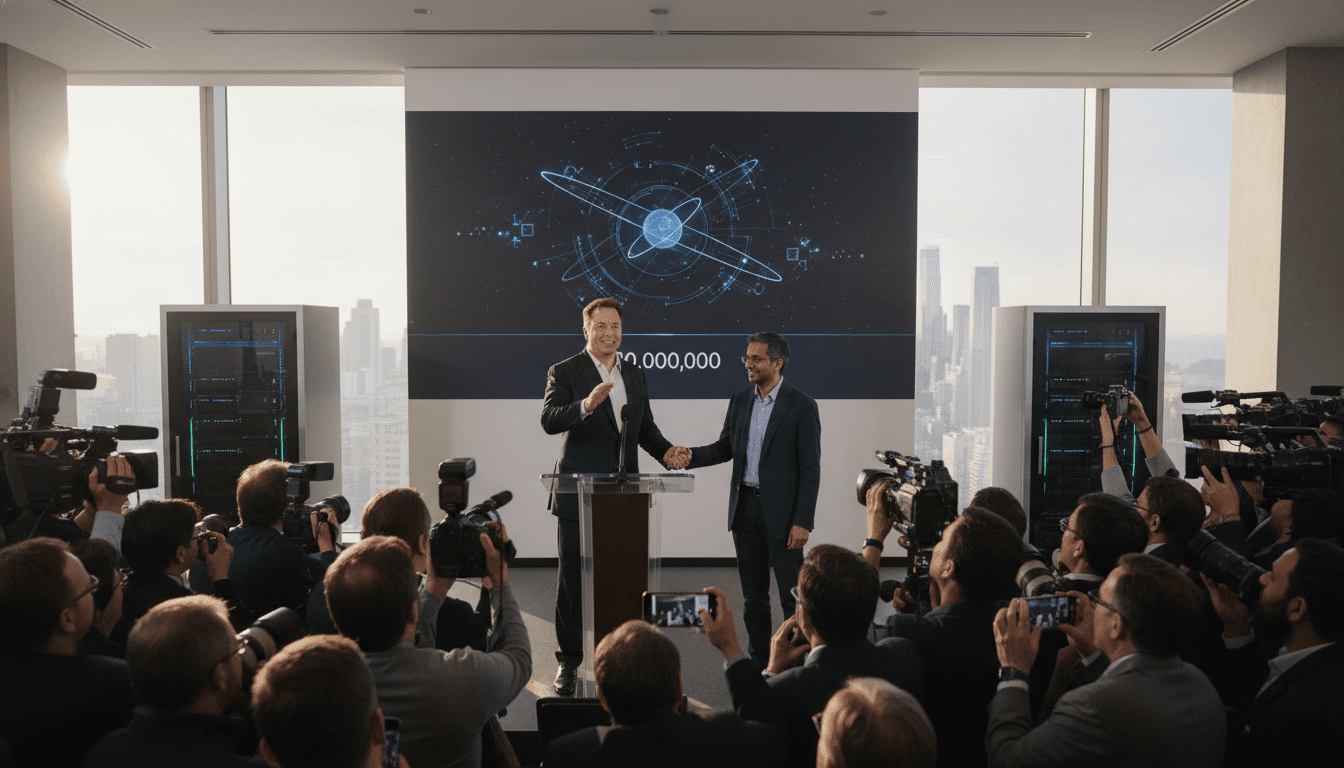
Google will pay SpaceX $920 million per month for AI compute capacity under a contract running through June 2029, a major development as SpaceX prepares for a Nasdaq IPO and positions itself in the AI infrastructure market.
Details of the $920 million monthly agreement
The IPO filing shows Google will pay $920 million per month once full rates take effect in October, following an initial period at a reduced fee. The pact spans until June 2029 and, if carried through, would deliver roughly $30 billion to SpaceX over the life of the agreement.
The documents also permit either party to exit under specified conditions with notice, leaving room for adjustments if market or technical conditions change. That flexibility reflects the scale and novelty of allocating private space-company compute resources to a single cloud customer.
Terms disclosed in SpaceX IPO filing
The payment terms and timeline were disclosed as part of SpaceX’s prospectus ahead of its planned June 12 listing on Nasdaq. The filing comes after Elon Musk consolidated his artificial-intelligence venture into the wider SpaceX group earlier this year, aligning satellite, rocket and compute ambitions under one roof.
The prospectus also recorded significant AI-related spending, which contributed to reported losses in recent quarters, even as demand among investors and potential shareholders has remained robust. The company’s IPO plans seek to raise roughly $75 billion, a sum that would set a new benchmark in public listings if realized.
How the deal fits SpaceX’s business mix
SpaceX generates most of its current revenue from the Starlink satellite broadband network, according to the IPO documents, while commercial and government launch contracts add additional streams. The new agreement with Google, however, signals a strategic pivot toward monetizing large-scale compute capacity alongside its existing aerospace operations.
By combining data-center-style AI compute with its satellite and ground infrastructure, SpaceX is redefining the lines between space services and cloud computing. That diversification could materially change revenue composition if the Google contract and similar deals are maintained.
Operational and contractual caveats
While headline numbers are large, the agreement includes operational caveats that could affect actual receipts. Initial months carry reduced charges, and exit provisions allow either side to terminate under certain scenarios with advance notice. Those clauses reduce downside risk for Google but also create execution risk for SpaceX’s revenue forecasts.
Delivering reliable, sustained AI compute at this scale will require continued investment in facilities, power and networking, and the company’s prior disclosures show that such investments have already weighed on profitability. Observers note the need to balance capital spending with near-term cash flow expectations as SpaceX transitions to public-company reporting.
Market response and IPO dynamics
Investor interest in SpaceX shares appears strong despite recent AI-related losses, with demand in private allocations reportedly exceeding available supply by a wide margin. The company’s proposed fundraising would be among the largest in history, underscoring investor appetite for firms that combine infrastructure with AI ambitions.
That enthusiasm, however, is paired with close scrutiny: analysts and potential shareholders will be watching revenue recognition, contract durability and how the Google agreement is implemented operationally. Any material change in the deal’s status or in SpaceX’s ability to deliver compute at the promised scale could quickly affect valuation on debut.
Wider implications for AI infrastructure
The contract highlights how major tech firms are securing long-term access to vast pools of compute as AI workloads grow more demanding. For Google, dedicating extensive external capacity to its AI programs reflects an industry-wide scramble to lock in processing resources that support model training and inference at scale.
For competitors and cloud providers, the arrangement also raises questions about competitive advantage and infrastructure concentration. Long-term, such deals could shape where large AI models are trained and hosted, and influence the strategic choices of both hyperscalers and emerging AI hardware providers.
SpaceX’s future revenue trajectory will depend on execution, regulatory reviews and the evolution of large-scale AI demand. The agreement with Google establishes a high-stakes commercial relationship that will be central to investor assessments when SpaceX lists on Nasdaq.
